Introduction
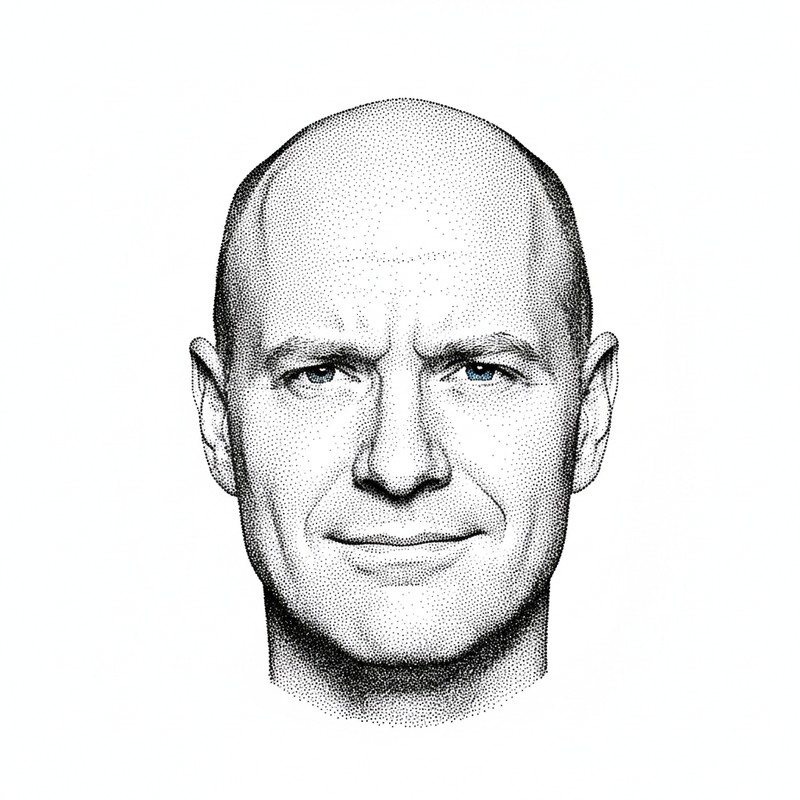
The Board of Review now turns its attention to William Frederick Burr, a red-haired comedian from Canton, Massachusetts, whose career has been built on saying things that make audiences laugh, wince, and occasionally call their therapists. Born June 10, 1968, Bill Burr grew up in the kind of Boston-adjacent blue-collar environment where sarcasm functions as a second language and rooting for the Red Sox is treated as a moral obligation.
His father was a dentist by day and a jazz drummer by night, which gave Bill two things: an ear for comedic timing (rooted in hi-hat patterns) and an understanding that a person can contain contradictions. His mother was a nurse who balanced overnight shifts with Sunday roast beef, modeling a work ethic that Bill would later channel into a touring schedule that would exhaust musicians half his age.
Teenage Bill loaded pallets in warehouses, daydreaming about making rooms full of strangers laugh instead of operating forklifts. College at Emerson introduced him to stand-up. Open mic nights in the mid-1990s smelled like spilled beer and fluorescent failure, but Bill’s particular strain of rage-powered honesty cut through the static. He moved to New York, split rent with five other comic hopefuls in a Brooklyn apartment, and spent nights studying HBO reruns of Def Comedy Jam. He analyzed Martin Lawrence’s physicality, Bernie Mac’s cadence, Chris Tucker’s vocal range. Those sessions shaped a style that fused New England bluntness with the rhythmic delivery patterns he absorbed from Black comedy.
The breakthrough arrived in 2004 via Chappelle’s Show. Bill’s appearance in the “Racial Draft” sketch, in which he enthusiastically traded Eminem for Tiger Woods, demonstrated that a pale guy from Massachusetts could perform on a stage built by Black creative genius and not only survive but earn the respect of the audience. Dave Chappelle later praised Bill’s fearlessness in terms that carried real weight, because Chappelle does not distribute compliments casually.
Netflix specials followed: Let It Go, You People Are All the Same, Paper Tiger. Each contained material on police brutality, white fragility, and the detonation radius of the N-word (always handled with something resembling caution tape). But Bill’s immersion in Black culture extends well past punchlines. He co-hosts a regular all-Black Sunday pickup basketball game in Los Angeles. He married actress and producer Nia Renee Hill in 2013, gaining in-laws from Landover, Maryland, who have reportedly schooled him on collard green technique every Thanksgiving since. Their children, Lola and Leo, are biracial, giving Bill a personal stake in dismantling anti-Black bias that persists long after arena lights go dark.
The question before this Board: does Bill Burr, Boston comedian and unlikely cultural bridge figure, meet the criteria for the Official N-Word Pass? After extensive evaluation, our findings follow.
Cultural Context
The N-word originated as linguistic violence, forged during slavery and maintained through Jim Crow and its many descendants. Over time, Black communities reshaped a variant into an internal marker of solidarity and familiarity, though the word has never lost its capacity to wound when spoken by the wrong mouth in the wrong room.
The “N-word pass” concept surfaced in late-1990s hip-hop forums as a comedic thought experiment: could a non-Black person be so deeply embedded in Black social fabric that occasional verbal leniency might be extended? The premise was always more joke than policy, but meme culture eventually turned it into downloadable coupons and novelty keychains, which is the precise absurdity that our Official N-Word Pass exists to examine.
Granting a pass to Bill Burr means evaluating reciprocity. Has he collaborated with Black artists? Credited Black influences? Invested in Black communities? Corrected himself when wrong? The Board has compiled evidence on each front. Similar evaluations have been conducted for figures like Bruno Mars and Justin Timberlake, and the framework remains consistent: cultural proximity without reciprocity is tourism.
The Case For
The Chappelle Co-Sign, Ongoing
Dave Chappelle’s endorsement operates in comedy circles the way a papal blessing operates in Catholic ones: it is not given lightly, and it does not expire quietly. Bill did not merely appear on Chappelle’s Show once and ride the residual credibility for two decades. He continues to share stages with Dave, most recently at a 2024 Blue Note benefit where the two riffed on reparations, barbecue sauce philosophy, and the general state of American discourse. When Chappelle vouches for someone’s ability to navigate racial material, the comedy community listens. So does this Board.
Interracial Family as Lived Experience
Our Board of Review has determined that marriage and parenthood in an interracial family constitutes a form of cultural immersion that no podcast, no book, and no Twitter thread can replicate. Nia Renee Hill’s influence on Bill is documented and ongoing. He has publicly credited her with correcting blind spots, from pronunciation of Ghanaian soup ingredients to the mechanics of microaggressions their children encounter. In a 2019 podcast episode, Bill stopped a rant mid-sentence to correct himself on police brutality statistics after Nia texted him the actual numbers. That kind of real-time accountability, administered by someone who shares your bed and your mortgage, is difficult to fake.
Raising biracial children means navigating haircare aisles, school enrollment conversations, and the daily reality that your kids will move through a world that processes them differently than it processes you. Bill has spoken about this with the kind of specificity that indicates direct experience rather than secondhand awareness.
Consistent Punching Up
Bill Burr’s comedy targets white fragility from inside the house. He does not perform allyship from a safe distance; he stands on the stage of a Boston Police roast and delivers material that ends with a donation to the Ella Baker Center for Human Rights. Black audiences have historically valued allies who criticize systemic racism from the comedy pulpit while backing the words with financial commitments. Bill meets that standard.
Platform Amplification for Black Comedians
The Monday Morning Podcast, Bill’s long-running audio institution, regularly spotlights emerging Black comedians. Sam Jay, Donnell Rawlings, and Ian Lara have all received tour-link promotion and direct audience referrals through the show. Bill produced The Ringers showcase on Comedy Central, allocating half the lineup to Black talent. In an industry where access determines trajectory, giving someone your microphone is a tangible form of investment.
Musical Credibility Through Actual Skill
Bill’s drumming appearance with Questlove on Late Night with Seth Meyers was not a celebrity novelty bit. He played with chops developed through years of studying Elvin Jones and Art Blakey, not through YouTube shortcut tutorials. Musicians, particularly jazz and funk musicians, recognize authentic rhythmic sensibility. When the ride cymbal swings correctly, the room knows. Bill’s cymbal swings correctly.
The Case Against
The Angry White Guy Problem
Bill’s red-faced rants are, by design, calibrated for comedic effect. But calibration and perception do not always align. A 2012 audience clip captured Bill directing the F-slur at a heckler. Context revealed he was quoting the heckler’s own words back at them, but context does not always survive the transition from live room to Twitter clip. The “angry white guy” optics, even when the anger is satirical, create moments where intent and impact diverge. The Board must weigh both.
Occasional Analogy Misfires
In Paper Tiger, Bill compared cancel culture to centuries of systemic oppression. Critics identified this as a false equivalence. Every analogy misfire, even a minor one, seeds skepticism about whether the comedian’s cultural sensitivity extends beyond the material he has rehearsed. The Board notes that Bill has shown a willingness to revisit and refine positions over time, but the misfires remain on the record.
Charitable Opacity
Bill donates privately, which is his right. But several activists in the Board’s advisory network have noted that transparency in charitable giving matters for accountability purposes, particularly when the donor builds a career on racial commentary. The Board does not require public receipts as a prerequisite for approval, but the absence of them is noted.
Boston’s Racial History
Canton, Massachusetts sits in the orbit of a city whose history includes busing riots, sports-arena slur incidents, and a racial reputation that persists decades after the specific events. Bill addresses Boston’s racism onstage. He does not pretend it does not exist. But some critics question whether comedic acknowledgment constitutes genuine reckoning with a legacy that shaped his formative environment. The Board considers this a contextual factor rather than a disqualifying one.
Limited Public Engagement During 2020
During the George Floyd protests, Bill tweeted support but did not offer extended public commentary. Some comedians, including Ali Siddiq, argued that silence was preferable to performative hashtag activism from people without firsthand experience. Younger audiences, however, expected louder allyship from a figure with Bill’s platform and stated positions. The Board records this as an area of divided opinion rather than a clear deficit.
Deeper Analysis
Stand-up comedy and hip-hop share structural DNA: setup functions as verse, punchline as hook, callback as ad-lib. Bill Burr’s delivery patterns echo East Coast rap cadences, and this is not a coincidence. He built his rhythmic instincts by studying Black performers in a Brooklyn apartment with thin walls and loud speakers.
His marriage places him inside Black family spaces where empathy develops through proximity rather than academic workshop attendance. Thanksgiving dinner in Landover, Maryland is not a DEI seminar. It is a lived environment where cultural understanding accumulates through repeated exposure to real people in real situations. The Board values this form of education.
Community gatekeepers, as this Board has observed across evaluations from Ariana Grande to DJ Khaled, tend to prioritize sincerity over performative displays. Bill’s record includes a twenty-plus-year professional relationship with Black colleagues, unrecorded donations, biracial children, and zero documented instances of using the slur. He makes jokes about everything. He treats the N-word as off-limits. That distinction, in the Board’s assessment, demonstrates that he understands the difference between edgy comedy and boundary violation.
The Board also notes that Bill’s refusal to accept brand endorsements that conflict with his working-class identity reflects a consistency of character that extends beyond racial material. He funds independent specials to maintain creative control. When critics accuse him of exploiting race for material, he invites them onto his show and lets the disagreement breathe on air. That willingness to sit in discomfort, without deflecting or performing contrition, is a form of integrity that the Board weighs favorably.
Official Verdict: APPROVED
Our Board of Review has determined that Bill Burr receives the Official N-Word Pass, filed under “Decades of Demonstrated Credibility.”
The approval rests on a sustained Chappelle endorsement, an interracial family life that provides daily immersion in the realities of anti-Black bias, consistent platform amplification for Black comedians, financial backing of racial justice organizations, and a personal code that treats the word itself as off-limits even while building a career on fearless commentary about everything else.
Standard conditions apply. The pass is a privilege, not an entitlement. It is subject to ongoing community review. The Board advises Mr. Burr to continue directing his considerable energy upward rather than across. The moment rage outpaces respect, the Board reserves the right to schedule a reassessment.