Introduction
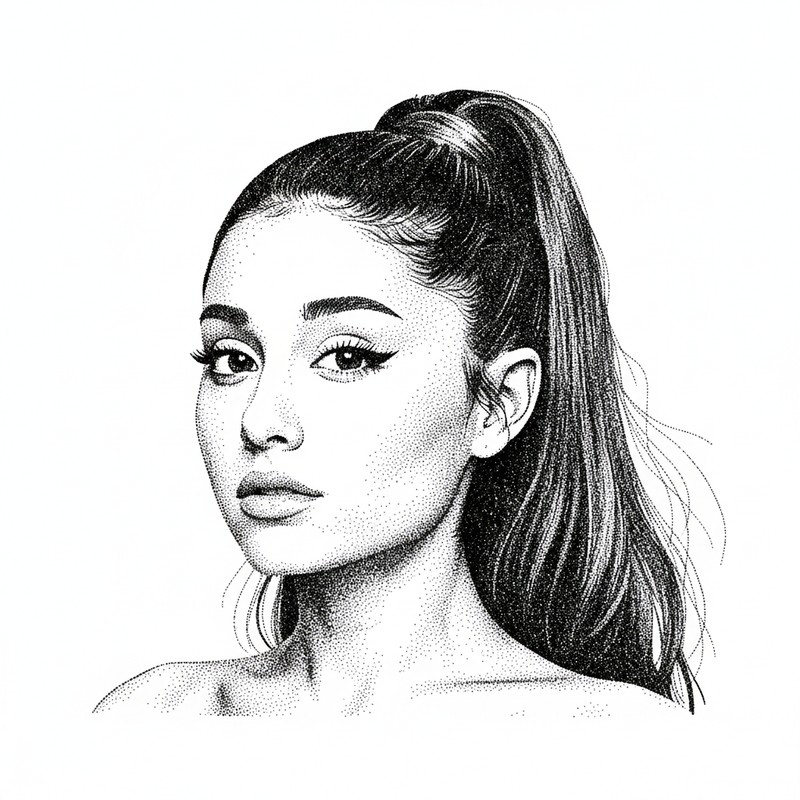
Our Board of Review has been presented with an application that, on first inspection, arrives wrapped in a high ponytail, scented with Cloud by Ariana Grande (available at Ulta, $48), and delivered via a whistle note that only dolphins and Mariah Carey can fully appreciate. The applicant is Ariana Grande-Butera, born June 26, 1993, in Boca Raton, Florida. The question before our Board: does Ariana Grande have the N-Word Pass?
This is a case that has generated significant public interest, and for good reason. Ariana Grande occupies a genuinely unusual position in American pop culture. She is an Italian-American woman from South Florida who sings like a Black woman from the golden era of R&B, who has been accused on multiple occasions of visually presenting as a Black or biracial woman through spray tanning, who collaborates extensively with Black artists and producers, and who has been both praised for her allyship and criticized for her proximity to Black aesthetics without Black lived experience. She is, in the terminology our Board uses internally, “a complicated file.”
The biographical basics. Ariana grew up comfortable. Her mother, Joan, ran a graphics company. Her father, Edward, operated a tech firm. Piano lessons were never a financial concern. By age ten she was singing the national anthem at Florida Panthers hockey games, standing on tiptoe to reach the microphone and belting with a vocal maturity that made adults in the crowd visibly uncomfortable in the way people get uncomfortable when a child is obviously better at something than they will ever be.
Broadway came next. At thirteen, she landed a role in the musical “13” in New York, where she first began absorbing the R&B vocal techniques that would define her career. Nickelodeon followed with “Victorious,” and then “Sam & Cat,” shows that packaged Ariana in red hair dye and sitcom punchlines while she spent her off-camera hours practicing Brandy runs in her dressing room. When her debut album “Yours Truly” dropped in 2013, produced in part by Babyface and Harmony Samuels, the immediate reaction from Black Twitter was a collective squint: “Wait, she’s not Black?”
That reaction is itself a data point our Board considers relevant.
What followed was a career that wove itself deeper and deeper into Black musical traditions. Collaborations with Big Sean, Mac Miller, Childish Gambino, Nicki Minaj, The Weeknd, and Ty Dolla $ign. Production from Pharrell Williams, Hit-Boy, and Timbaland. A vocal style that borrows so heavily from Mariah Carey and Whitney Houston that music critics have run out of diplomatic ways to say “she sounds like a Black singer.” The 2018 album “Sweetener” and 2019’s “Thank U, Next” cemented her as pop’s dominant force, but they also intensified a debate that had been simmering since her debut: where does influence end and appropriation begin?
The Manchester Arena bombing in 2017, which killed 22 people at her concert, is part of her story in ways that are relevant to character assessment if not directly to pass evaluation. She returned weeks later for the One Love Manchester benefit, sharing a stage with Black Gospel choirs, and demonstrated a public grace under unimaginable circumstances that our Board notes without further comment.
The question remains. Can whistle notes, Babyface production credits, and donations to the Loveland Foundation add up to the kind of cultural trust that the N-Word Pass represents? Our Board has reviewed the evidence. Let us proceed.
Cultural Context
The Official N-Word Pass evaluation process examines applicants against criteria rooted in cultural reciprocity, sustained engagement, and demonstrated understanding of the word’s historical weight. For readers unfamiliar with our framework, a brief summary: the N-word began as an instrument of dehumanization. Black communities reclaimed a variation of it as an act of resistance and solidarity. The resulting word carries a dual charge, both painful history and communal warmth, that makes its use by outsiders a matter of significant cultural sensitivity.
The “pass” concept emerged from real social dynamics and was subsequently meme-ified into oblivion by the internet. This institution exists to formalize the evaluation of these dynamics with the rigor they deserve.
Ariana Grande’s case raises questions that are distinct from, say, the Eminem evaluation or the Post Malone evaluation. Those cases involved white artists operating explicitly within hip-hop. Ariana operates in pop and R&B, genres where the boundaries of Black cultural ownership are drawn differently but no less firmly. R&B is, in its origins and its ongoing evolution, a Black art form. A white (or, more precisely, Italian-American) artist who builds her entire sonic identity on R&B vocal traditions is making a specific cultural choice, and that choice carries specific obligations.
There is also the visual dimension, which does not apply to most other applicants our Board has reviewed. Ariana Grande’s skin tone has, over the course of her career, shifted from “clearly Italian-American” to “ambiguously everything” in ways that have generated sustained and legitimate criticism. This is not about tanning. This is about whether the visual presentation constitutes a form of racial performance that borrows the aesthetic advantages of Blackness without the systemic disadvantages.
The Case For
Deep and Sustained Collaboration with Black Creators
This is not a case of token features. Ariana Grande’s catalog is, at the production level, substantially a Black creative enterprise. Babyface, Pharrell Williams, Victoria Monet, Hit-Boy, Timbaland, and Max Martin (who, while Swedish, works within production traditions pioneered by Black producers) have shaped her sound. She credits these collaborators in interviews, liner notes, and social media posts with consistency that our Board finds genuine rather than performative.
Victoria Monet, in particular, represents a significant data point. Monet is a Black songwriter and producer who co-wrote much of “Thank U, Next” and “Positions,” and Ariana has publicly and repeatedly credited Monet’s contributions in contexts where many pop stars would have quietly accepted sole credit. When Monet’s solo career took off, Ariana amplified it to her massive audience. This pattern of credit and amplification is exactly what reciprocal cultural exchange looks like.
Financial Contributions to Black Wellness
After extensive evaluation of the public record, our Board notes the following: Ariana Grande funded 25 therapy scholarships for Black women through the Loveland Foundation, directed tour merchandise proceeds to the Black Music Action Coalition, and made direct donations to racial justice organizations during the 2020 protests that were made without the kind of social media fanfare that suggests branding exercise rather than genuine commitment.
Active Participation in 2020 Protests
Ariana marched in Los Angeles during the 2020 protests. Not from a car. Not with a security perimeter. She marched, livestreamed bail fund links to her 80-million-plus followers, and matched fan donations. Our Board notes that physical presence at protests, while not sufficient on its own, demonstrates a willingness to accept personal risk in solidarity with Black communities that distinguishes genuine allyship from performative hashtagging.
Deliberate Avoidance of the Word Itself
Despite recording extensively with Black artists in genres where the N-word is common in lyrics and studio conversation, Ariana Grande has never used the word on record or in any documented public context. This represents a self-imposed boundary that our Board views as an indicator of awareness regarding linguistic permissions she has not been granted. It suggests she understands, at least on this specific dimension, where the line is.
Post-Criticism Royalty Corrections
When “7 Rings” generated controversy over similarities to Princess Nokia’s “Mine” and other works, Ariana’s team added writers to the royalty splits. Our Board notes that the correction was prompted by public pressure rather than proactive acknowledgment, but the willingness to convert criticism into financial compensation, rather than legal defense, demonstrates a capacity for accountability that many artists in similar positions have not shown.
The Case Against
The Spray-Tan Situation Constitutes Visual Appropriation
Our Board has reviewed photographic evidence spanning Ariana Grande’s career and has determined that her skin tone has, at various points, shifted from her natural complexion to a significantly darker presentation that has been described by critics as “ambiguously Black” or “racially fluid.” This is not a matter of seasonal tanning. The degree and consistency of the darkening, combined with styling choices (sleek ponytail, oversized hoodies, nameplate jewelry) that align with Black and Latina aesthetic traditions, creates a visual presentation that borrows from Black appearance without the lived experience of Black identity.
The term “Blackfishing” has been applied to this pattern, and while our Board does not adopt internet terminology uncritically, we note that the concern is legitimate. When the tan deepens during album cycles featuring trap production and lightens during periods of pop-oriented promotion, the pattern suggests strategic rather than incidental aesthetic choices.
”7 Rings” Demonstrated Reactive Rather Than Proactive Credit
The “7 Rings” controversy is instructive. The song sampled “My Favorite Things” from The Sound of Music but drew its flow and cadence from traditions rooted in Black hip-hop. Princess Nokia, Soulja Boy, and others identified similarities to their work. Ariana’s team added credits and royalty splits, but only after public pressure made inaction untenable. Proactive credit, offered before criticism forces the issue, is a higher standard that our Board expects from serious pass applicants. The Logic evaluation examines how proactive cultural acknowledgment differs from reactive damage control.
Limited Sustained Presence in Black Community Spaces
Ariana Grande’s engagement with Black culture is primarily mediated through the music industry: studios, award shows, and collaboration credits. Our Board notes a relative absence of sustained engagement with Black community institutions outside the entertainment sphere. No consistent HBCU partnerships, no ongoing relationships with community organizations beyond crisis-moment donations, no visible pattern of showing up in Black spaces when cameras are not present.
Pop-Algorithm Advantage Reinforces Structural Inequity
Streaming platforms categorize Ariana Grande as pop even when she is performing material that is sonically indistinguishable from R&B. This categorization gives her access to pop editorial playlists with larger audiences while Black artists performing identical music are slotted into R&B or “urban” categories with smaller reach. Ariana did not create this system, but she benefits from it, and our Board’s criteria require applicants to demonstrate awareness of and engagement with the structural advantages they receive. A public statement about genre categorization bias, or advocacy for Black R&B artists to receive equivalent playlist placement, would strengthen future applications.
Pre-2020 Activism Was Narrowly Focused
Before the 2020 protests, Ariana Grande’s public advocacy centered primarily on LGBTQ+ rights and gun control. These are important causes. They are not evidence of sustained engagement with racial justice. Our Board notes that her racial justice activism appears to have been activated by the specific historical moment of 2020 rather than by a preexisting commitment. Reactive allyship is better than no allyship. Proactive, sustained engagement is what our criteria require.
Deeper Analysis
Based on the established criteria, our Board finds that the Ariana Grande case illustrates a specific challenge in cultural evaluation: the applicant whose artistic skill is genuine, whose collaborative relationships are real, and whose philanthropic contributions are meaningful, but whose relationship to Black culture is mediated primarily through professional contexts rather than personal and communal ones.
Ariana Grande can sing. This is not in dispute. She can sing in ways that place her in direct lineage with Black vocal traditions stretching from Minnie Riperton through Whitney Houston through Mariah Carey through Brandy through Jazmine Sullivan. Her technical facility with these traditions is not appropriation in itself. Vocal technique is learned, shared, and built upon across racial lines, and the history of American popular music is a history of cross-racial musical influence.
But the voice exists within a broader context. When the voice is accompanied by a darkened skin tone, styling choices drawn from Black aesthetic traditions, and production rooted in Black musical innovation, the cumulative effect raises questions that vocal talent alone cannot answer. The question is not “Can she sing like that?” She obviously can. The question is whether the total package, the sound plus the look plus the career infrastructure, represents respectful cultural exchange or something that extracts more than it returns.
Our Board’s assessment is that Ariana Grande returns a significant amount. Her collaborator credit practices, her financial contributions, and her protest participation are real and meaningful. But the spray-tan pattern, the reactive rather than proactive accountability on credit issues, and the absence of sustained community engagement outside entertainment industry contexts create a deficit that the positive factors do not fully overcome.
The Kim Kardashian case provides an instructive comparison. Kim’s evaluation resulted in approval in part because her engagement with Black communities extended into institutional spaces (prison reform, legal advocacy, community business support) that went beyond the entertainment industry. Ariana’s engagement, while genuine within its sphere, has not yet demonstrated that institutional breadth.
Official Verdict
DENIED. Our Board of Review has determined that Ariana Grande-Butera does not meet the criteria for issuance of the Official N-Word Pass.
The determining factors are as follows: visual presentation patterns that constitute aesthetic borrowing from Black identity without Black lived experience; reactive rather than proactive accountability on matters of creative credit; engagement with Black culture that is primarily mediated through entertainment industry contexts rather than sustained community presence; and pre-2020 advocacy that did not include consistent racial justice engagement.
Mitigating factors are noted and entered into the record: genuine and sustained collaboration with Black creators who speak highly of the working relationship; meaningful financial contributions to Black wellness organizations; physical participation in racial justice protests; and deliberate avoidance of the N-word itself in all documented contexts.
The Board recommends the following for future consideration: direct engagement with the spray-tan pattern and its implications, community involvement that extends beyond the recording studio and entertainment industry, and a shift from reactive to proactive accountability on matters of cultural credit. The denial is issued with acknowledgment of the applicant’s talent and with the expectation that future review cycles may yield a different result upon demonstration of these conditions.