Introduction
The question arrives in the Board’s inbox with the regularity of rent payments and the philosophical weight of a Socratic dialogue: “Does the N-Word Pass actually exist?” It appears in Reddit threads, group chats, comment sections, and at least one doctoral dissertation the Board was asked to peer-review (the Board declined, but noted the citation for the file). The question seems simple. The answer sprawls across centuries of linguistic history, decades of meme evolution, a federally registered trademark, and the complicated architecture of human trust.
The Board will address this question with the thoroughness it warrants. As the trademarked authority on the matter, the Board is positioned to render an opinion that no other organization can provide. The examination follows.
The N-Word Pass as Cultural Concept: Undeniably Real
Let us start with the layer that nobody seriously disputes. The N-Word Pass, as a cultural concept, absolutely exists. It has existed for decades, long before anyone thought to trademark it, print it on metal, or write SEO-optimized articles about it.
The concept is simple: a Black person, through friendship, trust, or shared experience, grants a non-Black person informal permission to use the N-word in specific contexts. Maybe it happens in a college dorm room. Maybe it happens backstage at a comedy club. Maybe it happens between lifelong friends who have been through enough together that the word carries affection instead of malice.
This is not hypothetical. Ask anyone who has spent meaningful time in mixed-race friend groups and they will confirm the dynamic exists. The “pass” is real in the same way that any social agreement is real. It lives in the space between people, enforced not by law but by trust and mutual understanding.
Now, whether this informal permission is a good idea, whether it should be granted, and whether the recipient should actually use it are separate questions entirely. The existence of the concept is not in dispute. People have been navigating this dynamic since long before the internet gave it a name and a meme format.
The N-Word Pass as Meme: Extremely Real
Sometime in the mid-2010s, the cultural concept of the N-Word Pass collided with internet meme culture, and the result was predictable: chaos, humor, and a thousand variations of the same joke.
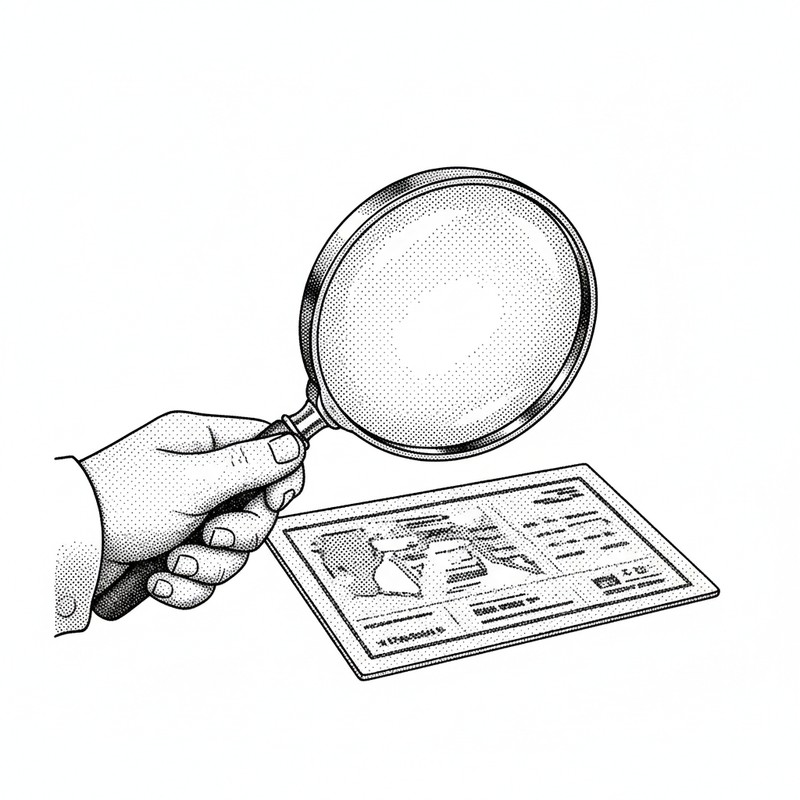
The meme version typically takes the form of an image (a card, a certificate, a formal-looking document) that “grants” the holder permission to say the N-word. Early versions were crude, just text on a white background. Later versions got elaborate: laminated cards with holograms, certificates signed by fictional authorities, anime characters presenting passes with grave solemnity.
The meme spread across every platform. Reddit dedicated entire subreddits to it. TikTok teens filmed “pass granting” ceremonies. Twitter accounts offered passes to celebrities in exchange for retweets. The format proved infinitely adaptable because it tapped into a genuine cultural tension. Everyone recognized the concept; the meme just gave it a visual language.
Does the meme version “exist”? Obviously. It exists the same way any viral internet format exists: as a shared cultural reference that millions of people recognize, reproduce, and riff on. You cannot seriously argue that the N-Word Pass meme is not real when it has been viewed, shared, and discussed billions of times across the internet.
But a meme is not a permission slip. Sharing a meme of an N-Word Pass card does not grant anyone anything, any more than sharing a meme of a million-dollar bill makes you rich. The meme captures the concept in image form. It does not replicate the social dynamics that the concept refers to.
The N-Word Pass as Physical Object: Also Real
Then there is us. The Official N-Word Pass. Trademarked. Produced. Sold (when in stock, which is rarely, because demand consistently outpaces our supply chain). Our pass exists as a physical metal card, professionally designed, legally trademarked, and purchased by thousands of people who understand exactly what they are buying.
What they are buying is not permission. It never was. What they are buying is a piece of satirical art that crystallizes an invisible cultural dynamic into something tangible. The card forces a conversation. When someone sees it in your wallet, they react. That reaction, whether it is laughter, discomfort, curiosity, or a thirty-minute debate about race and language, is the entire point.
You can read more about the philosophy behind our project on the About page, but the short version is this: we took something that already existed as an unspoken social phenomenon, gave it a physical form and a trademark, and used that to highlight the absurdity of trying to commercialize cultural permission. The pass exists as an object. The permission it implies does not transfer through metal and ink.
So in this sense, yes, the N-Word Pass exists. You can hold it. You can photograph it. You can show it to your friends. You just cannot use it as a defense in any conversation, argument, or HR meeting.
The N-Word Pass as Actual Authorization: This Is Where It Gets Complicated
Here is the question behind the question. When people ask “does the N-Word Pass exist,” they usually mean: “Is there a real, legitimate way for a non-Black person to obtain permission to say the N-word?”
The honest answer requires nuance that the internet is not known for providing.
On one hand, as we discussed above, informal social permissions between individuals are real. If your Black best friend of twenty years, in a private moment of trust, uses the word around you and signals that the dynamic is mutual, that is a real interpersonal agreement. It exists between the two of you, governed by your specific relationship, context, and mutual understanding.
On the other hand, no card, certificate, meme, website, or organization (including us, especially us) can grant universal permission to use the N-word. The word carries centuries of history that no single transaction can neutralize. Permission from one Black person does not constitute a blanket endorsement from all Black people. Cultural context shifts by setting, audience, tone, and about forty other variables that no laminated card can account for.
This is the central tension our project is built on. The pass “exists” in every sense except the one that people most want it to exist in. It exists as a concept, a meme, a physical product, and a cultural reference point. It does not exist as a universally recognized authorization to say a racial slur without consequences.
And that gap between what people want it to be and what it actually is? That gap is the satire.
Why the Question Keeps Getting Asked
The persistence of this question tells us something interesting about the current cultural moment. People keep asking “does the N-Word Pass exist” because the internet has flattened the boundaries between joke and sincerity, between meme and mandate, between satire and instruction manual.
When a teenager sees an N-Word Pass meme, they might genuinely wonder: is this a real thing? The visual language of the meme (official-looking documents, formal text, authoritative design) borrows from the aesthetic of real credentials. The line between parody and product has been erased by a decade of irony-poisoned internet culture where nothing is entirely serious and nothing is entirely a joke.
Our project lives in that ambiguity deliberately. The Official N-Word Pass looks official because that is the joke. The trademark is real because trademark law does not care about intent. The evaluations we publish on this site (see our assessments of Eminem, Bill Burr, and Kim Kardashian) follow a consistent methodology because consistency is funnier than randomness when you are operating in bureaucratic satire.
The question “does it exist” is, in a way, the perfect question for our project. It has no clean answer, and the discomfort of sitting with that ambiguity is exactly the conversation we want people to have.
The Philosophical Layer: What Does “Exist” Even Mean Here?
Indulge us for a moment.
If we are being rigorous about it, the question of whether the N-Word Pass “exists” depends entirely on what framework of existence you are using. This is not us being pretentious (okay, maybe slightly). This is a genuine philosophical point.
In a materialist sense, our metal cards exist. They have mass. They occupy space. They reflect light. They exist as much as any object exists.
In a social constructionist sense, the concept of the N-Word Pass exists because enough people believe in it and act on it. Money is paper we collectively agree has value. Marriage is a social institution we collectively agree carries meaning. The N-Word Pass occupies a similar space: it is a shared social fiction that produces real effects (conversations, debates, discomfort, laughter, self-reflection).
In a legal sense, our trademark exists. The United States Patent and Trademark Office processed it, assigned it a serial number, and entered it into the federal register. Whatever your feelings about the N-Word Pass, the law recognizes our claim to the phrase. That is a form of existence that most memes never achieve.
In a moral or ethical sense, the question of whether the pass “should” exist is different from whether it “does” exist. Many people feel strongly that no one should grant or receive permission to use a racial slur. That is a valid position. But moral objection to a thing does not make the thing non-existent. It just makes it controversial.
We contain multitudes. The pass exists in some dimensions and not in others. Welcome to the postmodern condition.
What the Search Results Will Not Tell You
If you Googled “does the N-Word Pass exist” and landed here, you probably also saw a collection of Reddit threads, Yahoo Answers relics, and opinion pieces offering tidy conclusions. Most of them fall into two camps.
Camp One says: “No, it is just a meme, it does not exist, stop asking.” This answer is too simple. It ignores the real social dynamics that inspired the meme and pretends that cultural concepts require physical form to be real.
Camp Two says: “Yes, your Black friend can give you one, and then you are good.” This answer is too simple in the other direction. It reduces a complex, context-dependent social negotiation to a one-time transaction and ignores the fact that one person’s comfort does not equal community consensus.
The real answer lives in the mess between those two positions. The N-Word Pass exists as a cultural phenomenon that captures something true about how trust, permission, and language work in multiracial societies. It does not exist as a formal authorization that anyone can issue, receive, or enforce.
Our project turns that messy truth into a metal card and dares you to figure out what it means. That is the whole game.
How Our Evaluations Fit In
When we publish an evaluation asking whether a particular celebrity has the N-Word Pass, we are engaging with the concept at its most layered. We are not actually granting or denying anyone permission to say a word. We are using the framework of “pass evaluation” to have a real conversation about cultural contribution, accountability, trust, and the complicated dynamics of race in public life.
Each evaluation weighs pros and cons, considers cultural context, and arrives at a verdict. The verdict is part of the satire. The analysis is real. We genuinely examine whether a public figure has contributed to or extracted from Black culture, whether they demonstrate accountability, and whether the communities most affected by their actions extend trust.
The format (bureaucratic evaluation of an absurd question) allows us to discuss serious topics without the preachy tone that makes most racial commentary feel like a college lecture. You can laugh at the premise while engaging with the substance. That dual function is by design.
So, Does It Exist?
Yes. And no. And conditionally. It depends on what you mean.
The N-Word Pass exists as a cultural concept rooted in real interpersonal dynamics. It exists as one of the internet’s most enduring meme formats. It exists as a physical product sold by a trademarked organization (that would be us). It exists as a framework for discussing race, language, trust, and cultural exchange.
It does not exist as a universal authorization. It does not exist as a transferable credential. It does not exist as a defense you can present when someone calls you out for saying something you should not have said.
The concept resists simple categorization, which is consistent with the complexity of the subject matter it addresses.
If you are still unsure whether it exists, consider this: you just read approximately 2,000 words about it, published on the website of the trademarked organization that produces it. If that is not existence, the word has lost all meaning.
Welcome to The Official N-Word Pass. The Board’s position on the matter is a matter of public record.