Introduction
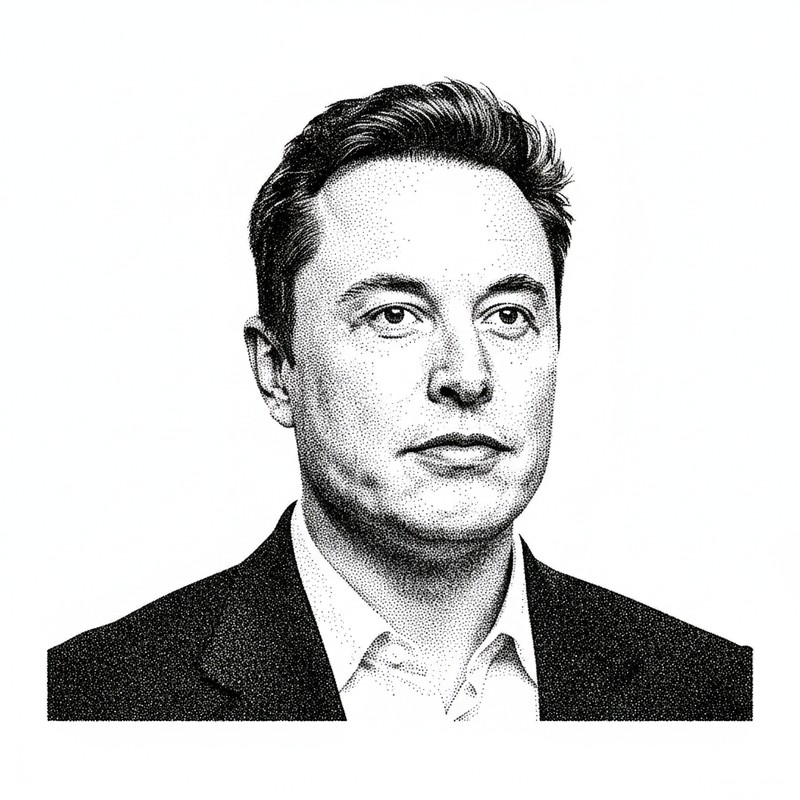
The Board of Review receives many applications that require careful deliberation, nuanced analysis, and extended internal debate. This is not one of them. Nevertheless, the volume of public inquiries regarding Elon Reeve Musk has reached a level that compels formal review. The Board operates on the principle that every applicant deserves a thorough evaluation, regardless of how clear the outcome may appear at the outset. We will therefore conduct a complete assessment, document our findings, and arrive at a verdict through the established process.
Mr. Musk was born on June 28, 1971, in Pretoria, South Africa. This fact alone does not disqualify an applicant. Many people were born in South Africa. Some of them are exemplary allies to Black communities. The relevance of Musk’s South African birth lies in the specific historical context: he was born into, raised within, and economically benefited from a society organized around the principle of apartheid, a system of institutionalized racial segregation and white supremacy that formally classified people by race and allocated resources, rights, and freedoms accordingly. The Musk family’s emerald mining interests in Zambia (the details of which Musk has alternately confirmed and disputed in interviews) placed them on the benefiting side of Southern Africa’s extractive colonial economy.
Musk left South Africa at seventeen, moving first to Canada and then to the United States, where he attended Queen’s University and the University of Pennsylvania before dropping out of a Stanford PhD program after two days to pursue internet ventures. The subsequent career trajectory is well-known: Zip2, PayPal, Tesla, SpaceX, Neuralink, The Boring Company, and, most relevant to this evaluation, the October 2022 acquisition of Twitter, which he subsequently renamed X.
It is the acquisition and management of X (formerly Twitter) that generates the majority of the Board’s concerns and the majority of the public inquiries. Under Musk’s ownership, the platform has undergone a series of changes that have directly and measurably impacted the experience of Black users and communities. Content moderation teams were gutted. Previously banned accounts associated with white nationalist movements were reinstated. The verification system was restructured in ways that amplified paying users (disproportionately white and male) while reducing the reach of legacy-verified accounts held by journalists, activists, and public figures, many of them Black. Hate speech monitoring organizations, including the Anti-Defamation League and the Center for Countering Digital Hate, documented significant increases in racial slurs and white supremacist content on the platform following the ownership change.
The Board has reviewed the file. The Board is ready to proceed. For context on how the Board evaluates technology and media figures, see our review of Joe Rogan. For our general evaluation methodology, visit our about page.
Cultural Context
The N-Word Pass, as the Board has stated many times, is a trust instrument rooted in communal relationships. It reflects a specific form of cultural closeness between a non-Black individual and Black communities, built through sustained engagement, demonstrated respect, shared experience, and reciprocal investment. The pass is not a business license. It is not a subscription service. It is not purchasable, transferable, or acquirable through stock options.
This distinction is worth emphasizing because Elon Musk’s approach to most things in life is transactional. He acquires companies. He purchases platforms. He hires and fires at scale. He approaches problems as engineering challenges to be optimized. Cultural relationships, however, do not optimize. They accumulate through the slow, unglamorous work of showing up, listening, and demonstrating that you understand the weight of what you are asking for.
South Africa’s apartheid system, which was not formally dismantled until 1994 (when Musk was twenty-two and had already left the country), created one of the most systematically racist societies in modern history. The system classified people as White, Black, Coloured, or Indian, and allocated everything from housing to education to employment on the basis of that classification. White South Africans, including the Musk family, benefited materially and socially from a system designed to exploit Black labor and suppress Black political power.
The Board does not hold individuals responsible for the political systems into which they are born. It does, however, consider how individuals reckon with those systems as they mature. Musk has not, to the Board’s knowledge, made any substantive public statement about apartheid’s legacy, his family’s position within it, or the obligations that might flow from having benefited from institutionalized white supremacy. He has joked about it in tweets. He has disputed details about the family emerald mine. He has not engaged with the subject in a way that suggests serious reflection.
This absence of reckoning is relevant to pass consideration. An applicant who grew up in the most formally racist society of the twentieth century and has never publicly grappled with that fact is an applicant whose relationship with racial justice remains, at best, unexamined.
The Case For
Employment Diversity at Tesla and SpaceX
Tesla and SpaceX employ thousands of Black workers across manufacturing, engineering, and corporate roles. Musk’s companies have created economic opportunities for Black Americans, particularly in manufacturing facilities located in communities with significant Black populations. The Fremont, California Tesla factory and the Boca Chica, Texas SpaceX facility both draw from diverse local labor markets. Employment is a form of economic participation, and the Board acknowledges it.
Technological Innovation Benefits Society Broadly
Musk’s contributions to electric vehicle adoption, space exploration, and renewable energy infrastructure benefit humanity broadly, including Black communities disproportionately affected by pollution, climate change, and environmental degradation. The Board does not typically evaluate applicants on the basis of general societal contribution, but notes this factor for completeness.
Some Black Public Figures Have Expressed Support
A small number of Black public figures, including Kanye West (during a particular period of his own public trajectory) and a handful of conservative commentators, have expressed support for Musk’s vision. The Board weighs public endorsements as part of its evaluation, though it notes that the endorsements in this case come from a narrow ideological segment and do not reflect broad community sentiment.
Free Speech Principles Have Theoretical Value
Musk has framed his management of X as a defense of free speech principles. In theory, a platform that allows more speech rather than less could benefit marginalized voices historically excluded from mainstream media. The Board acknowledges the theoretical argument while noting that its practical implementation has produced measurably different results.
The Case Against
The Platform He Owns Has Become a Haven for Racial Harassment
This is the central and most damaging element of the Musk file. Since acquiring Twitter/X, Musk has presided over a documented increase in hate speech, racial slurs, and white supremacist content on the platform. The Center for Countering Digital Hate reported a significant increase in the use of the N-word on the platform in the months following the acquisition. The Strategic Dialogue Institute found that hate speech targeting Black users increased measurably. These are not opinions. They are findings from independent research organizations using quantitative methodologies.
Musk did not create this content. But he created the conditions for its proliferation by gutting content moderation teams, reinstating banned accounts, and implementing algorithmic changes that amplified inflammatory content. When you own the building and you remove the fire exits, you bear responsibility for what happens during the fire.
Reinstated White Supremacist Accounts
Among the accounts reinstated under Musk’s ownership were those previously banned for explicit white supremacist content, harassment campaigns targeting Black users, and organized brigading against Black journalists and activists. Musk framed these reinstatements as free speech decisions. The Board frames them as choices that prioritized abstract principle over the concrete safety of Black users.
The “Free Speech” Framework Selectively Benefits Racists
Musk’s free speech absolutism has not been applied consistently. He has suspended accounts that criticized him, restricted the reach of journalists who covered him unfavorably, and banned links to competing platforms. The “free speech” framework appears to operate as a shield for content that Musk finds acceptable (including racial harassment) and a sword against content he finds personally inconvenient. This selective application undermines the principled justification for permitting hate speech proliferation.
Apartheid Background Without Public Reckoning
As discussed in the Cultural Context section, Musk grew up as a white person in apartheid South Africa and has never engaged in substantive public reflection about what that means. He has not discussed the system’s impact on Black South Africans. He has not acknowledged the ways his family’s wealth was connected to extractive colonial economics. He has not supported reparative efforts in South Africa or engaged with anti-apartheid legacy organizations. The Board finds this silence conspicuous and concerning.
Labor Discrimination Lawsuits at Tesla
Tesla has faced multiple lawsuits alleging racial discrimination and harassment at its manufacturing facilities. In 2022, a federal jury awarded $3.2 million to a Black former elevator operator at the Fremont factory who alleged persistent racial harassment, including the use of racial slurs by coworkers. The California Department of Fair Employment and Housing filed a separate lawsuit alleging widespread discrimination against Black workers at the same facility. Musk’s response to these allegations has been largely dismissive. An applicant whose own workplace is the subject of racial discrimination litigation faces an uphill evaluation under any circumstances.
Deeper Analysis
The Elon Musk case is, in one sense, straightforward. He scores poorly on virtually every metric the Board uses. Cultural engagement with Black communities: minimal. Reciprocity: absent in any targeted form. Humility: not a word typically associated with Mr. Musk. Trust: severely undermined by his management of a platform that has become measurably more hostile to Black users under his ownership.
But the case also illuminates something broader about the relationship between wealth, power, and cultural permission. Musk is, depending on the day’s stock prices, the richest or second-richest person on Earth. He owns a social media platform used by hundreds of millions of people. He has the ear of heads of state. He could, if he chose, direct resources toward Black communities on a scale that would dwarf the efforts of any individual the Board has ever evaluated.
He has chosen not to. And that choice, more than any single incident or statement, defines his application. The N-Word Pass is not about capacity. It is about demonstrated commitment. Musk has the capacity to be one of the most impactful allies Black communities have ever had. He has demonstrated, through his actions and inactions, that this is not a priority.
The comparison to other denied applicants is instructive. Iggy Azalea at least embedded herself in Black cultural spaces and put in years of ground-level work, however problematically. Joe Rogan has genuine, decades-long friendships with Black individuals who vouch for his character. Musk’s file contains no equivalent evidence of sustained, personal engagement with Black communities or culture. His connection to the evaluation criteria is almost entirely negative: a background in apartheid South Africa, a platform that amplifies racial harassment, a workplace with documented discrimination, and a public posture of indifference to it all.
The Board has occasionally been accused of being too lenient in its evaluations, of finding reasons to approve applicants whose records are mixed. This case presents no such temptation. The record is not mixed. It is consistently, thoroughly, and almost impressively devoid of the qualities the Board looks for.
Official Verdict
DENIED. The Board has determined that Elon Musk does not qualify for the Official N-Word Pass. The denial rests on the following grounds: an apartheid-era upbringing with no public reckoning, ownership and management of a platform that has become measurably more hostile to Black users, documented racial discrimination lawsuits at his flagship manufacturing company, the absence of any meaningful engagement with Black communities or culture, and a public posture that ranges from indifference to hostility toward concerns raised by Black individuals and organizations.
This is not a close call. The Board deliberated for the time required by procedural obligation, but the outcome was never in substantive doubt. Mr. Musk is encouraged to use his considerable resources for the benefit of communities whose safety and dignity have been compromised by the platforms and workplaces he controls. Such actions would not guarantee approval in a future review cycle, but they would represent a meaningful departure from the current trajectory.
The application is denied. The file is closed.