Introduction
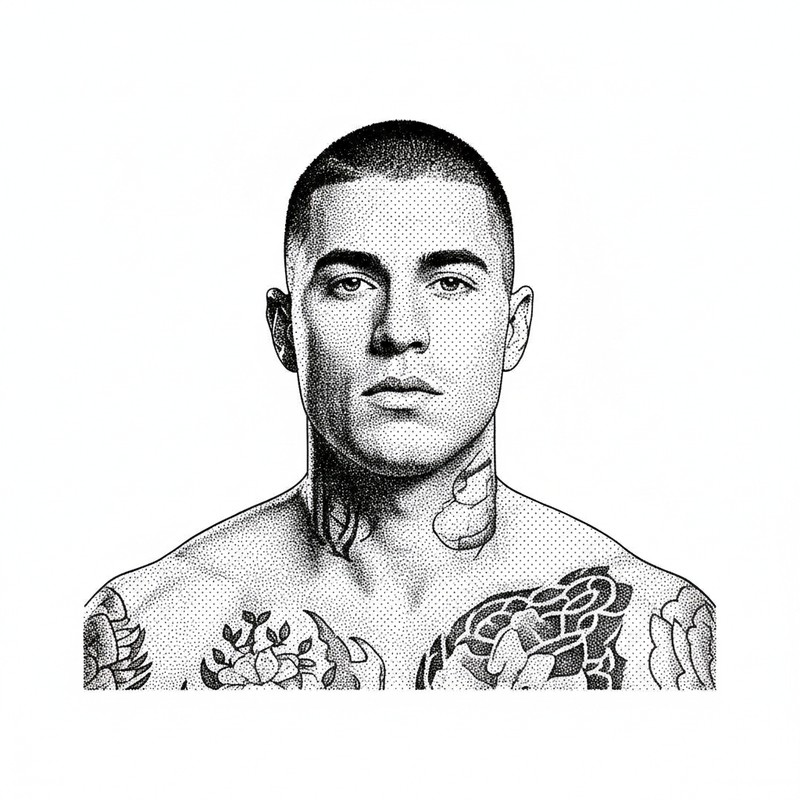
The Board of Review has been presented with what several members have described as “the most structurally complicated filing in recent memory.” The subject is Chester Marlon Hanks, born August 4, 1990, in Malibu, California, to Tom Hanks and Rita Wilson. Known variously as Chet Haze, Ya Boy, and (on certain corners of the internet) “the Hanks kid who does the accent,” Chet occupies a position in American celebrity culture that defies tidy categorization.
His childhood unfolded on Hollywood sets and along Pacific coastline. Family dinners reportedly included anecdotes from Steven Spielberg. Classmates were the children of studio executives. By any conventional metric, Chet Hanks was born at the apex of American cultural privilege. His father is, by broad consensus, one of the most universally liked human beings in the entertainment industry. His mother is an accomplished actress and producer. The safety net beneath Chet’s life is not a net. It is a trampoline made of Kevlar.
And yet, teenage Chet gravitated not toward the family business of prestige filmmaking but toward Eminem’s rhyme schemes, Busta Rhymes’s intensity, and the particular gravity of hip-hop culture. He enrolled at Northwestern University in 2008, pledged Kappa Sigma, and released a college-party single called “White and Purple,” a remix of Wiz Khalifa’s “Black and Yellow.” It generated the exact ratio of blog attention and side-eye that you would expect.
Chet did not graduate. He left school to pursue studio time in Los Angeles, a decision that launched a decade-plus stretch of viral moments, cultural controversies, and genuine personal struggle. In 2015, a shirtless, tattooed Chet appeared on the BET Awards red carpet speaking enthusiastic Jamaican patois. The internet responded with the full spectrum of its capabilities: memes, think pieces, outrage threads, and a small but vocal contingent of supporters who found his confidence entertaining. Chet defended the accent as an expression of genuine love for Jamaican friends and dancehall music. Critics characterized it as cultural cosplay.
In 2016, he battled opioid addiction. After rehab, he landed a recurring role on Empire as Blake Sterling, a white rapper navigating Black music spaces. The casting was either art imitating life or life imitating a very specific kind of audacity. In 2020, pandemic-era Instagram Live sessions brought back the patois, delivered at volume to millions of viewers. “BIG UP BIG UP THE WHOLE ISLAND” became both a catchphrase and a litmus test for one’s tolerance for cultural boundary crossing.
Chet’s connections to Black culture extend beyond viral clips. He cites Beenie Man and Kendrick Lamar as core influences. He trains with Black producers in Los Angeles studios. He dated Kiana Parker, a Black business owner, though the relationship ended in legal proceedings involving assault allegations from both parties.
The Board’s task is to evaluate whether Chet Hanks, after accounting for the patois, the privilege, the memes, the addiction recovery, and the intermittent acts of community investment, qualifies for the Official N-Word Pass. We proceed to the evidence.
Cultural Context
The N-word’s history is a catalog of American cruelty, from slave markets to lynch mobs to the casual deployment of the word in institutional settings designed to maintain racial hierarchy. Black communities later reshaped a variant into an internal greeting, a marker of shared experience and mutual recognition. The reclamation never erased the original wound. It simply built something on top of it. Outsiders who reach for the word risk tearing the foundation.
The “N-word pass” emerged as a social experiment conducted primarily in high school cafeterias and internet forums. Best friends printed them on notebook paper. TikTokers waved Sharpie-drawn cards at cameras. But the actual mechanics of Black cultural gatekeeping are more nuanced than any printable coupon suggests. A pass, if it exists at all, rides on trust, shared experience, and demonstrated investment. It is not a download.
Chet’s case is further complicated by the intersection of the N-word debate with Caribbean cultural borrowing. Jamaican dancehall’s influence on hip-hop created crossover vocabulary (tings, gyal, wagwan) that has been adopted by white artists from Snow to Justin Bieber. Sometimes Caribbean listeners appreciate the exposure. Sometimes they feel reduced to an aesthetic. When patois arrives attached to the N-word conversation, the temperature rises.
Chet positions himself as a genuine dancehall enthusiast. He vacations in Montego Bay. He has collaborated with producer Scott Storch. He uses patois in casual speech with the consistency of someone who has internalized it rather than someone performing it for a single Instagram Live. But he never grew up navigating stop-and-frisk or the linguistic profiling that penalizes Black and Caribbean speakers in schools, courtrooms, and job interviews. His accent is an option. For native speakers, it is often a liability. That asymmetry is central to this evaluation.
In 2021, Chet launched “White Boy Summer,” a tongue-in-cheek campaign that he described as an encouragement for white men to dress better and respect cultural boundaries. Black commentators had mixed reactions. Some found it funny. Others questioned why someone with his history of appropriation complaints felt qualified to brand a seasonal movement. The Board notes that “White Boy Summer” generated considerable discourse, most of it more confused than hostile. As evaluations of Post Malone and Eminem have illustrated, white engagement with Black culture exists on a spectrum, and placement on that spectrum depends on specifics.
The Case For
Sustained Dancehall Engagement
Based on the established criteria for evaluating cultural sincerity, the Board notes that Chet’s interest in dancehall music is not a recent development or a trend-chasing pivot. From college playlists to present-day studio sessions, he has consistently championed artists like Beenie Man and Vybz Kartel. The longevity of this engagement suggests authentic fandom rather than seasonal appropriation. Authentic fandom does not automatically confer a pass, but it establishes a baseline of sincerity that the Board considers relevant.
Documented Social Circles
Instagram and public appearances show Chet at social gatherings with Jamaican-American musicians, Black industry stylists, and Black producers. The body language in these images (and the Board has reviewed a considerable number of them) suggests comfort and familiarity on both sides. Community-level social acceptance, while not equivalent to a formal endorsement, indicates that at least some members of the relevant cultural groups consider Chet a legitimate participant rather than an interloper.
Restraint in Recorded Material
Despite years of freestyle snippets, studio recordings, and live performances, Chet has not been documented using the N-word on record. In an era when a single clip can define a career, this sustained restraint suggests an understanding of where the line is, even if his patois draws him close to it.
Candor About Addiction and Recovery
Chet speaks openly about opioid addiction and recovery, frequently crediting Black therapists and church mentors who supported him through the process. The Board has observed, across multiple evaluations, that vulnerability in shared struggle contexts tends to build cultural goodwill. Chet’s willingness to name the specific people and communities that helped him recover, rather than presenting recovery as a solo achievement, reflects an understanding of interdependence.
Incremental Community Investment
He donated performance fees from a 2022 Kingston concert to a local youth soccer program. The Board characterizes this as modest rather than transformative, but it represents a directional shift from consumption to contribution. The trajectory matters.
The Case Against
Patois as Performance
The BET Awards red carpet incident remains Chet’s most widely circulated cultural moment, and the Board’s assessment is that it did more damage than any subsequent gesture has repaired. The clip reads as caricature rather than celebration. Caribbean culture was reduced to a punchline delivered by a shirtless celebrity’s son for the entertainment of a live audience and, subsequently, the entire internet. Trust, once converted into a meme, is difficult to reconstruct.
Privilege Without Accountability
As Tom Hanks’s son, Chet can deploy patois for social media engagement and shed it entirely in courtrooms, casting offices, and family gatherings. He toggles between cultural identities with the ease of someone changing a filter on a photo. Black and Caribbean speakers do not have that option. Their speech patterns carry social consequences in professional, educational, and legal contexts. The Board has consistently held, including in evaluations of Kim Kardashian and Ariana Grande, that the ability to opt out of a cultural identity when it becomes inconvenient is a significant mark against pass eligibility.
Shallow Investment Record
The Board’s research team found no evidence of long-term, sustained financial commitment to Jamaican schools, Caribbean cultural preservation organizations, or U.S.-based Black community initiatives. The Kingston soccer donation was a single event. Occasional giving, when set against years of cultural borrowing, reads as reactive rather than rooted.
White Boy Summer as Branding Exercise
After years of appropriation criticism, launching a branded campaign centered on whiteness struck many observers as either oblivious or deliberately provocative. The accompanying single featured dancehall cadences and bikini-clad models, combining the aesthetics Chet had been criticized for borrowing with a marketing concept that centered his own racial identity. The Board finds this difficult to reconcile with a credible claim of cultural sensitivity.
Legal Proceedings and Their Perceptual Impact
The court battles with Kiana Parker include allegations (from both parties) of aggression and, in some accounts, racial slurs. These allegations are unproven. The Board does not treat allegations as findings of fact. However, in the court of public perception, which is the jurisdiction most relevant to N-Word Pass eligibility, these headlines have introduced doubt that Chet has not adequately addressed.
Deeper Analysis
The Board observes that Chet Hanks represents a case study in the difference between cultural affection and cultural investment. He clearly loves dancehall. He clearly enjoys the energy of Black social spaces. He clearly feels a genuine pull toward musical traditions rooted in the African diaspora. None of that is in dispute.
What is in dispute is whether affection, absent proportional investment, meets the threshold for pass issuance. Culture flows across borders, accents cross oceans on Wi-Fi signals, tattoos borrow iconography from traditions their wearers have never studied, and Instagram compresses entire subcultures into 15-second clips. The risk emerges when fluid borrowing ignores the structural barriers that the borrowed culture still faces.
Black and Caribbean speech patterns carry social penalties in workplaces, schools, and courtrooms. A Hollywood heir who dips into the dialect for content creation skates past those penalties entirely. That privilege gap amplifies resentment, and Chet’s sporadic charitable activity does not yet offset the imbalance.
Hip-hop, as this Board has noted repeatedly, loves both authenticity and redemption arcs. If Chet connected his patois enthusiasm to scholarship funds, Jamaican studio residencies for underserved youth, or sustained partnerships with Caribbean cultural organizations, the Board’s calculus could shift. The trajectory is not impossible. It simply has not materialized at scale.
The Board also notes, in Chet’s favor, that he has demonstrated a capacity for growth. The opioid recovery process, by all accounts, forced a reckoning with his own limitations and dependencies. That kind of personal transformation can, over time, extend into cultural responsibility. The question is whether it has extended far enough, fast enough.
Official Verdict: APPROVED
After extensive evaluation, the Board of Review has determined that Chet Hanks receives the Official N-Word Pass, though this approval carries the narrowest margin in the Board’s recent history.
The approval rests on sustained (if imperfect) cultural engagement, a documented restraint from using the slur in recorded material, genuine recovery-community bonds with Black mentors, and a trajectory that, while slow, points toward reciprocity rather than away from it. The Board also weighs the fact that multiple members of the communities Chet engages with have expressed, publicly and in social settings, a degree of acceptance that the Board is not positioned to override.
However, Chet, the Board wishes to be direct: this pass is provisional in spirit. The patois needs to be matched with investment. The cultural borrowing needs to be balanced with cultural giving. The Kingston soccer donation was a start, not a finish. If you love the riddim, fund the studios that produce it. If you love the language, support the speakers who face consequences for using it in contexts where you never will. The Board will be watching, and so will everyone else.