Overview
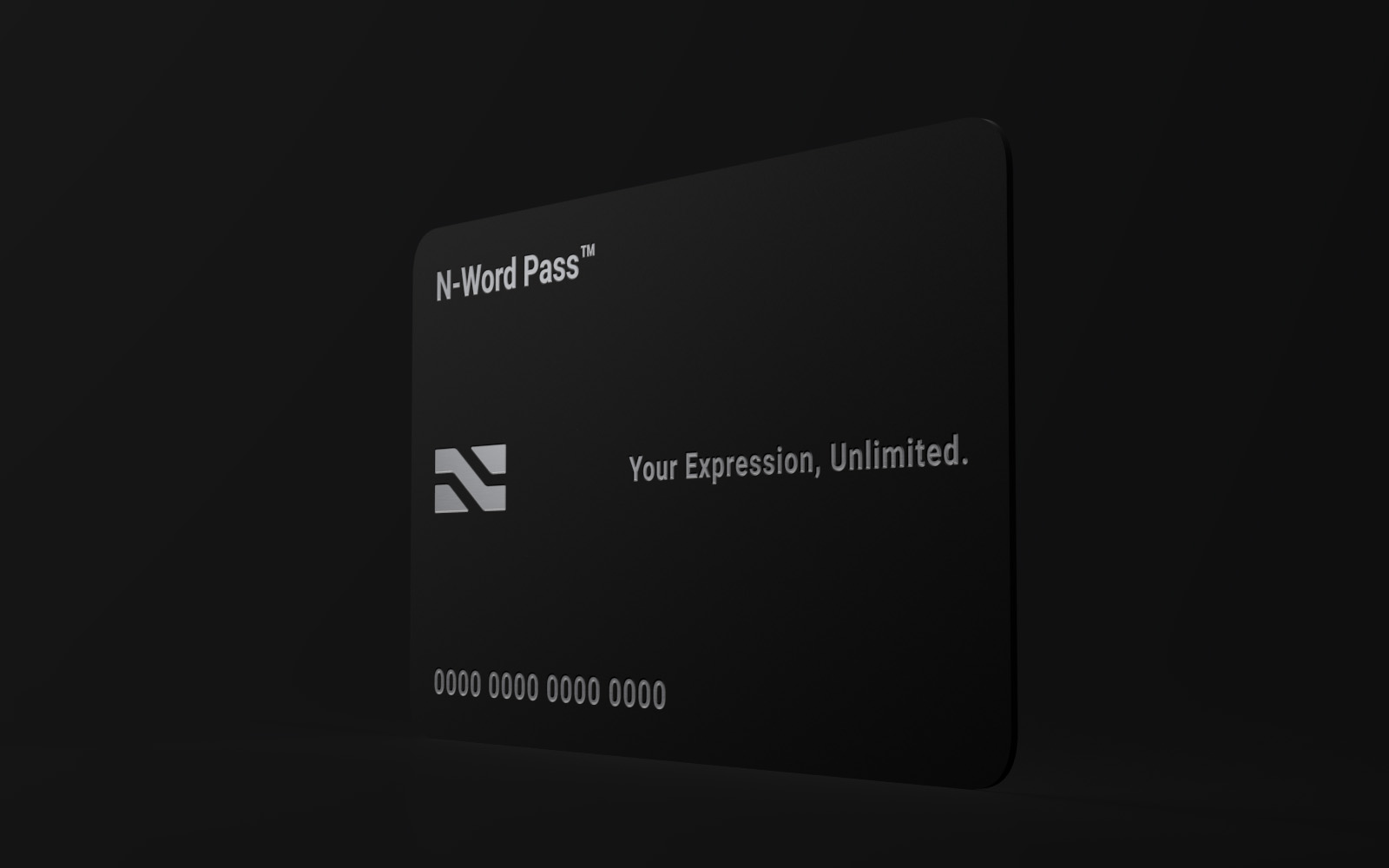
The search query “N-Word Pass template” returns approximately what you would expect: a collection of downloadable images, editable PDFs, Canva projects, and Google Slides files that allow anyone with a printer and a sense of occasion to produce their own N-Word Pass. The templates range from crude (white text on a black rectangle) to surprisingly detailed (mock holograms, serial number fields, expiration dates set in the year 2099). Some include blanks for the holder’s name. Some include blanks for the “issuing Black friend.” A few include terms and conditions, which is the kind of commitment to format that the Board would admire if it were not directed at producing unauthorized replicas of a trademarked product.
Every one of these templates is counterfeit. None are affiliated with The Official N-Word Pass. None carry verification codes that authenticate through our verification portal. None are protected by the registered trademark held by this organization with the United States Patent and Trademark Office. They are, in the most precise legal terminology available, unauthorized reproductions of a concept we own.
This page explains the history of N-Word Pass templates, why they proliferated, what makes them illegitimate, and what the Board’s position is on their continued existence. It also directs readers to the authorized products, because the Board is an institution and institutions convert explanations into sales when the opportunity presents itself.
A Brief History of N-Word Pass Templates
The N-Word Pass template predates this organization. That is a fact the Board acknowledges openly, because intellectual honesty is one of the few things that costs nothing and appreciates over time.
The earliest templates appeared in the mid-2010s, concurrent with the N-Word Pass meme’s rise across Reddit, Twitter, and gaming communities. The format was simple: a rectangular graphic resembling an ID card, with fields for the holder’s name and an “authorized by” line. These early templates were not commercial products. They were meme formats, shared freely across platforms as part of the broader N-Word Pass joke ecosystem. They circulated through group chats, Discord servers, and image boards with the same casual velocity as any other meme template.
By 2018, the templates had evolved. Graphic designers (amateur and professional) began producing higher-quality versions with custom typography, borders, backgrounds, and mock-official design elements. Some were created as jokes. Some were created as genuine design exercises. A few were created with evident care and attention to detail, which raises the philosophical question of whether a counterfeit can be admirable as a craft object even while remaining illegitimate as a credential. The Board’s answer is yes, but admiration does not constitute authorization.
The Canva era brought template creation to the masses. Canva’s drag-and-drop interface allowed anyone to produce a passable (in multiple senses of the word) N-Word Pass design without graphic design skills. Templates began appearing on Canva’s public library, on Pinterest boards, on teachers’ resource sites (the Board chooses not to dwell on this one), and across social media as downloadable assets. The barrier to producing an unofficial N-Word Pass dropped to approximately zero.
The proliferation accelerated further with AI image generation tools. Users could now prompt Midjourney, DALL-E, or Stable Diffusion to produce “realistic N-Word Pass card designs,” and the outputs were sometimes disturbingly professional. The line between an obvious meme and a convincing counterfeit narrowed, which is a sentence that applies to many things in the AI era and to the N-Word Pass in particular.
Our generator article covers the broader ecosystem of automated pass creation tools. The template ecosystem is related but distinct: generators produce a pass for you; templates give you the tools to produce one yourself. Both are unauthorized. The template is the DIY version of the same problem.
Why Templates Proliferated
The answer is not complicated: the N-Word Pass is a compelling visual format, and people like making things.
The card format, specifically, invites reproduction. Everyone understands what an ID card looks like. Everyone has held a driver’s license, a student ID, a library card. The format is so deeply embedded in daily life that it functions as a universal template in itself. When the N-Word Pass meme adopted the card format, it inherited all the cultural associations that come with card-shaped credentials: authority, identity, access. The template just formalized what the meme had already implied.
The humor of the N-Word Pass also lends itself to personalization. A generic meme is funny. A meme with your name on it is funnier, at least to you and possibly to the group chat. Templates let people insert themselves into the joke, which increases engagement, which increases sharing, which increases the demand for more templates. The cycle is self-reinforcing.
Social media incentives play a role as well. Creating and sharing a visually polished N-Word Pass template generates engagement: likes, shares, comments, arguments. The template becomes content. The content generates attention. The attention justifies creating more templates. Platform algorithms do not distinguish between authorized and unauthorized content. They measure engagement, and N-Word Pass templates engage.
Finally, the commercial impulse. Some template creators monetize their work through ad-supported downloads, Patreon memberships, or direct sales. A handful sell “premium” templates with additional design features. At least one sells a “customizable N-Word Pass template pack” that includes multiple designs and a font bundle. The Board notes this with the institutional weariness of an organization that has watched its concept be monetized by people who did not build it, trademark it, or invest in the infrastructure that makes it work.
What Makes Them Illegitimate
The Board’s position on templates is grounded in three categories of objection: legal, functional, and conceptual. All three matter.
Legal: Trademark Infringement
The Official N-Word Pass is a registered trademark. The Board holds it. Products that use the phrase “N-Word Pass” in a brand-identifying or commercial context without our authorization are potentially infringing on that trademark. Templates that present themselves as producing “official” passes, or that incorporate design elements associated with our brand, cross the line from meme participation into intellectual property violation.
The Board does not send cease-and-desist letters to every person who makes a meme. The meme ecosystem is vast, and policing it comprehensively would be neither practical nor consistent with the project’s spirit. But templates that are sold commercially, that present themselves as official or legitimate, or that replicate our trademarked branding are in a different category. Commercial exploitation of a registered trademark is infringement. The Board’s legal counsel has confirmed this. The Board’s legal counsel was mildly surprised to be consulted on this topic, but adapted quickly.
Functional: No Verification
The most immediate practical difference between an unofficial template and an Official N-Word Pass is the verification code. Every product sold through our shop carries a unique alphanumeric code registered in our database and verifiable through the portal. Templates do not carry legitimate verification codes because template creators do not have access to our database. A template might include a field labeled “Verification Code” or “Serial Number,” but the code is either blank, user-generated, or randomly assigned. It does not connect to anything. It verifies nothing.
This matters because the verification system is what distinguishes a credential from a decoration. A credential can be checked. A decoration can only be admired. The Official N-Word Pass was designed to be checkable because the act of checking, of pulling out your phone, scanning the QR code, and receiving an institutional confirmation, is part of the satirical experience. A template that skips verification is missing the infrastructure that makes the product work as satire.
The N-Word Pass Card article details how the verification system operates. The certificate article explains how the same system applies to the digital format. Both are worth reading if you want to understand what “official” means in this context.
Conceptual: Satire Requires Commitment
This is the objection that matters most to the Board, though it is the hardest to quantify in a legal filing.
The Official N-Word Pass works as satire because it is committed to the fullest degree. The metal card is manufactured from stainless steel. The trademark is registered with a federal agency. The verification system is built and maintained. The editorial content is researched and written with institutional rigor. The evaluations of public figures run thousands of words each, analyzing cultural contribution, community trust, and reciprocity with the dry seriousness of a government audit. Every element of the project is designed to be indistinguishable from a legitimate institution, because the tension between the institutional presentation and the absurd premise is where the commentary lives.
Templates collapse that tension. A homemade card printed on inkjet paper does not produce the same cognitive dissonance as a metal card with a registered trademark and a working QR code. The satire depends on the audience’s momentary uncertainty: is this real? That uncertainty is the space where the commentary operates. A template that is obviously homemade eliminates the uncertainty and, with it, the commentary. What remains is just a piece of paper with “N-Word Pass” on it, which is not satire. It is a label.
The Board does not object to templates because they are competition. The Board objects because they are bad satire, or more precisely, they are the raw materials for bad satire. A tool that lets anyone produce an unconvincing imitation of a carefully constructed satirical object works against the project’s purpose. The Official N-Word Pass asks serious questions through absurd means. Templates ask no questions. They just produce cards.
The Harm of Unofficial Templates
Beyond the legal, functional, and conceptual objections, the Board notes several specific harms produced by the template ecosystem.
Normalization without context. Templates strip the N-Word Pass concept of its contextual framework and reduce it to a graphic. When someone prints a template pass and presents it without the accompanying conversation about race, trust, and cultural permission, the pass becomes a prop for casual racism rather than a vehicle for engagement. The Board has documented instances where template-produced passes were used in workplace and school settings as “jokes” that produced real harm. The absence of institutional context turns the format into a weapon rather than a conversation starter.
False legitimacy claims. Some template creators present their products as official, affiliated, or authorized. They are not. Buyers or users who believe they have obtained a legitimate pass from a source other than our shop have been misled. The gap between what they believe they have and what they actually have (a picture someone designed in Canva) is the gap between a credential and a printout.
Trademark erosion. In trademark law, a mark can become “genericized” if it is used so broadly without enforcement that the public no longer associates it with a specific source. The Board’s legal counsel has advised that widespread template use incorporating the “N-Word Pass” mark could, over time, complicate enforcement efforts. The Board does not believe this threshold has been reached, but the Board also does not intend to find out.
What to Do Instead
If you arrived at this page searching for an N-Word Pass template, the Board offers three alternatives:
Purchase the Official N-Word Pass. The metal card and the digital certificate are available through the shop. Both carry unique verification codes, trademark protection, and the institutional weight that no template can replicate. The certificate, in particular, serves many of the same purposes a template would (digital file, printable, displayable) with the added benefit of being the real thing.
Engage with the content. The evaluations published on this site (Eminem, Kim Kardashian, Post Malone, Donald Trump, and many others) are free to read. They address the questions about race, language, and trust that the N-Word Pass concept points toward. If the conversation is what you are after, the conversation is available at no cost.
Think about why you want one. This is the alternative the Board recommends most frequently and the one that is most frequently ignored. The desire for an N-Word Pass, whether from our shop or from a template, reflects something worth examining. What permission are you seeking? From whom? Why does the desire persist after being told that no card, template, or credential can provide it? These questions are more valuable than any template, and unlike a template, engaging with them honestly might actually change something.
Conclusion
Unofficial N-Word Pass templates are counterfeit. They carry no verification codes, no trademark authority, and no connection to the organization that holds the registered mark. They reduce a carefully constructed satirical project to a printable graphic, stripping away the institutional infrastructure that makes the satire work.
The Board does not expect templates to disappear. The internet produces what the internet produces, and the Board has neither the resources nor the inclination to police every Canva project tagged “N-Word Pass.” But the Board does expect that anyone who reads this page understands the difference between a template and the trademarked product it imitates. The difference is verification, trademark protection, institutional commitment, and the hundreds of hours of editorial, design, and operational work that stand behind every product sold through the shop.
The Official N-Word Pass is in the shop. The certificate is available digitally. The card is available when production runs allow. The evaluations are free to read. The rules are published. The FAQ answers remaining questions.
Templates are free and they are worth what you pay for them. The Official N-Word Pass costs money because it costs money to build an institution. The Board trusts that the distinction is clear. The portal is at /verify/. Enter the code. See what comes back.