Introduction
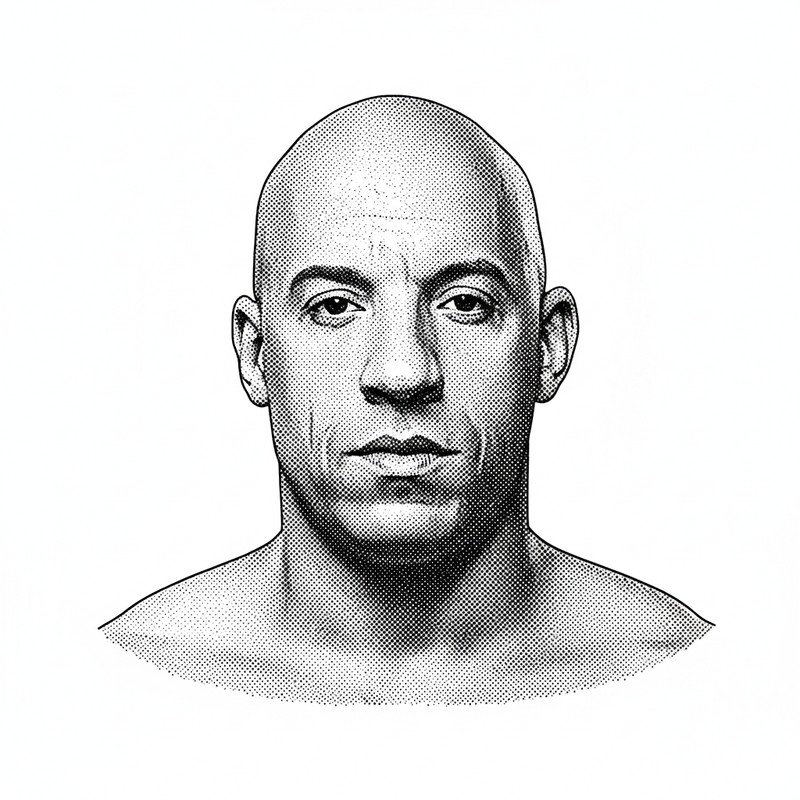
Case File #VD-2026-0215. Subject: Mark Sinclair, known professionally as Vin Diesel. Filed under: Action Film Stars; Individuals of Deliberately Unspecified Ethnic Background; Persons Whose Entire Public Identity Is Built on the Concept of Family, a Word He Has Said in Films More Times Than the Board’s Research Team Was Willing to Count.
The Board of Review has opened a formal evaluation into the N-Word Pass eligibility of Mark Sinclair, a man whose racial identity has been the subject of public speculation for approximately three decades, during which time Mr. Sinclair has provided exactly enough information to sustain the speculation without ever resolving it. The question before the Board is whether the available evidence of Mr. Sinclair’s racial heritage, combined with his public engagement with multiracial identity, satisfies the criteria for pass issuance.
The biographical record presents immediate complications. Mark Sinclair was born on July 18, 1967, in Alameda County, California. He has stated publicly that he never knew his biological father. He was raised by his mother, Delora Sherleen Vincent, and his stepfather, Irving H. Vincent, who is Black and was a theater manager and acting instructor in New York’s Greenwich Village. Vin Diesel grew up in the housing projects of Greenwich Village, a neighborhood whose cultural composition in the 1970s and 1980s was significantly more diverse than its current wine-bar-and-boutique iteration would suggest.
Here is what Mr. Diesel has said about his racial background: he is “a person of color.” He has described himself as “definitely a person of ambiguous or multicultural ethnicity.” He has stated that he considers himself multiracial. He has not, in any documented public statement, specified which races constitute that multiracial identity. His mother appears, in available photographs, to be white. His stepfather is Black. His biological father is unknown, at least publicly.
The Board notes this ambiguity without irritation, though the filing process would have been simplified by specificity. The evaluation proceeds on the available evidence.
Cultural Context
The N-Word Pass evaluation framework is accustomed to processing biracial applicants with clearly identified parentage. The Drake evaluation and the Doja Cat evaluation both involved subjects whose Black parentage was publicly known and documented. Mr. Diesel’s case is different because the racial identity of his biological father is not part of the public record.
What is part of the public record is the following: Vin Diesel was raised by a Black stepfather in a multiracial urban environment. He has consistently identified as a person of color. He has addressed racial identity in his creative work, most notably in his 1995 short film “Multi-Facial,” a semi-autobiographical piece about a multiracial actor who is rejected for roles because he does not fit neatly into any racial casting category. The film was screened at the Cannes Film Festival and caught the attention of Steven Spielberg, who subsequently cast Diesel in “Saving Private Ryan.”
The Board evaluates “Multi-Facial” as a significant piece of evidence because it demonstrates that Mr. Diesel’s engagement with racial identity is not retroactive or opportunistic. In 1995, before “The Fast and the Furious,” before Dominic Toretto, before the family, Mark Sinclair was making art about the experience of being racially ambiguous in a society that demands racial clarity. That creative act speaks to a lived experience with racial identity that the Board weighs heavily.
The Case For
Raised by a Black Stepfather in a Black Cultural Environment
Irving H. Vincent, Vin Diesel’s stepfather, is a Black man who raised Mark Sinclair from infancy. The Board has established in previous evaluations that racial identity is not exclusively biological. Cultural formation matters. An individual raised within Black family structures, exposed to Black cultural norms, and shaped by a Black parental figure has a relationship to Black culture that is formed through daily life rather than external adoption.
Vin Diesel grew up in his stepfather’s world: Greenwich Village theater, a multiracial neighborhood, a household shaped by Black cultural practices. The Board notes this formation as substantial evidence of cultural connection, regardless of the unresolved question of biological heritage.
”Multi-Facial” Demonstrates Authentic Engagement with Racial Identity
The 1995 short film is, in the Board’s assessment, the single most compelling piece of evidence in this file. “Multi-Facial” depicts the experience of a multiracial actor navigating an industry that wants him to be one thing when he is many things. The film was written, produced, directed by, and starring Vin Diesel. It was personal work created at personal expense, before fame provided any commercial incentive for racial self-examination.
The Board notes that individuals who are performing racial ambiguity for strategic purposes do not typically make independent short films about the pain of racial ambiguity and screen them at Cannes. “Multi-Facial” is the work of someone processing genuine lived experience through art.
Consistent Public Identification as a Person of Color
Throughout his career, Vin Diesel has consistently described himself as multiracial and as a person of color. He has not wavered on this identification. He has not adopted it when convenient and abandoned it when inconvenient. He has maintained it in interviews, in public appearances, and in his creative work across three decades. The Board notes this consistency as evidence of genuine identity rather than strategic positioning.
The Fast & Furious Franchise Models Multiracial Community
While the Board does not typically evaluate fictional output as evidence of personal cultural engagement, the “Fast and Furious” franchise warrants mention because of the degree to which Vin Diesel has shaped it as a producer and creative force. The franchise features one of the most consistently diverse casts in Hollywood blockbuster history. Black, Latino, Asian, and multiracial characters are presented as equals within the “family” structure that the films celebrate. This casting is not accidental. It reflects creative decisions made by a producer who has used his commercial leverage to ensure multiracial representation at the blockbuster level.
This is a form of cultural contribution that operates through institutional power. Mr. Diesel used his position to create a franchise where multiracial identity is normalized and celebrated. The Board notes this contribution as evidence of sustained engagement with the principles the N-Word Pass evaluation rewards.
Greenwich Village Upbringing Provided Genuine Urban Multiculturalism
The Greenwich Village of the 1970s and 1980s, where Vin Diesel grew up in the Westbeth Artists Community housing project, was a neighborhood defined by cultural diversity, artistic experimentation, and proximity between racial and ethnic groups. This was not the sanitized, commercial Greenwich Village of the current era. It was a working artists’ community where Black, white, Latino, and Asian families lived in close quarters, and where cultural exchange was a daily reality rather than an aspirational concept.
The Board notes this environment as the formative context in which Mr. Diesel’s multiracial identity was shaped. Growing up in Westbeth, raised by a Black stepfather and a white mother, surrounded by artists and performers of every background, is the kind of formative cultural immersion that the Board’s framework evaluates favorably.
The Case Against
The Biological Heritage Remains Publicly Unresolved
The Board must address the elephant in the file. Vin Diesel has never publicly identified the racial background of his biological father. While the Board respects an individual’s right to privacy regarding family matters, this privacy creates an evidentiary gap. The Board’s framework evaluates identity based on available evidence. When a component of that identity is deliberately withheld from the public record, the evaluation proceeds with incomplete information.
The Board does not accuse Mr. Diesel of deception. The Board notes that the unresolved question creates a space for speculation that ranges from reasonable to conspiratorial, and that the Board would prefer to evaluate a complete record.
Racial Ambiguity Can Function as a Form of Privilege
There is a legitimate argument that racial ambiguity, when an individual can move through the world being perceived as white, Black, Latino, or other depending on context, provides a form of social flexibility that is itself a privilege. A person perceived as white in one room and as a person of color in another navigates racial dynamics differently than a person who is unambiguously read as Black in every room.
The Board notes this argument without endorsing it as disqualifying. Racial ambiguity is not chosen. It is a consequence of mixed heritage, and the discomfort it creates, the constant negotiation of “what are you,” the sense of not fully belonging to any category, is itself a specific form of racial experience that “Multi-Facial” documented with evident sincerity.
Limited Public Engagement with Racial Justice Issues
Vin Diesel’s public persona is defined by action films, car chases, and the concept of family. It is not defined by public advocacy on racial justice issues. The Board has reviewed the public record for statements, donations, or institutional engagement related to the systemic issues affecting Black communities and finds the record sparse. This does not necessarily indicate indifference. It may indicate a preference for privacy in matters of social engagement. But the Board evaluates what is on the record, and what is on the record is limited.
The “Family” Brand Could Be Read as Post-Racial Evasion
A less charitable reading of the “Fast and Furious” franchise’s multiracial casting is that it presents a post-racial fantasy in which race is irrelevant to the bonds between people. While the Board acknowledges the appeal of this vision, it also notes that post-racial narratives can function as a way of avoiding engagement with the specific, ongoing reality of racism. The franchise does not address systemic racism. It does not engage with the differential experiences of its characters based on race. It presents a world where family transcends race, which is aspirationally appealing and structurally evasive.
Deeper Analysis
The Vin Diesel evaluation requires the Board to assess a category of applicant that defies the standard framework: the racially ambiguous individual who has been raised within Black cultural structures, who identifies as a person of color, but whose biological heritage remains partially undocumented in the public record.
The Board’s determination rests on a fundamental question: is cultural formation sufficient to establish the identity component of the evaluation, even in the absence of biological confirmation?
The Board determines that it is. The reasoning is as follows. Racial identity in America is not a biological test. It is a social, cultural, and experiential category. A person raised by Black parents in Black cultural environments, who has navigated the world as a person of ambiguous racial identity, who has processed that experience through personal creative work, and who has consistently identified as a person of color for three decades, has a relationship to Black culture that is formed through lived experience. That lived experience is what the Board evaluates, and in this case, the lived experience supports the application.
The Obama evaluation established the principle that biracial identity fully satisfies the Board’s identity criterion. The Vin Diesel case extends that principle into murkier territory: the individual whose specific biological heritage is unconfirmed but whose cultural formation is demonstrably rooted in Black family and community structures. The Board finds this extension reasonable, if imperfect.
Official Verdict
APPROVED. The Board of Review has determined that Mark Sinclair, known professionally as Vin Diesel, meets the criteria for issuance of the Official N-Word Pass.
The determining factors are as follows: the subject was raised from infancy by a Black stepfather within a multiracial cultural environment; his 1995 short film “Multi-Facial” demonstrates authentic, lived engagement with the complexities of racial identity that predates any commercial incentive for such engagement; his consistent, three-decade public identification as a person of color and multiracial individual demonstrates sustained identity commitment; and his use of institutional power to ensure diverse representation in the “Fast and Furious” franchise constitutes cultural contribution through commercial infrastructure.
The Board notes the evidentiary gap created by the undisclosed identity of the subject’s biological father. This gap introduces an element of uncertainty that the Board acknowledges but does not find disqualifying, given the weight of the cultural formation evidence.
The pass is issued with standard conditions. It is a privilege subject to ongoing community review. The Board advises the subject that, should he choose to provide additional information about his biological heritage at any point, the file will be updated accordingly. Until then, the evaluation stands on the evidence of cultural formation, personal identity, and creative engagement, which the Board finds sufficient.