Introduction
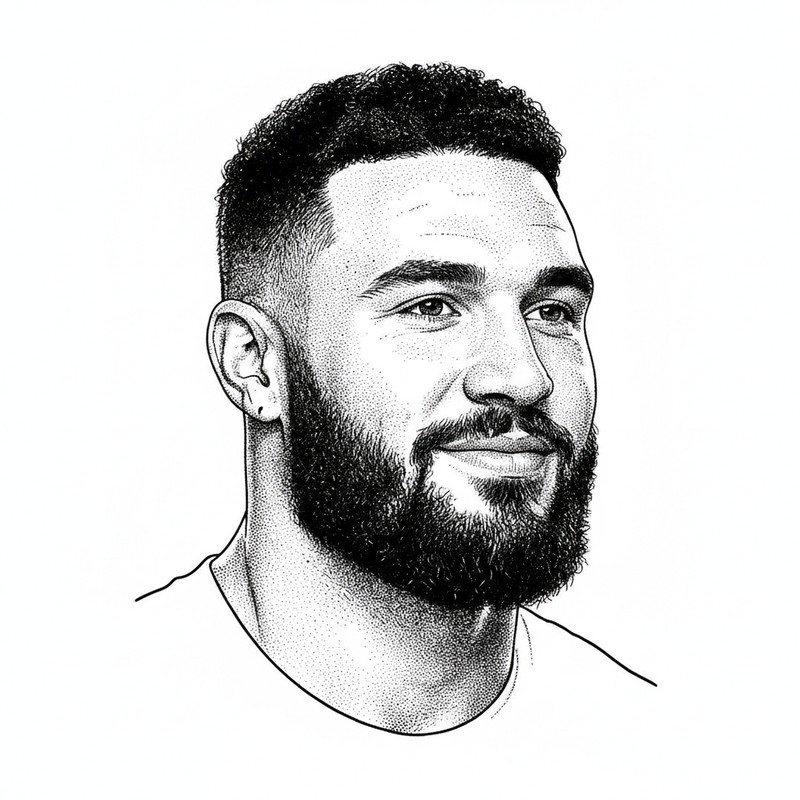
Case File #TC-2025-0615. Subject: Timothee Hal Chalamet. Filed under: French-American Actors; Former LaGuardia High School Students; Men Whose Jawline Has Generated More Internet Commentary Than Most People’s Entire Careers; Individuals Filed Under “Gen Z Cultural Figures” Despite Having No Documented Connection to the Culture This Board Evaluates.
The Board of Review has opened a formal evaluation into the N-Word Pass eligibility of Timothee Hal Chalamet, an actor of French-American heritage, a person whose cheekbones have been described in major publications with the kind of reverence typically reserved for architectural landmarks, and a young man who grew up in Hell’s Kitchen, Manhattan, during a period when Hell’s Kitchen was less “Hell” and more “a neighborhood where two-bedroom apartments cost $4,000 a month.”
The Board will acknowledge at the outset that this evaluation was prompted not by any specific incident involving Mr. Chalamet and the N-word but by the volume of public search queries the Board’s analytics division has flagged. The internet wants to know. The Board answers when asked. That is the mandate.
The biographical record. Timothee Hal Chalamet was born on December 27, 1995, in New York City. His father, Marc Chalamet, is a French editor at UNICEF. His mother, Nicole Flender, is an American former Broadway dancer of Russian Jewish and Austrian Jewish descent. He grew up in Hell’s Kitchen, attended the Fiorello H. LaGuardia High School of Music & Art and Performing Arts (the “Fame” school), and briefly attended Columbia University and NYU before his acting career rendered higher education redundant.
He broke through with “Call Me by Your Name” (2017), received an Academy Award nomination at age twenty-two, and proceeded to appear in “Little Women,” “Dune” (Parts One and Two), “Wonka,” and, most relevantly for this evaluation, “A Complete Unknown” (2024), in which he portrayed Bob Dylan. The Dylan biopic is relevant because Dylan himself borrowed extensively from Black musical traditions, making Chalamet an actor portraying a white artist who was influenced by Black artists, which positions him at approximately three degrees of separation from the culture this Board evaluates. The Board notes the distance.
Cultural Context
The N-Word Pass evaluation framework assesses genuine cultural engagement, reciprocity, and communal trust. It was designed for cases where a meaningful intersection between the applicant and Black culture exists and requires evaluation. In Mr. Chalamet’s case, the Board must first determine whether such an intersection exists at all before proceeding to evaluate its quality.
Mr. Chalamet’s cultural position is that of a Gen Z icon whose fame derives from acting talent, physical appearance, and an ability to dress in a manner that fashion publications describe as “effortlessly cool.” His public persona does not include documented engagement with hip-hop culture, Black communities, or the cultural traditions that form the basis of most Board evaluations. He is, in the Board’s assessment, the subject of an evaluation that exists primarily because the internet asked a question and the Board is constitutionally incapable of leaving a question unanswered.
The Board has evaluated other cases where the cultural connection was thin. The Gordon Ramsay evaluation examined a British chef whose connection to Black American culture was primarily mediated through proximity rather than participation. The Ryan Reynolds evaluation assessed a Canadian actor whose cultural position was similarly tangential. Mr. Chalamet’s case follows a comparable trajectory, though with the additional variable of his New York City upbringing, which the Board must consider.
The Case For
He Grew Up in New York City
Hell’s Kitchen, Manhattan, is one of the most culturally diverse neighborhoods in one of the most culturally diverse cities on earth. Growing up in New York City provides exposure to Black culture, Black communities, and Black artistic expression as a matter of daily existence. The subway system alone places every New Yorker in proximity to every other New Yorker’s cultural output. Mr. Chalamet attended a performing arts high school where the student body reflected the city’s diversity, and his formative years were spent in an environment where cultural cross-pollination is unavoidable.
The Board notes this as context. Growing up in New York City does not confer a pass. Approximately eight million people live in New York City, and the Board is not issuing eight million passes. But the urban environment is noted as a mitigating factor against the charge that Mr. Chalamet exists in complete cultural isolation.
The Bob Dylan Role Required Engagement with Black Musical Traditions
Playing Bob Dylan in “A Complete Unknown” required Mr. Chalamet to study the folk and blues traditions that shaped Dylan’s music. Those traditions are rooted in Black American musical history. Dylan himself learned from Odetta, Lead Belly, and the Black gospel and blues musicians who built the foundations of American popular music. To portray Dylan credibly, Chalamet would have needed to engage, at least academically, with those traditions.
The Board notes this as the thinnest possible form of cultural engagement: an actor researching a role. It is the equivalent of citing a term paper as evidence of expertise. The research may have been thorough, but it was undertaken for professional purposes and terminated when the cameras stopped rolling.
He Has Not Appropriated Black Culture
The Board enters into the record something that is, in this evaluation, genuinely notable: Timothee Chalamet has not, in any documented instance, adopted Black cultural aesthetics, language, or mannerisms for personal or professional benefit. He has not twerked at an awards show. He has not adopted a blaccent. He has not posted the N-word on Instagram and called it a term of endearment. In the current cultural environment, where many celebrities of comparable fame have stumbled into appropriation, Mr. Chalamet’s record is clean. The Board acknowledges this while noting that the absence of negative behavior is not the same as the presence of positive engagement.
The Case Against
No Documented Cultural Connection to Black Communities
The Board’s research division has conducted a thorough review of Mr. Chalamet’s public record and has found no evidence of sustained engagement with Black communities, Black cultural institutions, or Black artistic traditions outside of the professional requirements of his acting career. No documented attendance at Black cultural events. No philanthropic investment in Black-serving organizations. No public statements engaging with racial politics beyond the generic allyship statements that publicists draft for celebrity social media accounts during moments of national attention.
The Board does not fault Mr. Chalamet for the absence of this record. He is an actor. He is not obligated to have a relationship with Black culture. But the absence is the absence, and the evaluation must note it.
The Hell’s Kitchen of Chalamet’s Youth Was Not the Hell’s Kitchen of Cultural Mythology
Hell’s Kitchen’s reputation as a gritty, diverse, working-class neighborhood is historically accurate. It is also historically dated. By the time Timothee Chalamet was growing up there in the early 2000s, the neighborhood had undergone significant gentrification. His family’s circumstances, a UNICEF editor father, a Broadway dancer mother, a son enrolled in the city’s most prestigious performing arts high school, do not describe a working-class existence in a struggling neighborhood. They describe an upper-middle-class family in a rapidly gentrifying Manhattan neighborhood. The Board declines to credit the mythology of the neighborhood when the biography of the resident does not match it.
Professional Proximity to Black Art Is Not Personal Cultural Engagement
Mr. Chalamet has appeared in films with Black actors. He has studied the work of Bob Dylan, who was influenced by Black musicians. He works in an entertainment industry whose cultural products draw extensively from Black artistic traditions. All of this is professional proximity. None of it is personal engagement. The Board distinguishes between the two with the same rigor it applies in every evaluation: being in the building is not the same as being in the community.
The Internet’s Curiosity Is Not a Credential
The search queries that generated this evaluation reflect public interest in Mr. Chalamet as a cultural figure, not evidence of his cultural standing. The internet is curious about many things. Curiosity is not qualification. The Board evaluates evidence, not search volume.
Deeper Analysis
The Chalamet evaluation is, in the Board’s assessment, an exercise in evaluating absence. Most evaluations in the Board’s history involve weighing positive evidence against negative evidence: cultural contributions versus cultural appropriation, community investment versus community harm, genuine engagement versus performative allyship. The Chalamet file presents a different challenge: there is almost nothing on either side of the ledger.
Mr. Chalamet has not harmed Black communities. He has not appropriated Black culture. He has not made racially insensitive statements. He has also not engaged with Black communities, invested in Black institutions, or demonstrated the kind of sustained cultural connection that the pass requires. The file is not damning. It is empty.
This emptiness is itself informative. It demonstrates the difference between a person who exists in a culturally diverse environment and a person who engages with cultural diversity. Mr. Chalamet grew up in New York City, attended a diverse high school, and works in a diverse industry. He has done all of this without developing a documented relationship with Black culture that extends beyond professional coincidence. That is not a failure. It is simply a fact. And facts are what the Board evaluates.
The Billie Eilish evaluation examined a similar Gen Z figure whose cultural position was defined more by audience projection than by documented engagement. The Matthew McConaughey evaluation assessed an actor whose professional career intersected with Black culture without producing personal cultural credentials. The Chalamet file follows a similar pattern, though with even less material for the Board to evaluate.
Official Verdict
DENIED. The Board of Review has determined that Timothee Hal Chalamet does not meet the criteria for issuance of the Official N-Word Pass.
The determining factors are as follows: the public record contains no evidence of sustained personal engagement with Black communities or Black cultural traditions; the subject’s upbringing in a gentrified Manhattan neighborhood, while providing exposure to diversity, did not produce documented cultural connections; professional roles requiring engagement with Black-influenced musical traditions do not constitute personal cultural investment; and the subject’s clean record regarding appropriation, while commendable, reflects absence of engagement rather than quality of engagement.
The Board notes that this denial carries no negative judgment. Mr. Chalamet has conducted himself without the cultural missteps that characterize many evaluations. He has simply not built the record that the pass requires. The denial is a statement of insufficiency, not a statement of fault.
The application is denied. The cheekbones are noted. The file is closed.