Introduction
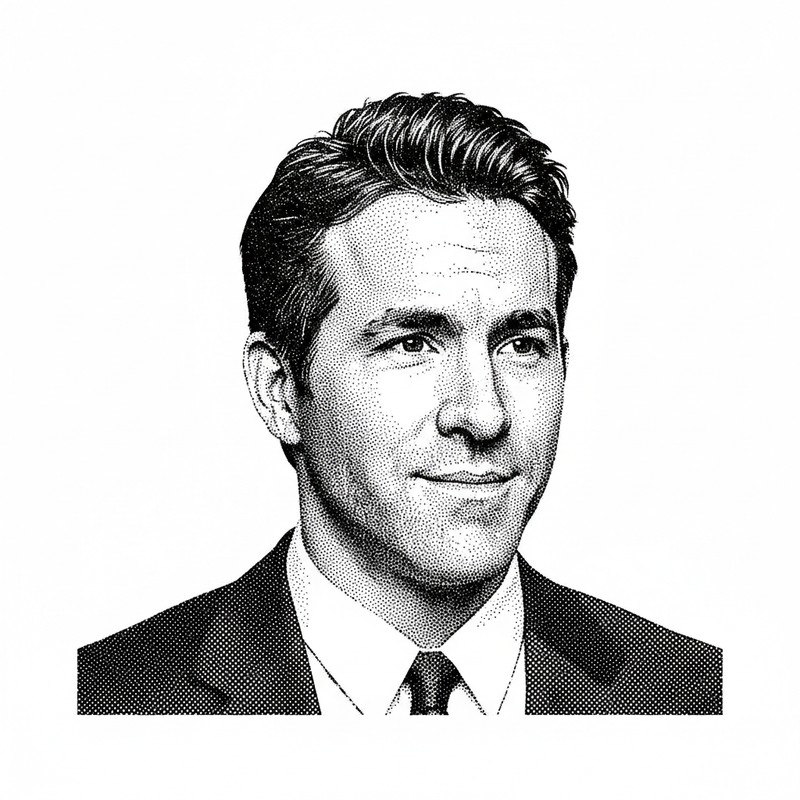
Case File #RR-2026-0207. Subject: Ryan Rodney Reynolds. Filed under: Canadian Nationals; Action Film Stars; Individuals Whose Brand of Humor Has Been Described as “What Would Happen If a Marketing Algorithm Developed Self-Awareness and Also Abs”; Owners of Wrexham A.F.C. (Welsh Football Club, Acquired for Reasons the Board’s Research Team Cannot Fully Determine).
The Board of Review has opened a formal evaluation into the N-Word Pass eligibility of Ryan Reynolds, an actor and entrepreneur from Vancouver, British Columbia, whose public persona is built on a foundation of self-deprecating charm, strategic social media presence, and the ability to sell anything from gin to mobile phone plans while appearing to find the entire process of selling things genuinely funny. The question before the Board is whether Mr. Reynolds’s cultural engagement with Black communities, Black art forms, or Black social institutions reaches the threshold for pass issuance.
The Board will note at the outset that this evaluation was flagged by the research team as a case where the primary challenge would be identifying enough material to fill the required sections. Mr. Reynolds’s relationship with Black culture is best described as “warm but distant,” which is coincidentally also how one might describe his relationship with the concept of earnestness.
The biographical record. Ryan Reynolds was born in 1976 in Vancouver, Canada, the youngest of four boys. His father was a food wholesaler and former Royal Canadian Mounted Police officer. His mother was a retail saleswoman. He attended Kitsilano Secondary School, dropped out of Kwantlen Polytechnic University, and moved to Los Angeles to pursue acting. His early career included “Van Wilder,” “Blade: Trinity,” and a period of rom-com work before “Deadpool” in 2016 transformed him from a moderately successful actor into a cultural phenomenon and marketing savant.
Mr. Reynolds’s post-Deadpool career has been defined by two things: acting and business ventures. His business portfolio includes Aviation Gin (sold for approximately $610 million), Mint Mobile, Maximum Effort Productions, and a stake in Wrexham A.F.C. His marketing approach, which involves self-aware humor, fourth-wall-breaking advertisements, and strategic social media engagement, has made him one of the most commercially successful actor-entrepreneurs in Hollywood. None of this is related to Black culture, and the Board notes the absence with neither surprise nor judgment.
Cultural Context
The N-Word Pass evaluation framework requires sustained, meaningful engagement with Black culture, communities, or institutions. The framework was designed to evaluate cases where that engagement exists in some form and needs to be assessed for depth, sincerity, and reciprocity. In Mr. Reynolds’s case, the framework encounters a subject whose cultural engagement with Black communities is so minimal that the evaluation is less an assessment of engagement quality and more an observation that the engagement category is largely empty.
This is not an indictment of Mr. Reynolds’s character. Many people, including many decent, well-intentioned people, do not have sustained relationships with Black culture. The N-Word Pass evaluation does not require every person to develop such relationships. It evaluates those who present themselves, or who are presented by public discourse, as potential pass holders. Mr. Reynolds’s evaluation was triggered by social media discourse, specifically a thread in which someone asked, “Does Ryan Reynolds have the N-Word Pass?” and received approximately 4,000 responses, most of which could be summarized as “probably not but we like him.”
The Justin Bieber evaluation and the Ed Sheeran evaluation examined white celebrities whose relationship with Black culture, while insufficient for pass issuance, was at least substantive enough to generate a robust evaluation. Mr. Reynolds’s case presents a thinner record.
The Case For
He Is Universally Liked, Including by Black Audiences
Ryan Reynolds’s public approval rating is high across all demographics. He is liked by Black audiences, by white audiences, by audiences who do not typically watch action movies, and by audiences who have never purchased gin but now feel warmly toward Aviation Gin because of a funny commercial. This cross-demographic likability is noted as a social reality without being attributed evaluative weight for the same reasons articulated in the Guy Fieri evaluation and the Matthew McConaughey evaluation: being liked is not the same as being culturally engaged.
Social Media Engagement Occasionally References Hip-Hop
Mr. Reynolds has, on occasion, quoted hip-hop lyrics on his social media accounts, referenced Black cultural moments, and engaged with Black celebrities in the self-deprecating, joke-driven format that characterizes his online presence. These interactions are noted as evidence that he is culturally aware of Black art and entertainment. They are also noted as the kind of engagement that requires approximately thirty seconds and a WiFi connection, which is not the sustained investment the Board’s framework evaluates.
Professional Relationships with Black Colleagues
Reynolds has worked with Black actors, directors, and producers throughout his career. His friendship with Hugh Jackman, while not racially relevant, demonstrates a capacity for sustained professional friendship that could, theoretically, extend to relationships with Black cultural figures. The Board notes the theoretical possibility without granting it evaluative weight.
The Deadpool Character Operates in a Post-Racial Comedy Framework
Deadpool, Reynolds’s signature character, makes jokes about everything and everyone without apparent racial hierarchy. The character’s comedy is equal-opportunity in its irreverence. The Board notes this while also noting that a fictional character’s approach to race is not evidence of the actor’s cultural engagement. Deadpool is not applying for the N-Word Pass. Ryan Reynolds is. And Ryan Reynolds’s record is thinner than Deadpool’s fourth wall.
The Case Against
Cultural Engagement with Black Communities Is Functionally Nonexistent
The Board has reviewed the public record for evidence of sustained engagement with Black cultural communities, Black social institutions, Black art forms, or Black civic organizations. The record contains social media posts, professional interactions, and the general warmth that characterizes Mr. Reynolds’s public persona. It does not contain evidence of community investment, sustained relationships with Black cultural institutions, or engagement with Black issues beyond the baseline level of a liberal Hollywood actor.
Canadian Origin Provides No Cultural Foundation
Mr. Reynolds grew up in Vancouver, which, while a diverse city, is not a city with a significant Black cultural infrastructure comparable to American cities like Atlanta, Detroit, Chicago, or New York. His formative cultural environment was white, Canadian, and suburban. His engagement with Black culture since moving to Los Angeles has been professional rather than communal, commercial rather than personal, and surface-level rather than deep.
The Justin Bieber evaluation noted similar Canadian-origin complications. The distinction between Bieber’s case and Reynolds’s case is that Bieber at least had the Usher mentorship and extensive hip-hop collaboration. Reynolds has social media posts and a charming personality.
Marketing Savvy Is Not Cultural Engagement
Mr. Reynolds’s public persona is, by his own implicit acknowledgment, a carefully constructed brand. The self-deprecating humor, the social media interactions, the strategic vulnerability are all elements of a marketing framework that has generated hundreds of millions of dollars in commercial value. The Board does not criticize this approach. The Board notes that a persona optimized for universal appeal will naturally include elements that resonate across racial demographics, but that this resonance is a marketing outcome, not a cultural relationship.
No Evidence of Targeted Philanthropy
The Board has reviewed Mr. Reynolds’s charitable activities and finds them focused on children’s health (SickKids Foundation), environmental causes, and community-level investments in Wrexham, Wales. These are admirable causes. They do not include sustained investment in Black communities, Black educational institutions, or Black cultural preservation.
Deeper Analysis
The Ryan Reynolds evaluation is the most straightforward denial in the current evaluation cycle. It is straightforward not because Mr. Reynolds has done anything wrong, but because he has not done anything that the Board’s evaluation framework measures. He has not engaged with Black culture in a sustained way. He has not invested in Black communities. He has not immersed himself in Black art forms. He has not demonstrated the kind of cultural relationship that the pass represents.
This is not a failing. It is simply the state of the record. Many people, including many excellent people, do not have deep relationships with Black culture. The N-Word Pass is not a reward for being a good person. It is a recognition of a specific cultural relationship, and Mr. Reynolds does not have that relationship.
The Board notes that Mr. Reynolds’s case provides a useful benchmark for future evaluations: the case of the likable, charming, non-offensive white celebrity whose application fails not because of any negative factor but because of the absence of positive ones. In the Board’s evaluation framework, the absence of cultural engagement is not a neutral state. It is an insufficient state. The pass requires something, and “nothing negative” does not satisfy “something positive.”
Official Verdict
DENIED. The Board of Review has determined that Ryan Rodney Reynolds does not meet the criteria for issuance of the Official N-Word Pass.
The determining factors are as follows: the absence of sustained engagement with Black cultural communities, institutions, or art forms; a formative cultural environment in Vancouver, Canada, that did not include meaningful exposure to Black cultural infrastructure; cultural engagement limited to occasional social media interactions and professional courtesy; and the absence of targeted philanthropic investment in Black communities.
The Board notes that no negative factors were identified. Mr. Reynolds has not committed any act of cultural offense, racial insensitivity, or appropriation that the Board’s research team could identify. The denial is based entirely on the absence of the positive engagement that the Board’s framework requires.
The application is denied with goodwill and the observation that Mr. Reynolds’s charm, while considerable, is not a cultural credential. The Board wishes him continued success in his many ventures and notes that if he ever decides to invest in Black community infrastructure with the same strategic enthusiasm he brings to selling gin, the Board would welcome the opportunity to revisit the evaluation.