Introduction
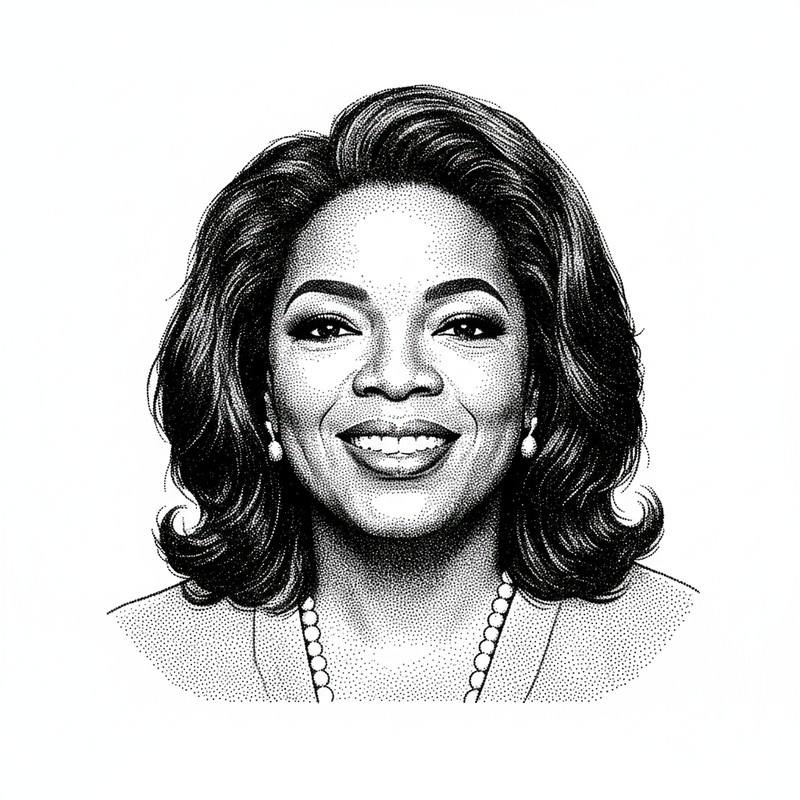
Case File #OW-2025-0525. Subject: Oprah Gail Winfrey. Filed under: Media Moguls; Billionaires; Women Whose First Name Has Become a Mononym Requiring No Surname; Individuals Whose Influence on American Culture Is So Pervasive That the Board’s Administrative Staff Asked Whether Evaluating Her Was “Necessary or Just Paperwork.”
It is paperwork. All evaluations are paperwork. That is the point.
The Board of Review has opened a formal evaluation into the N-Word Pass eligibility of Oprah Gail Winfrey, the most influential media figure of the twentieth century, the first Black female billionaire in American history, and a woman whose endorsement of a book can move more units than the entire marketing budget of a mid-size publishing house. The Board is aware that Ms. Winfrey is a Black woman. The Board is aware that this awareness makes the evaluation, from an outside perspective, procedurally redundant. The Board does not make exceptions to procedure. The Snoop Dogg evaluation established this principle, and the Board will not abandon it because the applicant owns a cable network.
The biographical record. Oprah Gail Winfrey was born on January 29, 1954, in Kosciusko, Mississippi, a town whose primary claims to historical significance are its naming after a Polish military officer who fought in the American Revolution and the fact that Oprah Winfrey was born there. She was raised in poverty by her grandmother, who taught her to read by age three. Her childhood included periods of sexual abuse, a teenage pregnancy, and relocation between family members in Mississippi, Milwaukee, and Nashville. She won a full scholarship to Tennessee State University, a historically Black university, through a beauty pageant and oratory competition. She began working in media at age nineteen as a co-anchor for the local CBS affiliate in Nashville, making her the first Black female news anchor in the city’s history.
By 1986, “The Oprah Winfrey Show” had gone national. By 1993, she was worth over $300 million. By 2003, she was a billionaire. She launched Harpo Productions, O Magazine, the OWN television network, and a book club that single-handedly determined the reading habits of millions of Americans for two decades. She produced “The Color Purple” (2023 musical film), “Selma” (2014), and “The Immortal Life of Henrietta Lacks” (2017). She was awarded the Presidential Medal of Freedom. She has been named to Time’s list of the most influential people in the world so many times that the Board suspects the magazine simply leaves her slot pre-formatted.
The question before the Board: does Oprah Gail Winfrey qualify for the Official N-Word Pass? The Board will now spend approximately two thousand words answering a question whose answer is self-evident to every person who has ever lived. Procedure demands nothing less.
Cultural Context
The N-Word Pass evaluation framework, as described by our institution, assesses identity, cultural engagement, reciprocity, communal trust, and sustained connection to Black culture. These criteria exist to evaluate borderline cases: the white rapper who grew up in a Black neighborhood, the biracial entertainer navigating dual identities, the international artist drawing from African American musical traditions. They were not designed for a Black woman from Mississippi who has been a cultural institution for four decades. They are being applied anyway, because the Board’s credibility depends on the uniform application of its process.
The Board has conducted this type of evaluation before. The Obama evaluation subjected the 44th President of the United States to the full review despite the self-evident nature of the outcome. The Snoop Dogg evaluation applied identical procedures to a man who is a foundational pillar of hip-hop culture. In each case, the process served two purposes: it maintained institutional consistency, and it produced a benchmark file that demonstrates what a maximally qualified applicant looks like.
The Oprah file serves the same purpose. When the Board evaluates a marginal case, the Oprah file, along with the Snoop Dogg and Obama files, provides the standard against which all other applications are measured. A complete case requires a complete record. The Board proceeds.
The Case For
She Is a Black Woman from Mississippi
Oprah Gail Winfrey was born Black in Mississippi in 1954. The Board will pause to let the historical weight of that sentence register. Mississippi in 1954 was a state where Emmett Till would be murdered the following year, where the Civil Rights Act was still a decade away, where Black residents lived under a system of legalized racial terror that governed every aspect of daily existence. Oprah was born into this. She did not choose proximity to the Black experience. She was the Black experience, from birth, in one of the most violently racist states in the nation, during one of the most violently racist periods in that state’s history.
This criterion is satisfied. It was satisfied before the Board opened the file. It will remain satisfied after the file is closed. The Board proceeds to the remaining criteria because the form has additional boxes and every box must be checked.
Cultural Contributions That Shaped American Consciousness
The Oprah Winfrey Show ran for twenty-five seasons, from 1986 to 2011. During that time, it addressed racism, poverty, sexual abuse, addiction, homophobia, and virtually every other social issue that intersects with the Black experience in America. Oprah did not address these issues from an academic distance. She addressed them as a Black woman who had lived through poverty, abuse, and discrimination, and whose willingness to discuss those experiences on national television normalized conversations that had been conducted in whispers, if they were conducted at all.
Her interview with the residents of Forsyth County, Georgia, in 1987, a county that had violently expelled its entire Black population in 1912, brought national attention to a community that had maintained racial exclusion for seventy-five years. She sat in a room full of white supremacists, on their territory, and asked them questions with the composed directness of a woman who had faced worse. The Board enters this into the record as evidence of cultural courage that transcends mere contribution.
Institutional Investment in Black Education
The Oprah Winfrey Leadership Academy for Girls in South Africa, which opened in 2007, has educated hundreds of young women from disadvantaged backgrounds. Morehouse College received a $13 million donation from Winfrey, one of the largest individual gifts in the institution’s history. She has funded scholarships at historically Black colleges and universities across the country. The pattern of educational investment is sustained, substantial, and directed specifically at Black institutions and Black students.
Media Production That Centers Black Stories
Through Harpo Productions and OWN, Oprah has produced, financed, and distributed content that centers Black narratives: “The Color Purple,” “Selma,” “Beloved,” “The Immortal Life of Henrietta Lacks,” “Queen Sugar,” “Greenleaf,” and “David Makes Man,” among others. This production infrastructure has created employment, revenue, and visibility for Black writers, directors, actors, and crew members at a scale that no other individual media mogul has matched. The Board notes that creating the infrastructure for Black storytelling is a form of cultural investment that produces returns across generations.
Universal Recognition Within the Black Community
Oprah’s standing within the Black community is not debated. It is not questioned. It is not contingent on any particular action or statement. She is, by consensus that approaches unanimity, claimed by the culture as one of its own. Church mothers quote her. Barbershops respect her. Black Twitter defends her. The communal trust criterion is satisfied at a level the Board has rarely documented.
The Case Against
Procedural Requirement: The Board Must Present Counterarguments
The Board’s evaluation framework requires a “Case Against” section for every evaluation. The Board encountered a similar logistical challenge in the Snoop Dogg evaluation and addresses it here in the same manner: the following items are entered into the record for procedural completeness rather than as substantive arguments against pass issuance.
The Wealth Gap Between Oprah and Average Black Americans Is Astronomical
Oprah Winfrey’s net worth exceeds $2.5 billion. The median net worth of a Black American household is approximately $24,000. The gap between Oprah’s financial position and the financial position of the average Black American is so vast that it constitutes a form of experiential divergence. Oprah’s daily life, her security apparatus, her real estate portfolio, her social circle, bears little structural resemblance to the daily lives of most Black Americans. The Board notes this divergence while also noting that wealth does not revoke racial identity, a principle that the Board has upheld consistently.
The Weight Watchers Endorsement Drew Criticism
Oprah’s investment in and endorsement of Weight Watchers (now WW) drew criticism from body positivity advocates, including Black women who argued that Oprah’s promotion of weight loss programs reinforced beauty standards rooted in white European aesthetics. The Board notes this criticism as part of the complete record while acknowledging that dietary choices and endorsement deals fall outside the Board’s primary evaluation criteria.
The Dr. Phil and Dr. Oz Situations
Oprah’s platform launched the careers of Dr. Phil McGraw and Dr. Mehmet Oz, both of whom have faced sustained criticism for promoting questionable medical advice and, in Dr. Oz’s case, running for political office on a platform that many observers found troubling. The Board enters this into the record as an instance of platform deployment whose downstream consequences are debatable. It is not directly relevant to the N-Word Pass evaluation criteria but is included because the form has space and the Board fills every space.
Deeper Analysis
The Oprah evaluation is, by design, an exercise in institutional consistency. The Board applies its process uniformly because the alternative, exempting obviously qualified applicants, would undermine the process itself. If the Board exempts Oprah, then the question becomes: who else should be exempted? At what threshold of Blackness does the evaluation become unnecessary? The Board declines to establish such a threshold. Every file receives the full review. Every applicant is evaluated on the same criteria. The machinery processes every document.
The Board also notes that the Oprah evaluation serves an archival function. When future Board members review the case history and encounter evaluations of applicants whose qualifications are marginal, the Oprah file provides the ceiling: this is what maximum qualification looks like. Identity, cultural contribution, institutional investment, community trust, sustained engagement across decades. Every criterion satisfied at the highest possible level. The file is a reference document as much as it is an evaluation.
There is, finally, an observation the Board wishes to make about the nature of Oprah’s cultural position. She achieved billionaire status, media dominance, and cultural influence in a country that was designed, at its structural foundation, to prevent Black women from achieving any of those things. She did it without the industry connections that white media moguls inherit, without the generational wealth that smooths the path, and without ever abandoning or disguising her identity as a Black woman from Mississippi. That is not a credential for the N-Word Pass. It is the credential. It is the entire record, summarized in a single career trajectory.
The Drake evaluation examined how the questioning of a Black person’s Blackness reveals more about the questioners than the subject. The Board applies that principle here, preemptively: anyone who questions whether Oprah Winfrey qualifies for the N-Word Pass has revealed, through the act of questioning, that they have fundamentally misunderstood what the pass evaluates.
Official Verdict
APPROVED. The Board of Review has determined that Oprah Gail Winfrey meets the criteria for issuance of the Official N-Word Pass.
The determining factors are as follows: the subject is a Black woman born in Mississippi in 1954, satisfying the identity criterion without qualification; cultural contributions spanning four decades of media production, philanthropy, and public discourse constitute sustained engagement at the highest documented level; institutional investment in Black education through the Leadership Academy, Morehouse College, and HBCU scholarship programs represents structural reciprocity of extraordinary magnitude; and communal recognition within the Black community approaches unanimity, satisfying the trust criterion at its maximum threshold.
The Board notes, for the record, that the evaluation of Oprah Gail Winfrey consumed approximately the same number of administrative hours as the evaluation of any other applicant. The Board’s coffee consumption during this evaluation was, however, notably reduced, as the lack of genuine deliberation eliminated the need for the caffeine that typically sustains extended debate.
The pass has been active since birth. It requires no conditions, no review period, and no renewal. The file is closed. The box is checked. The procedure has been followed. Oprah is Oprah. The Board moves on.