Introduction
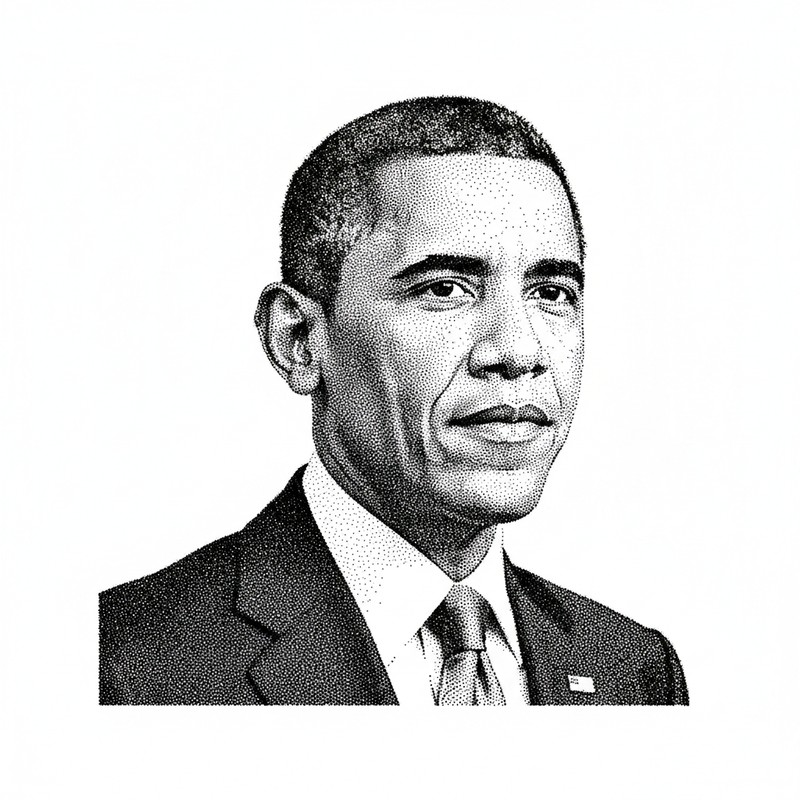
Case File #BO-2026-0310. Subject: Barack Hussein Obama II. Filed under: Presidents of the United States (44th); Nobel Laureates; Individuals Whose Birth Certificate Has Been Demanded More Times Than Any Other Document in American Political History.
The Board of Review has opened a formal evaluation into the N-Word Pass eligibility of the 44th President of the United States. The subject is Black. The Board is aware of this. The evaluation is proceeding anyway, because organizational bylaws require a full, impartial review of every case that enters the queue, regardless of how predetermined the outcome may appear to outside observers.
Barack Hussein Obama II was born on August 4, 1961, in Honolulu, Hawaii, to Barack Obama Sr., a Kenyan economist, and Ann Dunham, a white anthropologist from Wichita, Kansas. He grew up navigating racial identity across Hawaii, Indonesia, and eventually the South Side of Chicago, where he married Michelle Robinson, a descendant of enslaved people from South Carolina. Their family occupied a residence at 1600 Pennsylvania Avenue that was constructed, in part, by enslaved laborers. The Board notes the historical circularity without additional commentary.
The same evaluation criteria applied to Eminem and Donald Trump apply here. The Board does not issue exemptions based on the apparent clarity of the outcome. Protocol exists to be followed, not to be selectively applied when a case appears straightforward. The machinery processes every file that crosses the desk.
Cultural Context & Historical Background
The N-word carries centuries of weight. Born from the Latin “niger” and twisted into a tool of dehumanization during the transatlantic slave trade, the word was weaponized across generations of American racism, from plantation overseers to Jim Crow lawmakers to modern-day internet trolls. Black communities reclaimed a variant of the word as an act of linguistic resistance, transforming a slur into an in-group term of familiarity, solidarity, and sometimes endearment. The reclamation was never universal or uncontested, but it persists as one of the most complex negotiations in American English.
The concept of the “N-Word Pass” emerged from internet culture in the late 1990s and early 2000s, initially as a half-serious, half-joking acknowledgment that some non-Black individuals had earned enough trust within Black social circles to exist comfortably in proximity to the word. Meme culture turned it into laminated cards, TikTok skits, and eventually the Official N-Word Pass, which formalized the evaluation process through institutional review.
Barack Obama occupies a singular position in this conversation. He is not an outsider petitioning for entry. He is not a white rapper seeking validation or a racially ambiguous pop star navigating identity politics. He is a Black man who happened to hold the most visible office on the planet. His relevance to the N-Word Pass discussion stems not from ambiguity but from a specific cultural moment: his June 2015 appearance on Marc Maron’s “WTF” podcast, where he said, “It’s not just a matter of it not being polite to say [the N-word] in public. That’s not the measure of whether racism still exists or not. It’s not just a matter of overt discrimination. Societies don’t, overnight, completely erase everything that happened 200 to 300 years prior.”
He said the actual word. On a podcast. While president. Fox News coverage that week could have powered a small city with the energy generated by outraged pundits. The moment crystallized a truth the internet had been dancing around for years: context, identity, and intent matter more than the mere presence of syllables.
For Obama, the pass is not something to be earned. It is something he was born into. But let us, as required by organizational bylaws, weigh the evidence anyway.
Pros
He Is, Factually and Demonstrably, a Black Man
This should probably be the entire section, but our format requires elaboration, so here we go. Barack Obama’s father, Barack Obama Sr., was born in Nyang’oma Kogelo, Kenya. His mother, Ann Dunham, was a white woman from Wichita, Kansas. Obama identifies as Black. American society has identified him as Black since approximately the moment he was born. He has written extensively about navigating Black identity in his memoir Dreams from My Father, describing experiences with racial profiling, code-switching, and the particular isolation of being a biracial kid in a predominantly white environment in Hawaii.
He did not become Black upon entering politics. He did not adopt Blackness as an aesthetic or a marketing strategy. He lived it, with all the complexity and contradiction that entails. Our Board of Review notes that being Black is, in fact, the single most relevant qualification for the N-Word Pass, and Mr. Obama meets this criterion with zero ambiguity.
Deep Roots in Black Chicago
After Columbia University and Harvard Law School (where he became the first Black president of the Harvard Law Review), Obama moved to Chicago’s South Side. He did not parachute in for a photo op. He worked as a community organizer in Altgeld Gardens, a public housing development. He joined Trinity United Church of Christ under Reverend Jeremiah Wright. He taught constitutional law at the University of Chicago. He married Michelle Robinson, a South Side native whose family tree includes descendants of enslaved people from South Carolina.
Obama’s immersion in Black Chicago was not performative adjacency. It was daily life: haircuts at local barbershops, pickup games at the gym, cookouts where the potato salad was properly vetted. This is the kind of sustained community presence that our evaluation framework weighs heavily.
The Marc Maron Podcast Moment
In June 2015, President Obama sat in Marc Maron’s garage studio and used the N-word in the context of a thoughtful discussion about racism in America. The moment was deliberate. He was not quoting a rap lyric or telling a joke. He was making a point about how the absence of the word in polite conversation does not equal the absence of racism in American life. The statement was measured, intelligent, and delivered with the calm authority of a man who has every right to use the word and chose to deploy it for maximum rhetorical impact.
Conservative media reacted as though he had launched a nuclear warhead. The rest of the country largely shrugged and said, “He’s Black. He can say it.” This moment serves as perhaps the clearest public demonstration that Obama possesses the pass, has always possessed the pass, and wielded it with the precision of a constitutional law professor making a closing argument.
Cultural Fluency Beyond Politics
Obama’s Blackness extends well beyond policy positions. He published curated playlists featuring Kendrick Lamar, Chance the Rapper, and SZA. He invited Common and Wale to the White House. He slow-jammed the news with Jimmy Fallon while maintaining presidential gravitas. He played basketball with regularity and reportedly talked trash with the confidence of a man who has been doing it since middle school. He referenced Jay-Z’s “Dirt Off Your Shoulder” during a 2008 campaign speech, brushing his shoulder in a gesture that Black audiences immediately recognized and white pundits spent three news cycles trying to decode.
These are not calculated cultural plays. They are the natural expressions of a man who grew up listening to Stevie Wonder and Earth, Wind and Fire, who understands the difference between seasoned and unseasoned chicken, and who once told a crowd in South Carolina that “nah, we straight” when a supporter shouted encouragement.
Enduring Respect From Black Communities
Obama’s approval rating among Black Americans consistently hovered above 90% during his presidency. He carried over 95% of the Black vote in both 2008 and 2012. Black cultural figures from Beyonce to John Legend to Oprah Winfrey publicly endorsed and campaigned for him. He is, by any measurable standard, embraced by the community whose approval matters most in this evaluation.
The aunties at the cookout did not merely accept Obama. They claimed him. They hung his portrait next to Martin Luther King Jr. in living rooms across the country. They named babies after him. They cried on election night in 2008 and again in 2012. If communal acceptance is the currency of the N-Word Pass, Obama is a billionaire.
Cons
The Biracial Identity Complexity
In the interest of procedural thoroughness, we must acknowledge that some voices, primarily on the internet and primarily operating with questionable motives, have questioned whether Obama’s biracial heritage complicates his claim to the pass. His mother was white. He was raised in part by his white grandparents. He spent formative years in Hawaii and Indonesia, environments not typically associated with the Black American experience.
Our Board of Review notes this argument, considers it for approximately four seconds, and moves on. American racial categorization, for better or worse, has never operated on a percentage basis. Obama is Black by self-identification, social experience, community acceptance, and the one-drop rule that America itself invented. The biracial complexity enriches his perspective; it does not diminish his Blackness.
The “Respectability Politics” Critique
Some Black commentators, particularly on the progressive left, have criticized Obama for occasionally leaning into respectability politics. His 2008 Father’s Day speech at a Black church, where he admonished absent Black fathers, drew pushback from those who felt it reinforced stereotypes rather than addressing systemic causes of family instability. His tendency toward measured, both-sides rhetoric sometimes frustrated activists who wanted a more confrontational approach to racial justice.
This critique is valid as political analysis but irrelevant to the pass evaluation. Disagreeing with a Black man’s politics does not revoke his Blackness. The aunties might argue with him at Thanksgiving, but they are not kicking him out of the house.
He Wore a Tan Suit
This is not actually a con. We include it because conservative media treated it as a national scandal in August 2014, and our Board of Review finds the overreaction endlessly amusing. The suit was fine. It was a suit. It was tan. The republic survived.
Deeper Cultural Analysis
The Obama evaluation tests a procedural edge case. When the subject is unambiguously Black, the entire bureaucratic apparatus of evaluation processes a foregone conclusion. The Board is, in effect, asking whether a fish requires a swimming permit. The question answers itself before it finishes being asked. The Board proceeds anyway, because protocol does not contain an exemption clause for obvious outcomes.
And yet, Obama’s case illuminates something important about how America processes Black identity in positions of extreme visibility. The 44th president existed in a paradox: simultaneously the most recognized Black man on Earth and a figure some corners of America refused to accept as American at all. The birther conspiracy, championed most loudly by Donald Trump, attempted to strip Obama of not just his presidency but his national belonging. It was, at its core, a denial of his legitimacy that carried unmistakable racial undertones.
In this light, the N-Word Pass evaluation becomes less about Obama’s qualifications and more about America’s discomfort with Black authority. A country that spent years demanding to see a Black president’s birth certificate is a country still negotiating its relationship with Blackness itself. Obama navigated that negotiation with a steadiness that earned him both admiration and frustration, depending on which side of the cultural divide you occupied.
The Marc Maron moment matters because it was one of the rare occasions when Obama dropped the diplomatic filter and spoke as a Black man first, president second. The word landed with the weight of lived experience, not borrowed credibility. It was a reminder that behind the presidential seal and the carefully constructed public persona, there was a guy from the South Side who understood exactly what that word meant, who had the right to say it, and why its casual disappearance from polite conversation should not be confused with progress.
The Board’s institutional mandate is to evaluate every case that enters the queue. Obama’s case highlights a particular procedural tension: the idea that a Black man’s Blackness requires external validation. It does not. The Board filed the paperwork anyway, because process exists to be followed, not to be selectively applied.
Final Verdict
APPROVED.
The Board of Review has determined that Barack Hussein Obama II meets the criteria for issuance of the Official N-Word Pass. The vote was unanimous. The deliberation was the shortest in organizational history.
The determining factors are as follows: the subject is a Black man by lineage, self-identification, community acceptance, and every metric of racial classification that the United States has constructed over the past two and a half centuries. He was raised within Black family and community structures. He married into a Black family with roots tracing directly to the institution of slavery. He demonstrated cultural fluency at the presidential level, including the deployment of the word itself on a nationally broadcast podcast in the context of substantive commentary on American racism. Community approval ratings among Black Americans exceeded 90% throughout his presidency.
The pass has been active since birth. It requires no renewal, no co-signer, and no annual review. The file is closed. The paperwork, while procedurally required, confirmed what the record made self-evident from the first page.