Introduction
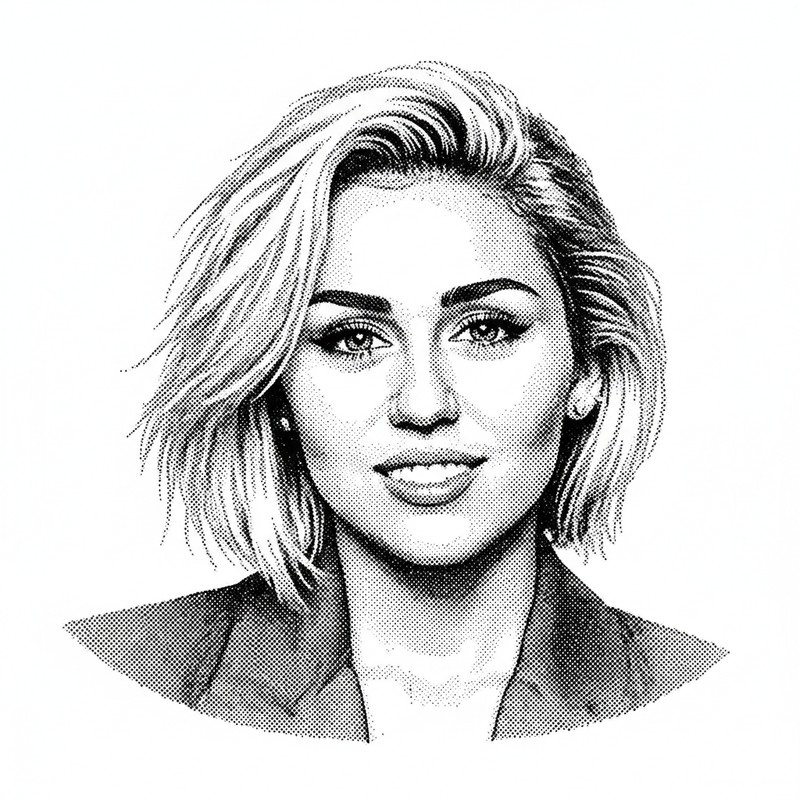
Case File #MC-2026-0222. Subject: Miley Ray Cyrus. Filed under: Former Disney Channel Stars; Individuals Who Twerked on Robin Thicke at the 2013 VMAs; Artists Who Adopted and Subsequently Abandoned Hip-Hop Culture With the Speed of Someone Returning a Rental Car.
The Board of Review has opened a formal evaluation into the N-Word Pass eligibility of Miley Ray Cyrus, daughter of Billy Ray Cyrus, goddaughter of Dolly Parton, and a person whose relationship with Black culture can best be described as a three-year lease with no option to renew. The question before the Board is not whether Ms. Cyrus genuinely enjoyed her time in hip-hop spaces. She appeared to be having an extraordinary time. The question is whether enjoyment constitutes the kind of sustained cultural commitment that our evaluation framework requires.
The biographical record is entered into evidence. Destiny Hope Cyrus (later legally changed to Miley) was born in Franklin, Tennessee, in 1992. Her father, Billy Ray Cyrus, is a country musician best known for “Achy Breaky Heart” and for a mullet that has been classified by the Smithsonian Institution as a cultural artifact. Her godmother is Dolly Parton. She was raised in Nashville, on a 500-acre farm, in conditions that can be described as aggressively country. At age eleven, she was cast as Hannah Montana on the Disney Channel, becoming one of the most commercially successful child stars of the 2000s.
Then came 2013, and the Bangerz era. Our Board will address this era in full, because it is the central exhibit in the case before us.
Cultural Context
The N-Word Pass, as outlined by our institution, is predicated on sustained cultural engagement, genuine reciprocity, and communal trust built over time. The operative word is “sustained.” The Board evaluates patterns, not phases. Phases are what you go through in college when you briefly become interested in mixology. Sustained cultural engagement is what you do with the rest of your life.
The broader cultural context of Ms. Cyrus’s hip-hop period involves a phenomenon sociologists and cultural critics have identified as “strategic Blackness”: the adoption of Black cultural aesthetics, mannerisms, and musical styles by white artists during periods when those aesthetics are commercially profitable, followed by their abandonment when the commercial utility diminishes or when the cultural cost of maintaining them becomes inconvenient.
This is not a new phenomenon. The Iggy Azalea evaluation documents a parallel case. The Justin Bieber evaluation explores similar dynamics through a different lens. But Miley Cyrus’s case is notable because the adoption and abandonment were so rapid and so public that they function as a case study in cultural tourism.
The Case For
The Bangerz Era Demonstrated Genuine Enthusiasm
Our Board does not question Ms. Cyrus’s sincerity during the Bangerz period. The evidence suggests she was genuinely excited about hip-hop production, about collaboration with Black artists, and about the creative possibilities the genre offered. Her work with Mike Will Made-It, a Black producer from Marietta, Georgia, resulted in music that was, by commercial standards, successful. “We Can’t Stop” and “Wrecking Ball” sold millions. The album debuted at number one. Critics who engaged with the music on its own terms found it competent, if not revelatory.
Genuine enthusiasm matters in the Board’s evaluation framework. It is preferable to cynical calculation. But enthusiasm without commitment is a vacation, not a residence.
Collaboration with Black Artists
During the Bangerz era, Ms. Cyrus collaborated with Big Sean, French Montana, Pharrell Williams, Nelly, Future, and others. She hosted the 2015 VMAs and used the platform to bring out several members of the hip-hop community. She signed to RCA Records and worked with producers whose roots were in Atlanta’s hip-hop infrastructure.
These collaborations are noted in the record. They are also noted as being concentrated within a specific timeframe, a pattern that becomes relevant in the Case Against section below.
Dead Petz and Artistic Risk-Taking
In 2015, Ms. Cyrus released “Miley Cyrus & Her Dead Petz,” a psychedelic, experimental album that featured The Flaming Lips and drew from a wider palette than pure hip-hop. While not directly relevant to Black cultural engagement, the album demonstrated that Cyrus was capable of artistic choices driven by creative impulse rather than pure commercial calculation. Our Board notes this as evidence against the charge that every move is cynically market-driven, while also noting that creative risk-taking and cultural commitment are different categories.
Support for LGBTQ+ Communities Demonstrates Solidarity Instincts
Ms. Cyrus founded the Happy Hippie Foundation, which supports homeless and LGBTQ+ youth. While this work is not directly connected to the N-Word Pass evaluation criteria, it demonstrates a capacity for sustained advocacy and community investment that suggests the subject is capable of structural commitment. The Board’s concern, outlined below, is that this capacity has not been directed toward the Black communities whose cultural products she adopted during the Bangerz era.
The Case Against
The Pivot Away from Hip-Hop Was Surgical and Self-Serving
In a 2017 interview with Billboard, Ms. Cyrus stated: “I also love that new Kendrick [Lamar] album. I was so scared that Kendrick was going to come out with this album and it was going to be a lot of the ‘personal songs,’ because of the way that some rap and hip-hop affects me. Yeah, certain songs I cannot listen to.”
She elaborated by describing hip-hop as materialistic and bragging-focused, expressing discomfort with lyrics about drug use and money. She stated that she wanted to make music that was more meaningful, more personal, and more aligned with her country and folk roots.
The Board will set aside the irony of a woman who spent three years twerking in a unitard on national television suddenly discovering that hip-hop was too focused on spectacle. The substantive issue is the framing. In these statements, Ms. Cyrus characterized Black musical expression as shallow and materialistic while positioning her own (overwhelmingly white) musical traditions as deep and meaningful. This is a specific and historically loaded critique that has been directed at Black art forms for centuries. That Ms. Cyrus appeared unaware of this history while deploying the critique does not mitigate its impact.
The Timeline Tells the Story
The Board has reconstructed the relevant timeline. In 2013, hip-hop aesthetics were commercially dominant and Ms. Cyrus adopted them. By 2017, she had released “Younger Now,” a country-folk album, and was distancing herself from hip-hop in interviews. By 2020, she had released “Plastic Hearts,” a rock album. By 2023, she had released “Endless Summer Vacation,” a pop-dance record.
At no point after 2017 did Ms. Cyrus return to hip-hop aesthetics, hip-hop collaboration, or hip-hop cultural spaces in any meaningful way. The Bangerz era lasted approximately three years. The subsequent abandonment has lasted approximately nine and counting. The timeline does not describe an artist who found a cultural home in hip-hop and stayed. It describes an artist who visited hip-hop, enjoyed the amenities, and checked out when the reservation expired.
The Twerking Problem
We must address the twerking. At the 2013 VMAs, Ms. Cyrus performed with Robin Thicke (whose own relationship with Black culture warrants a separate evaluation) and incorporated twerking as a central element of the performance. Twerking is a dance form with roots in West African dance traditions, developed within Black American communities, and popularized within Black club culture long before it appeared on an MTV stage.
Ms. Cyrus’s appropriation of the dance was not the issue per se. The issue was the context: a white woman performing a Black dance form on a national stage, surrounded by Black women used as props and set pieces, in a performance that treated Black bodies and Black cultural expression as accessories to her own narrative of rebellion against her Disney Channel past. The Black women on that stage were not collaborators. They were scenery.
Minimal Community Investment in Black Spaces
The Happy Hippie Foundation does important work. It is not directed at the Black communities whose cultural products fueled the most commercially successful period of Ms. Cyrus’s career. Our Board has found no evidence of sustained scholarship programs, community centers, label infrastructure, or institutional investment directed specifically toward Black communities or Black artists. The Bangerz era generated substantial wealth. The question of where that wealth was reinvested is relevant to our evaluation, and the answer does not favor the applicant.
The Dolly Parton Inheritance Cuts Both Ways
Ms. Cyrus’s godmother, Dolly Parton, is one of the few white country artists who has consistently acknowledged the Black roots of country music. Ms. Cyrus has inherited many things from Dolly: talent, charisma, a comfort with spectacle. She has not inherited Dolly’s consistent acknowledgment of the Black musical traditions that underpin her genre. The model was available. It was not followed.
Deeper Analysis
The Miley Cyrus case is, in the Board’s assessment, the clearest example of cultural tourism in our evaluation history. This determination is not a commentary on Ms. Cyrus’s character, which by most accounts is warm, generous, and well-intentioned. It is a commentary on a pattern of behavior that the Board’s evaluation criteria were specifically designed to identify.
Cultural tourism is defined, within our framework, as the adoption of a marginalized culture’s aesthetics, language, or art forms for personal or commercial benefit, followed by the abandonment of those elements when they are no longer useful, without sustained reciprocal investment in the originating community. Every element of this definition is present in Ms. Cyrus’s record.
The adoption was public and enthusiastic. The commercial benefit was substantial. The abandonment was accompanied by statements that framed the abandoned culture as shallow and materialistic. The reciprocal investment is absent from the record. This is not a close call.
What makes the case instructive is the comparison between Ms. Cyrus’s trajectory and that of artists who have maintained genuine, long-term engagement with Black culture. The Eminem evaluation documents an artist who entered hip-hop and stayed for decades, investing in the community that raised him artistically. Ms. Cyrus entered hip-hop and stayed for approximately the duration of a college degree, then moved on to the next genre without forwarding address.
The Board also notes the asymmetry of consequence. When Ms. Cyrus adopted hip-hop aesthetics, she was celebrated for being edgy and subversive. When she abandoned them, she was celebrated for being authentic and returning to her roots. A Black artist attempting the reverse trajectory, abandoning hip-hop for country, would face an entirely different set of industry obstacles and audience expectations. The ability to move between cultures without friction is itself a form of privilege that the Board’s evaluation framework accounts for.
Official Verdict
DENIED. The Board of Review has determined that Miley Ray Cyrus does not meet the criteria for issuance of the Official N-Word Pass.
The determining factors are as follows: the adoption and subsequent abandonment of hip-hop culture along a timeline that correlates precisely with its commercial utility constitutes textbook cultural tourism; public statements characterizing hip-hop as shallow and materialistic, delivered while pivoting toward overwhelmingly white musical traditions, demonstrate insufficient understanding of Black artistic expression; the use of Black bodies as visual props during the 2013 VMA performance reveals a relationship with Black culture that is extractive rather than reciprocal; and the absence of sustained institutional investment in Black communities indicates that the commercial benefits of the Bangerz era were not accompanied by structural reciprocity.
Mitigating factors are entered into the record: genuine musical talent is acknowledged; collaborative relationships with Black producers and artists during the Bangerz era appear to have been professionally respectful; and the Happy Hippie Foundation demonstrates a capacity for sustained advocacy that could, if redirected, strengthen a future application.
The denial is issued with the observation that Ms. Cyrus is uniquely positioned to invest in the Black musical communities that fueled her commercial peak. She has the resources, the platform, and, if her Bangerz-era enthusiasm was genuine, the motivation. The Board will revisit the evaluation if the record changes. For now, the application is denied.