Introduction
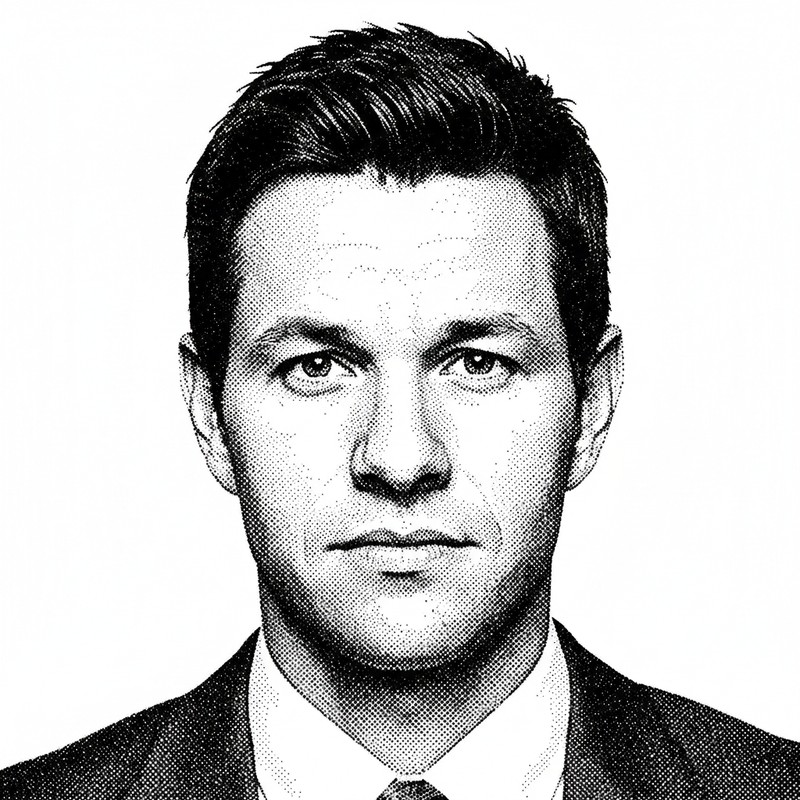
The Board of Review has received the file of Mark Robert Michael Wahlberg, born June 5, 1971, in the Dorchester neighborhood of Boston, Massachusetts. The file is thick. It contains police reports, court records, magazine profiles, box office receipts, and a petition to the Commonwealth of Massachusetts requesting a pardon for felony assault. It is, by any measure, one of the more challenging files to cross the Board’s desk, and not because the evidence is ambiguous. The evidence is remarkably clear. The challenge lies in evaluating whether a person’s documented history of racial violence can ever be sufficiently overcome to warrant cultural permission of this nature.
Some biographical context. Mark Wahlberg was the youngest of nine children in a working-class Irish Catholic family. His older brother Donnie had already achieved fame as a member of New Kids on the Block by the time Mark was a teenager. The Dorchester of Mark’s youth was a neighborhood defined by racial tension, economic hardship, and a culture of street violence that the Wahlberg family navigated with varying degrees of success. Mark dropped out of school at fourteen. By fifteen, he was using drugs regularly. By sixteen, he had accumulated a criminal record that would follow him for the rest of his life.
The incidents that define this record are not minor. In 1986, fifteen-year-old Mark Wahlberg and a group of friends chased three Black children while throwing rocks and shouting racial slurs, including the N-word. The children were attempting to use a public beach. In a separate incident the same year, Wahlberg and friends harassed a group of Black fourth-graders on a school field trip, again hurling racial slurs. In 1988, at age seventeen, Wahlberg attacked two Vietnamese men in separate incidents on the same day. He struck one man, Thanh Lam, with a large wooden stick, and punched another, Hoa Trinh, in the eye while calling him a racial slur. Trinh lost vision in that eye (though Wahlberg has disputed whether the injury was pre-existing). Wahlberg was charged with attempted murder and pled guilty to felony assault, serving 45 days of a two-year sentence.
These are not allegations. They are documented facts, confirmed by court records and by Wahlberg himself in subsequent interviews.
What followed the criminal chapter is a story of reinvention that Hollywood loves to tell. Wahlberg channeled his energy into music, becoming “Marky Mark” of Marky Mark and the Funky Bunch, a rap act that scored a number one hit with “Good Vibrations” in 1991. He transitioned to acting, earning critical acclaim in films like Boogie Nights (1997), The Departed (2006), and The Fighter (2010). He received an Academy Award nomination. He built a restaurant empire (Wahlburgers), a production company, and a personal brand centered on discipline, faith, and redemption. He has spoken publicly about his past, expressed remorse, and positioned his life story as proof that people can change.
The Board does not dispute that people can change. The Board’s question is narrower: does Mark Wahlberg’s post-criminal career, however successful, constitute the kind of cultural relationship with Black communities that warrants N-Word Pass issuance? To explore this question, we examine the record in full. For comparison, see the Board’s evaluation of Donald Trump, another applicant whose biography includes documented incidents of racial hostility alongside subsequent gestures of outreach.
Cultural Context
The N-Word Pass, as the Board has stated in prior evaluations and on our official guidelines page, is a trust instrument. It represents the extension of communal permission from Black communities to a non-Black individual, based on demonstrated respect, sustained reciprocity, and genuine cultural engagement. The pass is not a reward for good behavior. It is not a certificate of rehabilitation. It is an acknowledgment that a specific individual has earned a specific form of trust through consistent, voluntary, and meaningful participation in the cultural life of Black communities.
This distinction is critical for the Wahlberg evaluation because much of the public discourse around his candidacy conflates personal redemption with cultural standing. These are related but separate concepts. A person can genuinely grow, sincerely regret their past actions, and live an exemplary life going forward without necessarily earning the specific form of cultural trust that the N-Word Pass represents. The Board does not doubt that Mark Wahlberg has changed since he was a violent teenager in Dorchester. The Board’s concern is whether the change has manifested as genuine engagement with the communities he harmed, or primarily as personal advancement.
Boston’s racial history provides additional context. The city’s school desegregation crisis of the 1970s, when court-ordered busing provoked violent white resistance in neighborhoods like South Boston, Charlestown, and Dorchester, created a climate of racial hostility that shaped the environment in which young Mark Wahlberg committed his crimes. This context does not excuse the behavior, but it helps explain the ecosystem. Wahlberg was not an anomaly. He was a product of a neighborhood culture that normalized anti-Black and anti-Asian violence, and his individual acts were expressions of a broader communal sickness.
The question for the Board is whether Wahlberg, having emerged from that sickness, has done the work of addressing it, not only in his personal life but in his relationship to the communities that bore its consequences.
The Case For
He Has Publicly Acknowledged His Crimes
Wahlberg has not denied or minimized the incidents from his youth. In multiple interviews over the years, he has described his actions as “despicable” and expressed remorse. Public acknowledgment is a baseline requirement for any applicant with a documented history of racial hostility, and Wahlberg meets it. The Board notes that many applicants with far less severe histories have failed even this basic threshold.
The Funky Bunch Era Demonstrated Cultural Interest
Marky Mark and the Funky Bunch was, whatever its artistic merits, a project rooted in hip-hop and dance music. The group included Black members, collaborated with Black producers, and performed in venues alongside Black artists. While the project was commercial and short-lived, it represented a period in which Wahlberg voluntarily entered Black cultural spaces and worked within them. The Board does not overweight this factor, given that hip-hop participation does not automatically confer cultural credentials, but it is part of the record.
Faith-Based Redemption Has Been Consistent
Wahlberg credits his Catholic faith with transforming his life. He attends daily mass, publicly discusses his spiritual journey, and has funded faith-based youth programs in Boston. While religious conversion does not directly address racial harm, the Board acknowledges that sustained spiritual practice can support the kind of self-examination that genuine growth requires.
Financial Success Has Been Shared With Boston Communities
Wahlberg has invested in Boston-area businesses, created jobs through his restaurant chain, and supported local youth athletic programs. Some of these investments benefit diverse communities, though the Board notes that generalized community investment is different from targeted reparative engagement with the specific communities he harmed.
The Case Against
The Violence Was Not a Single Incident
The Wahlberg file contains multiple incidents of racial violence across multiple years, targeting multiple racial groups. This is a pattern, not a lapse. The 1986 attacks on Black children at a public beach, the harassment of Black fourth-graders on a field trip, and the 1988 assaults on Vietnamese men represent a sustained period of racially motivated violence. Patterns of this nature weigh heavily in the Board’s evaluation because they indicate not a momentary failure of judgment but an internalized worldview that regarded non-white people as legitimate targets.
The Pardon Request Was Self-Serving
In 2014, Wahlberg petitioned the state of Massachusetts for a pardon of his felony assault conviction. His stated motivation was that the conviction interfered with his ability to obtain certain business licenses. He did not frame the request in terms of reconciliation with his victims or community healing. He framed it in terms of his own commercial interests. When one of his victims, Kristyn Atwood (one of the Black children targeted in the 1986 beach incident), publicly stated that she forgave him but wished he had reached out to her directly rather than through the legal system, Wahlberg withdrew the petition. The Board finds this sequence revealing. A genuine reckoning begins with the people you harmed, not with a filing at the statehouse.
No Direct Restitution to Victims
To the Board’s knowledge, Wahlberg has not made direct, personal contact with the individuals he assaulted for the purpose of reconciliation. Thanh Lam, the Vietnamese man he struck with a wooden stick, told reporters that Wahlberg never personally apologized to him. Wahlberg’s expressions of remorse have been directed at interviewers, audiences, and the general public. They have not, so far as the record shows, been directed at the people who actually experienced the violence. The Board considers this a significant gap.
Generalized Philanthropy Is Not Targeted Repair
Wahlberg’s charitable work is real and commendable. However, the Board distinguishes between generalized philanthropy (building restaurants, funding youth sports) and targeted reparative engagement (investing in Vietnamese American community organizations, supporting anti-violence programs in Dorchester’s Black communities, creating opportunities specifically for the populations he harmed). The former benefits the donor’s public image. The latter addresses the specific harm. Wahlberg’s charitable portfolio leans heavily toward the former.
The “I’ve Changed” Narrative Centers the Perpetrator
The redemption arc, as told by Wahlberg and by the entertainment media, is a story about Mark Wahlberg. It is about his growth, his discipline, his faith, his success. It is not, in any meaningful way, about the people he hurt or the communities he terrorized. This narrative centering is common among public figures with problematic pasts, and the Board does not blame Wahlberg for the way media constructs stories. But the Board does note that a pass application grounded primarily in “look how far I’ve come” rather than “look how I’ve served the communities I damaged” is fundamentally incomplete.
Deeper Analysis
The Mark Wahlberg case forces the Board to confront a question it would prefer to avoid: is there a floor? Is there a threshold of past conduct below which no amount of subsequent growth, success, or public remorse can support pass issuance?
The Board believes there is, and Wahlberg’s case approaches it. The documented racial violence against children (the beach incident involved kids as young as eight or nine) is qualitatively different from the cultural missteps, careless language, and aesthetic appropriation that characterize most of the Board’s denied applications. This is not a case of someone using the wrong word or wearing the wrong hairstyle. This is a case of someone throwing rocks at Black children while screaming racial slurs, and then beating a Vietnamese man with a stick while calling him a slur. The physical violence is the distinguishing factor, and its weight in the evaluation is enormous.
The Board also notes the difference between forgiveness and permission. Several of Wahlberg’s victims have publicly stated that they forgive him. Forgiveness is a gift that victims give for their own healing, and the Board respects it completely. But forgiveness from individual victims is not the same as cultural permission from Black communities at large. The N-Word Pass is a communal instrument, not a personal one, and communal trust operates on different principles than individual reconciliation.
Wahlberg’s post-criminal life has been, by most external measures, admirable. He has built a successful career, supported his family, invested in his community, and avoided further criminal conduct. The Board respects this trajectory. But respect for personal growth does not obligate the Board to issue a pass, particularly when the applicant’s engagement with the specific communities he harmed remains, at best, indirect and incomplete.
Official Verdict
DENIED. The Board has determined that Mark Wahlberg does not qualify for the Official N-Word Pass. The documented history of racial violence against Black children and Vietnamese men establishes a deficit of trust that the applicant’s subsequent career, however successful, has not sufficiently addressed. The absence of direct restitution to victims, the self-serving nature of the pardon petition, and the perpetrator-centered redemption narrative all compound the Board’s concerns.
The Board acknowledges Mr. Wahlberg’s growth and does not suggest that he is the same person he was at seventeen. People change. The Board believes this. But the N-Word Pass is not a certificate of personal transformation. It is a trust instrument issued on behalf of communities, and those communities have received insufficient direct engagement from the applicant to justify issuance.
Mr. Wahlberg is encouraged to redirect some portion of his considerable resources toward the specific communities he harmed: Vietnamese American community organizations in Boston, anti-violence programs in Dorchester’s Black neighborhoods, and direct, personal outreach to the individuals whose lives he altered. Such actions would not guarantee pass issuance in a future review, but they would represent the kind of targeted repair that the Board has consistently identified as a prerequisite for trust. The application is denied.