Introduction
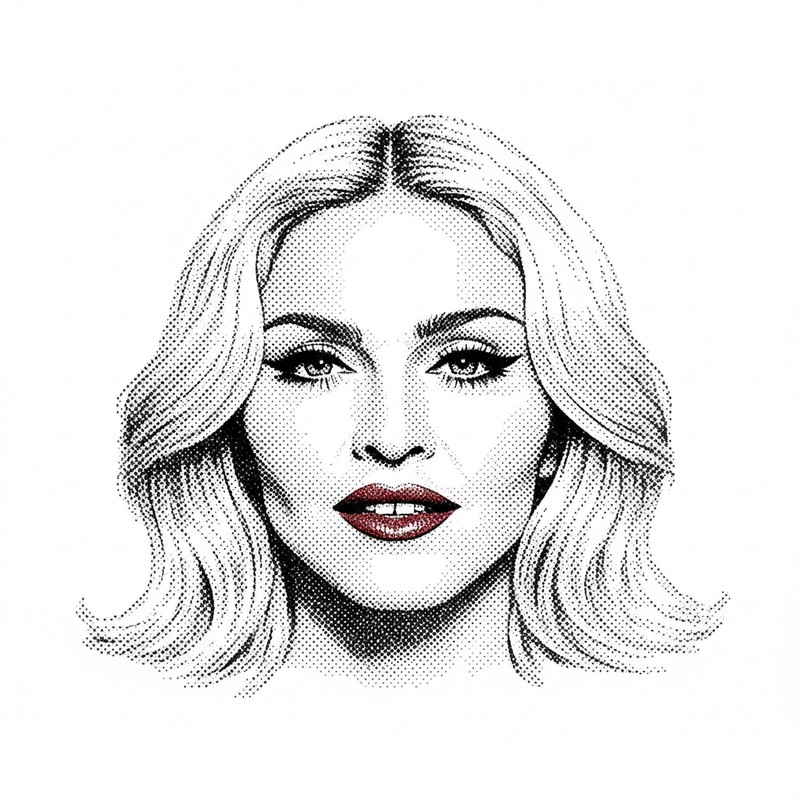
Case File #ML-2025-0505. Subject: Madonna Louise Ciccone. Filed under: Pop Royalty; Cultural Tourists (Lifetime Platinum Tier); Women Who Have Adopted Children from Malawi; Individuals Who Posted the N-Word on Instagram and Called It “a Term of Endearment”; The Original Appropriation Case File, Vintage 1984.
The Board of Review has opened a formal evaluation into the N-Word Pass eligibility of Madonna Louise Ciccone, the woman who has spent four decades positioned at the exact intersection of Black cultural innovation and white commercial profitability. If cultural appropriation had a corporate headquarters, Madonna would be the founding CEO, chairwoman emeritus, and the person whose portrait hangs in the lobby.
The Board wishes to clarify at the outset that this evaluation is not about Madonna’s talent, which is considerable, or her commercial impact, which is historic. It is about a forty-year pattern of extracting from Black culture with one hand while claiming allyship with the other, and whether that pattern, taken in its entirety, constitutes the kind of reciprocal engagement the Official N-Word Pass requires.
The biographical record. Madonna Louise Ciccone was born on August 16, 1958, in Bay City, Michigan, to Italian-American parents. Her mother died of breast cancer when Madonna was five. She studied dance at the University of Michigan, moved to New York City in 1977 with thirty-five dollars in her pocket (a detail she has recounted in approximately four hundred interviews), and embedded herself in the downtown Manhattan scene that included graffiti artists, breakdancers, DJs, and the predominantly Black and Latino ball culture that would later inform her career in ways the Board will examine at length.
By 1983, she had a record deal. By 1984, “Like a Virgin” had sold over 21 million copies. By 1990, she was the highest-paid entertainer in the world. Along the way, she absorbed, repackaged, and commercialized elements of Black culture with a consistency and efficiency that the Board finds, upon review, both impressive and concerning.
Cultural Context
Madonna’s career spans the entirety of the modern appropriation conversation. She was borrowing from Black culture before the term “cultural appropriation” had entered mainstream discourse. She was doing it when the only people raising objections were the Black artists whose innovations she was popularizing without comparable credit. And she continued doing it long after the cultural conversation caught up, which suggests either genuine obliviousness or a calculated bet that the commercial returns would always outweigh the cultural costs.
The specific traditions Madonna has drawn from include: vogueing and ball culture, which originated in Harlem’s Black and Latino LGBTQ+ communities; gospel music and church aesthetics; hip-hop production and visual style; dancehall and Caribbean music; and, more recently, Afrobeats. Each of these borrowings occurred at a moment when the originating community was still marginalized, still fighting for mainstream recognition, and still receiving a fraction of the commercial benefit that Madonna’s adaptations generated.
The Board has examined similar dynamics in the Miley Cyrus evaluation and the Iggy Azalea evaluation. Madonna’s case differs in one significant respect: the duration. Miley Cyrus borrowed from Black culture for approximately three years. Madonna has been doing it for forty. Whether that duration represents sustained engagement or sustained extraction is the central question before the Board.
The Case For
Early New York Immersion Was Genuine
When Madonna arrived in New York in 1977, she did not move to the Upper East Side. She moved to the East Village and Harlem, where her social circle included Black and Latino dancers, DJs, and visual artists. Her early musical collaborators included Jellybean Benitez, a Puerto Rican DJ, and her debut album was shaped by the Black and Latino dance music scene that dominated downtown Manhattan clubs. This immersion was not curated by a marketing team. It was the result of a young woman arriving in a city and gravitating toward the cultural spaces that excited her. The Board notes the authenticity of this early period without extending it as a blanket justification for the four decades that followed.
”Truth or Dare” and Vogueing Exposure
Madonna’s 1990 hit “Vogue” and the accompanying “Blond Ambition” tour brought vogueing, a dance form created by Black and Latino LGBTQ+ communities in Harlem, to a global audience. The documentary “Truth or Dare” (1991) featured members of these communities prominently. The exposure was unprecedented. Millions of people learned about vogueing through Madonna.
The Board acknowledges this exposure while noting, as it must, that Jennie Livingston’s documentary “Paris Is Burning” (1990) documented ball culture from within and was released the same year as “Vogue.” The community did not need Madonna to tell its story. It was already telling its own. Madonna amplified it. Whether amplification constitutes contribution or appropriation depends on what the amplifier gave back.
Decades of LGBTQ+ Advocacy
Madonna’s support for LGBTQ+ communities, many of which are Black and brown, has been sustained across her entire career. She funded AIDS research and services during the epidemic’s darkest years, when government response was negligible and public stigma was lethal. She used her platform to normalize queer identity at a time when doing so carried genuine career risk. The LGBTQ+ communities she supported were disproportionately Black and Latino, and the material benefits of her advocacy, fundraising, visibility, and political pressure, served those communities directly.
Collaborations with Black Artists and Producers
Madonna has worked with Nile Rodgers, Babyface, Pharrell Williams, Timbaland, Diplo, and numerous other Black producers and songwriters across her career. These collaborations were not token gestures. They shaped the sound of her most successful albums. The professional relationships were, by available accounts, respectful and creatively productive.
The Case Against
The Instagram N-Word Post
In January 2014, Madonna posted a photograph of her son Rocco on Instagram with a caption that included the N-word, followed by a hashtag containing the word. When confronted, she initially defended the post, stating that the word was “a term of endearment.” She subsequently apologized and deleted the post. The Board wishes to address this directly: the N-word is not a term of endearment when deployed by a white woman from Bay City, Michigan, on a public social media platform with millions of followers. The defense was worse than the post. It revealed a person who believed their proximity to Black culture entitled them to the most guarded word in the American English language. It does not.
Vogueing Was Commercialized Without Proportional Credit
“Vogue” sold millions of copies and became one of Madonna’s signature songs. The dancers and choreographers from Harlem’s ball scene who taught her the form received session musician rates and tour employment. They did not receive songwriting credits, publishing royalties, or institutional investment in the communities where vogueing was born. Jose Gutierez Xtravaganza and Luis Camacho Xtravaganza choreographed the tour and appeared in the video. Their compensation, relative to the revenue the song and tour generated, was a fraction. This disparity is the textbook definition of cultural extraction: the originating community provides the innovation; the commercial entity harvests the profits.
The Adoptions from Malawi Are Not Cultural Credentials
Madonna adopted four children from Malawi. She also established the Raising Malawi foundation, which has built schools and funded health initiatives in the country. The Board does not question the sincerity of these actions. The Board does note that adopting Black children and funding African development projects are not evidence of cultural standing within Black American communities. They are evidence of wealth deployed charitably in African nations. The two are not interchangeable, and the conflation of them reveals a worldview in which Blackness is a monolith rather than a diverse array of distinct cultural experiences.
The Pattern of Borrowing Follows Commercial Trends
Madonna’s engagement with Black culture has tracked commercial trends with notable precision. When hip-hop dominated the charts, Madonna incorporated hip-hop production. When dancehall was trending, Madonna released “Music” with Jamaican-influenced production. When Afrobeats began its global ascent, Madonna’s later projects incorporated Afrobeats elements. The pattern suggests an artist whose relationship with Black culture is mediated by market analysis rather than genuine cultural affinity. A tourist who visits every popular destination is still a tourist.
The Grill, the Grillz, and the General Aesthetic Borrowing
As recently as 2023, Madonna appeared at public events wearing grillz, cornrows, and fashion aesthetics associated with Black culture. These appearances occurred without commentary, acknowledgment, or the kind of contextual awareness that four decades of public feedback might be expected to produce. The Board notes that a seventy-year-old white woman from Michigan wearing grillz to the Grammys is not cultural exchange. It is a Halloween costume worn in March.
Deeper Analysis
Madonna’s case is historically significant for the Board because she represents the original template for the phenomenon the Board now evaluates across dozens of cases. Before Miley Cyrus, before Iggy Azalea, before any of the contemporary figures who borrow from Black culture during commercially convenient periods, there was Madonna, doing the same thing in 1984 with fewer people willing to call it what it was.
The forty-year duration of Madonna’s borrowing complicates the evaluation in a way that shorter-term cases do not. On one hand, the sustained nature of her engagement could be read as genuine cultural affinity rather than opportunistic trend-chasing. She did not abandon Black cultural aesthetics after a single album cycle. She returned to them, repeatedly, across four decades and multiple genre shifts. On the other hand, the sustained nature of the borrowing, combined with the consistent pattern of undercompensating the Black artists and communities whose innovations she popularized, produces a cumulative ledger that is heavily imbalanced.
The key distinction the Board draws is between exposure and reciprocity. Madonna exposed millions of people to vogueing. She exposed millions of people to Black dance music. She exposed millions of people to aesthetics and art forms that originated in Black communities. Exposure is not nothing. But exposure without proportional reinvestment is broadcast, not exchange. It is a one-way transmission in which the broadcaster profits and the originating community receives visibility instead of equity.
The Eminem evaluation provides an instructive contrast. Eminem entered hip-hop and invested in it: launching Black artists through Shady Records, funding community programs in Detroit, and maintaining a posture of visible gratitude toward the culture that made his career possible. Madonna entered Black cultural spaces, took what was useful, and reinvested at a rate the Board considers insufficient relative to the returns she received.
Official Verdict
DENIED. The Board of Review has determined that Madonna Louise Ciccone does not meet the criteria for issuance of the Official N-Word Pass.
The determining factors are as follows: the Instagram N-word post, and the initial defense characterizing it as a “term of endearment,” demonstrate a fundamental misunderstanding of the word’s significance and the limits of cultural proximity; four decades of borrowing from Black cultural traditions without proportional reinvestment in the communities that created those traditions constitute a pattern of extraction rather than reciprocity; the commercialization of vogueing without equitable compensation for the Harlem ball culture community that created the form is a specific and documented instance of cultural profit without cultural investment; and the ongoing adoption of Black aesthetics (grillz, cornrows, hip-hop fashion) without contextual awareness suggests a relationship with Black culture that is acquisitive rather than respectful.
Mitigating factors are entered into the record: the early New York immersion was genuine and formative; LGBTQ+ advocacy that served Black and brown queer communities was sustained and materially significant; professional collaborations with Black producers and artists were respectful and creatively productive; and the Raising Malawi foundation represents genuine philanthropic commitment, though the Board reiterates that it is not a substitute for engagement with Black American communities.
The denial is issued with the observation that Madonna is perhaps the only applicant in the Board’s history whose file spans the entire modern era of the appropriation conversation. She has been doing this longer than most of the Board’s other applicants have been alive. The length of the pattern does not redeem it. It merely makes the file thicker.