Introduction
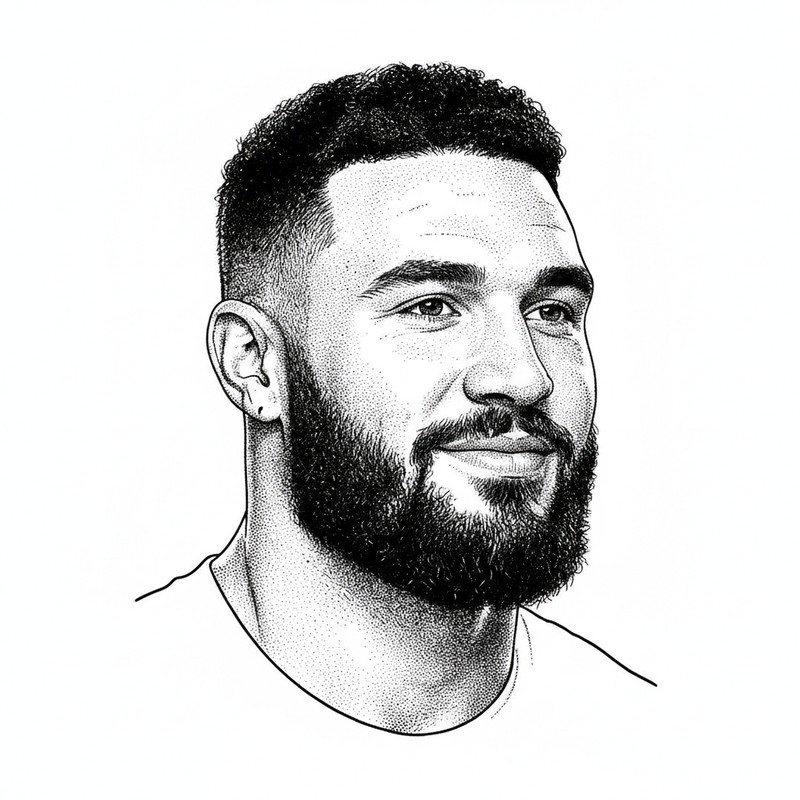
Case File #BH-2026-0213. Subject: Benjamin Hammond Haggerty, known professionally as Macklemore. Filed under: White Rappers; Grammy Winners (Controversial); Individuals Whose Public Apology for Winning an Award Became More Famous Than the Award Itself.
The Board of Review has opened a formal evaluation into the N-Word Pass eligibility of Benjamin Haggerty, a white rapper from Seattle, Washington, who in 2014 won the Grammy Award for Best Rap Album over Kendrick Lamar’s “good kid, m.A.A.d city,” and has spent the subsequent decade attempting to apologize his way out of a cultural debt that compounds interest faster than he can make payments.
The biographical record. Ben Haggerty was born in 1983 and raised in Seattle’s Capitol Hill neighborhood. His upbringing was comfortable, white, and suburban in the way that Pacific Northwest upbringings frequently are. He discovered hip-hop as a teenager, began recording music in his early twenties, and spent nearly a decade as an independent rapper with a modest regional following before “Thrift Shop” went supernova in 2012, propelled by a beat from his production partner Ryan Lewis and a music video that cost $600 to make and generated approximately $600 million in cultural impact.
“Thrift Shop” was followed by “Can’t Hold Us,” “Same Love” (a pro-LGBTQ+ anthem), and “The Heist,” an album that Macklemore and Lewis released independently, without a major label, selling directly to fans through their own distribution infrastructure. The album debuted at number one. It was, by independent music standards, a remarkable achievement. It was also the album that won the Grammy over Kendrick Lamar.
The Grammy is the fulcrum of this evaluation, not because the award itself determines pass eligibility, but because what happened after the award reveals everything the Board needs to know about Macklemore’s relationship with hip-hop’s racial dynamics.
Cultural Context
The N-Word Pass evaluation framework evaluates cultural engagement, communal trust, and reciprocity. In the case of white rappers, the framework pays particular attention to how the applicant navigates the structural advantages that whiteness provides within the music industry. The Eminem evaluation established a benchmark for how a white rapper can earn cultural trust through sustained skill, community investment, and humility. The Macklemore evaluation examines what happens when those qualities are present in some dimensions and conspicuously absent in others.
The broader context is the Grammy Awards’ well-documented history of failing to recognize Black artistry. In the year Macklemore won, Kendrick Lamar’s “good kid, m.A.A.d city” was not merely nominated alongside “The Heist.” It was, by critical consensus, one of the greatest hip-hop albums of the decade, a cinematic narrative of Compton youth survival that expanded what the genre could accomplish structurally and emotionally. That the Recording Academy chose “Thrift Shop: The Album” over Kendrick’s masterwork was not Macklemore’s fault. But his response to it, and the culture’s response to his response, is the substance of this evaluation.
The Case For
The Apology to Kendrick Was Genuine
After winning the Grammy, Macklemore texted Kendrick Lamar: “You got robbed. I wanted you to win. You should have. It’s weird and it sucks that I robbed you.” He then posted a screenshot of the text to Instagram, which is where the situation became complicated (see Case Against). But the Board evaluates the initial impulse before examining its execution: Macklemore’s first instinct was to acknowledge that his win was, by the relevant standards, unjust. This instinct is noted as evidence of genuine awareness of the racial dynamics at play.
”White Privilege” Tracks Demonstrate Self-Awareness
Macklemore released “White Privilege” in 2005 and “White Privilege II” in 2016. Both tracks engage directly with his position as a white artist profiting from a Black art form. “White Privilege II” is a nine-minute examination of gentrification, cultural appropriation, and the guilt of benefiting from systems built on racial inequality. The Board has reviewed the lyrics and finds them substantively engaged with structural racism at a level that exceeds what most white rappers have attempted.
The question is whether making songs about white privilege constitutes meaningful action or whether it is a form of performative self-flagellation that allows the artist to profit from the critique of profiting. The Board finds both interpretations have merit.
Independent Distribution Model Bypassed Industry Gatekeeping
Macklemore and Ryan Lewis released “The Heist” independently, without a major label. This is relevant because the major label system is the primary mechanism through which the music industry’s racial economics operate. By bypassing that system, Macklemore demonstrated that commercial success was possible without the corporate infrastructure that has historically extracted value from Black music. The Board notes this as a structural contribution, even as it acknowledges that an independent white rapper’s success is enabled by the same racial dynamics that constrain independent Black artists.
Pro-LGBTQ+ Advocacy Through “Same Love”
“Same Love” was one of the first commercially successful songs by a hip-hop artist to explicitly advocate for LGBTQ+ rights. While not directly related to the N-Word Pass evaluation criteria, the Board notes that using a hip-hop platform for social advocacy demonstrates a willingness to leverage cultural access for progressive purposes. This willingness is relevant to the evaluation’s reciprocity criteria.
The Case Against
The Grammy Apology Became Performance Art
Macklemore texted Kendrick Lamar a private acknowledgment that the Grammy result was unjust. He then posted the text to Instagram for his millions of followers to see. The transformation of a private gesture of humility into a public performance of allyship is the core of the Board’s concern with this incident.
By posting the text, Macklemore accomplished several things simultaneously: he demonstrated that he understood the injustice, he positioned himself as the kind of white person who understands injustice, and he received public credit for understanding the injustice. The apology became content. The humility became a brand. Kendrick Lamar, who did not consent to having a private text published, was placed in the position of having to respond publicly to a gesture that was originally private, which is the kind of dynamic that benefits the apologizer more than the person apologized to.
Kendrick later addressed this dynamic in interviews, noting with characteristic restraint that “everything isn’t meant to be shared.” The Board concurs.
The Apology Tour Became the Career
Following the Grammy incident, Macklemore’s public identity shifted from “indie rapper” to “white rapper who feels bad about being a white rapper.” This is not, in the Board’s assessment, a cultural contribution. Self-awareness that never progresses beyond self-awareness is a loop, not a journey. At some point, the question becomes: what has the awareness produced beyond more expressions of awareness?
The Board has reviewed Macklemore’s post-Grammy career for evidence that his articulated understanding of white privilege has translated into sustained institutional action. The record shows charitable donations, public statements, and additional songs about the topic. It does not show the kind of sustained community investment, label infrastructure for Black artists, or institutional commitment that would transform awareness into contribution.
”Thrift Shop” Popularity Illustrates the Very Dynamics He Critiques
“Thrift Shop” became one of the best-selling singles in hip-hop history. The song is about shopping at Goodwill. It was purchased, in overwhelming numbers, by an audience demographic that the Board describes as “people who would not otherwise buy rap music.” Macklemore’s commercial success was built, in significant part, on making hip-hop accessible to white audiences who found conventional hip-hop alienating, which is precisely the dynamic that “White Privilege” purports to critique.
The Board notes the circularity: Macklemore profits from being a non-threatening white entry point into hip-hop, then profits again by critiquing the fact that white entry points into hip-hop exist. Both products sell to the same audience. The structural reality does not change.
Limited Sustained Community Investment
The Board has reviewed the public record for evidence of sustained institutional investment in Black communities, Black artists, or hip-hop preservation. The record shows episodic donations and public statements. It does not show scholarship programs, label imprints, community centers, or the kind of structural commitment that the Board’s framework evaluates favorably.
Given the substantial commercial revenue generated by Macklemore’s career, the absence of sustained institutional investment in the Black communities whose art form he profits from represents a gap in reciprocity.
The Halloween Costume Incident
In 2014, Macklemore appeared at a Halloween event wearing a costume that included a large prosthetic nose, a black wig, and a beard. Multiple observers noted the costume’s resemblance to antisemitic caricatures. Macklemore stated the costume was a random disguise and not intended as a Jewish stereotype. The Board does not evaluate this incident as a pass criterion, but notes it as evidence of a recurring pattern: actions that produce racial or ethnic controversy, followed by statements of non-intent, followed by the cultural conversation moving on without resolution.
Deeper Analysis
The Macklemore case illuminates a specific failure mode in the Board’s evaluation framework: the applicant who understands everything and acts on very little. Macklemore’s articulated awareness of his position as a white artist in a Black genre is, by the standard of white rappers, sophisticated. “White Privilege II” engages with structural racism, police violence, and the performative nature of white allyship with a specificity that suggests genuine intellectual engagement with the material.
But awareness without corresponding action is, in the Board’s assessment, insufficient. The Board does not issue passes for understanding the problem. The Board issues passes for demonstrating, through sustained action, that the understanding has produced meaningful change in how the applicant relates to the culture they participate in.
The comparison with Eminem is illuminating. Eminem rarely discusses white privilege in his music. He does not make songs about feeling guilty for being a white rapper. What he does is invest in Black communities, share his platform with Black artists, and maintain a posture of humility toward hip-hop’s Black origins that is demonstrated through action rather than articulated through lyrics. Macklemore does the opposite: he articulates beautifully and acts minimally.
The Post Malone evaluation examined an artist who lacks Macklemore’s self-awareness but who also lacks Macklemore’s pattern of converting self-awareness into content. The Board finds both approaches insufficient, but for different reasons. Post Malone does not understand the problem. Macklemore understands the problem and has turned the understanding into a product. Neither approach produces the sustained reciprocity the Board requires.
Official Verdict
DENIED. The Board of Review has determined that Benjamin Hammond Haggerty, known professionally as Macklemore, does not meet the criteria for issuance of the Official N-Word Pass.
The determining factors are as follows: the transformation of the Grammy apology from a private gesture of humility into a public performance of allyship demonstrates a pattern of converting racial awareness into content rather than action; articulated understanding of white privilege, while intellectually sophisticated, has not been accompanied by sustained institutional investment in Black communities; commercial success built on making hip-hop accessible to audiences who find conventional hip-hop alienating illustrates the very racial dynamics the applicant claims to critique; and the absence of structural reciprocity, whether through label infrastructure, scholarship programs, or community investment, indicates that awareness has not translated into contribution.
Mitigating factors are noted: the initial instinct to acknowledge the Grammy injustice was genuine; “White Privilege” and “White Privilege II” demonstrate intellectual engagement with structural racism that exceeds the norm for white rappers; and the independent distribution model represents a structural alternative to the major label system.
The denial is issued with the observation that Mr. Haggerty possesses the awareness, the platform, and the resources to transform his understanding into sustained institutional action. Should he do so, a future review may reach a different conclusion. For now, awareness without action is insufficient.