Introduction
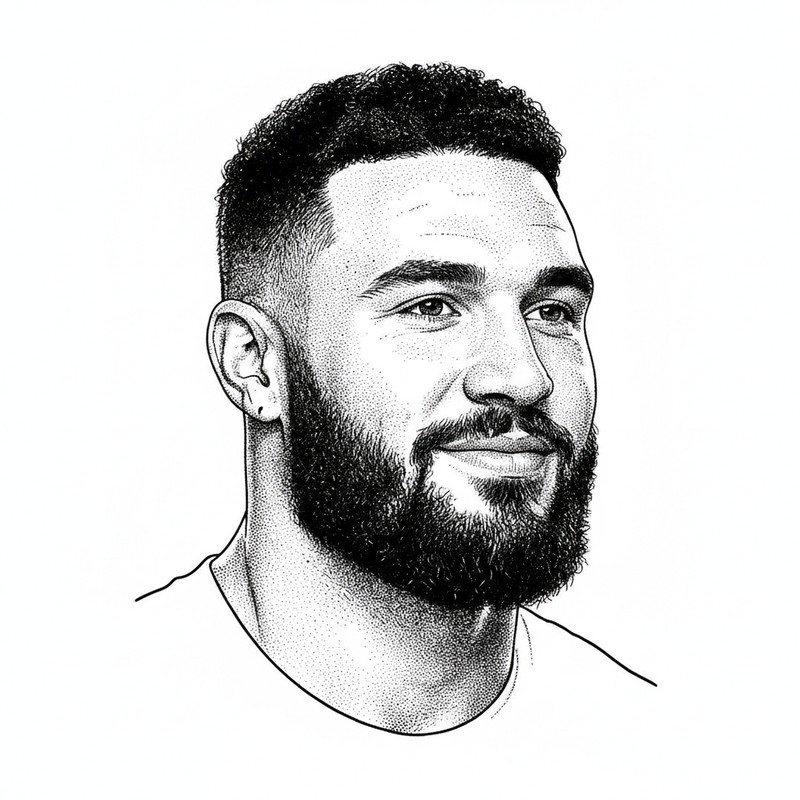
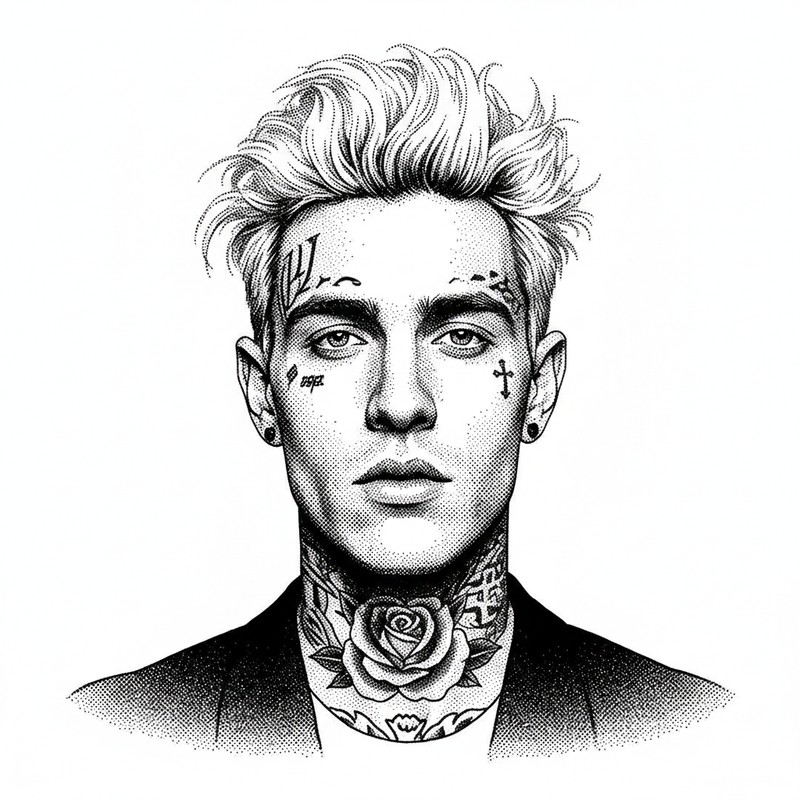
Case File #MGK-2026-0306. Subject: Colson Baker, operating under the professional alias “Machine Gun Kelly” (also “MGK”). Filed under: Entertainers, Rap (Former); Entertainers, Pop-Punk (Current); Individuals Who Lost a Public Rap Battle and Changed Genres.
The Board of Review has opened a formal evaluation into the N-Word Pass eligibility of Colson Baker. The subject’s career trajectory, from Cleveland battle rap circuits to Bad Boy Records to an Eminem confrontation to a pop-punk reinvention, presents a case study in genre migration that the Board finds directly relevant to its assessment criteria.
Born on April 22, 1990, in Houston, Texas, Colson’s early life was a geography lesson in instability. His father was a missionary, which sounds more serene than it was. The family moved between Egypt, Germany, and various American cities before landing in Denver, Colorado, where young Colson’s mother abandoned the family entirely. He and his father eventually settled in Cleveland, Ohio, a city that would become central to his artistic identity and his claim to hip-hop credibility.
Cleveland in the early 2000s was a rust belt city still processing decades of economic decline, racial tension, and the kind of sports heartbreak that builds character whether you want it or not. Colson attended Shaker Heights High School, a notably diverse institution where the student body split roughly evenly between Black and white students. He started rapping as a teenager, adopting the name Machine Gun Kelly from a notorious 1930s gangster and building a local following through mixtapes and live shows characterized by manic energy and an apparent inability to stand still.
His 2012 debut album, Lace Up, arrived on Bad Boy Records (Diddy’s label) and positioned MGK as a legitimate hip-hop contender. The album featured collaborations with DMX, Waka Flocka Flame, and Tech N9ne. Critics noted his rapid-fire delivery and working-class authenticity. He was not the most skilled lyricist in any room he entered, but his energy was undeniable, and his Cleveland roots gave him a roughness that separated him from the wave of blog rappers emerging at the time.
Then came 2018, and with it, the decision that would define his career more than any album or collaboration: he took a shot at Eminem. His track “Rap Devil” was a response to Eminem’s “Not Alike” from the album Kamikaze. Eminem fired back with “Killshot,” a surgical lyrical dismantling that accumulated hundreds of millions of views and left MGK’s rap credibility in a condition best described as “intensive care.”
What happened next surprised everyone. Rather than continuing the rap beef he could not win, MGK pivoted to pop-punk. His 2020 album Tickets to My Downfall, produced by Travis Barker, debuted at number one on the Billboard 200. The transformation was complete: the Cleveland rapper was now a pink-haired rocker with painted nails, a clothing line, and a relationship with actress Megan Fox that generated tabloid coverage measured in metric tons.
This genre pivot is central to our evaluation, because the N-Word Pass is fundamentally about sustained commitment to and respect for Black culture. An artist who built his early career in hip-hop and then abandoned the genre after losing a public battle raises questions about how deep that commitment ever was. Let us weigh the evidence.
Cultural Context & Historical Background
The N-word’s transformation from a tool of racial terror to a reclaimed term of in-group solidarity is one of the most complex linguistic journeys in human history. Black communities guard the reclaimed version with the vigilance of people who understand what it cost to take the word back. Access for non-Black individuals depends on trust, sustained engagement, and demonstrated respect, qualities that are earned over years and can be lost in moments.
Hip-hop has historically served as the primary arena where this trust is negotiated between Black and non-Black participants. White rappers from the Beastie Boys to Eminem to Jack Harlow have navigated this space with varying degrees of success, and the culture’s verdict has been surprisingly consistent: skill matters, but respect matters more. You can be a mediocre rapper and still earn community goodwill if your engagement is genuine. You can be technically gifted and still lose trust if your behavior suggests you view Black culture as a stepping stone rather than a home.
MGK’s career trajectory creates an unusual test case. He entered hip-hop through legitimate channels: Cleveland battle raps, Bad Boy Records, collaborations with established Black artists. He was, for a period, a functioning member of the hip-hop community with real (if limited) respect from peers. His pivot to pop-punk did not just change his sound. It changed his cultural address. He moved out of the neighborhood, and the neighborhood noticed.
Our evaluation criteria consider not just present engagement but historical patterns. An artist who arrived in hip-hop, extracted what he could, lost a public contest, and then departed for a genre with fewer gatekeeping mechanisms raises flags that our Board of Review cannot ignore.
Pros
Legitimate Cleveland Upbringing
Colson Baker’s Cleveland years were not a fabrication. He grew up in a racially diverse environment, attended a school with a significant Black student population, and developed his musical identity in a city where hip-hop was one of the primary cultural languages. His early experiences in Cleveland rap battles involved performing for and being judged by predominantly Black audiences. He earned respect in those rooms through energy and persistence, if not always through lyrical precision.
Cleveland is not a city that hands out credibility for free. It is a place where economic hardship, racial tension, and cultural pride create an environment that tests authenticity. MGK passed those early tests. He was accepted as a participant in Cleveland hip-hop, and that acceptance was based on genuine engagement rather than novelty or curiosity.
Bad Boy Records Signing and Black Collaborators
Being signed to Diddy’s Bad Boy Records was not a trivial credential. The label’s roster was predominantly Black, and its cultural footprint was enormous. MGK did not sneak onto the label through a side door. He was selected, promoted, and positioned as a hip-hop artist with crossover potential. His collaborations with DMX, Waka Flocka Flame, and other Black artists were not charity features. They were professional endorsements that suggested the culture accepted his presence.
Early Career Authenticity
Before the Eminem beef and the genre pivot, MGK was a working rapper who toured extensively, performed at hip-hop festivals, and maintained a fan base that included significant numbers of Black listeners. His music addressed working-class struggle, economic anxiety, and the grind of building a career from nothing. These themes resonated across racial lines because they were rooted in genuine experience rather than manufactured narrative.
He Did Not Use the N-Word (Publicly, in Music)
Our Board of Review notes that MGK, despite years of making hip-hop music and performing in predominantly Black spaces, did not incorporate the N-word into his recorded output. This restraint, similar to what we observed in our evaluation of Jack Harlow, suggests an understanding of linguistic boundaries that some white hip-hop artists have failed to demonstrate.
Cons
The Genre Pivot Reads as Cultural Abandonment
This is the elephant in the recording studio. MGK built his career in hip-hop, benefited from the culture’s infrastructure, co-signs, and audience, and then left when things got difficult. The timing is particularly damaging: his departure came after the Eminem beef, a public loss that made continued competition in rap untenable. The pivot to pop-punk was commercially brilliant (the album debuted at number one) but culturally suspect.
Hip-hop communities read the move as confirmation of what skeptics had always suspected: MGK was a tourist. He visited hip-hop, enjoyed the scenery, and returned to a genre where his whiteness was an asset rather than an obstacle. Pop-punk has fewer racial gatekeepers, fewer questions about cultural authenticity, and a built-in audience that does not require Black co-signs. The pivot was, from a business perspective, a rational response to a difficult situation. From a cultural trust perspective, it was an evacuation.
The N-Word Pass requires sustained commitment. You cannot earn it by living in the neighborhood for eight years and then moving to the suburbs when the rent gets too high. MGK’s departure from hip-hop is the single most significant factor in our evaluation, and it weighs heavily against approval.
The Eminem Beef Demonstrated Limited Skill
The “Rap Devil” vs. “Killshot” exchange was not a close contest. Eminem’s response was technically superior, lyrically denser, and culturally more resonant. MGK’s entry was competent but outmatched. In a genre that values lyrical skill as a core credential, being publicly outclassed by a peer (even a peer as skilled as Eminem) diminishes standing.
More importantly, MGK’s response to losing was to leave the genre entirely. In hip-hop, losing a battle is not necessarily fatal. Rappers have lost public exchanges and rebuilt through subsequent work, humility, and continued engagement. What damages credibility is running. MGK ran. He ran to guitars, power chords, and Travis Barker drum fills. The culture noticed and drew its own conclusions.
Surface-Level Engagement With Black Culture
Even during his hip-hop years, MGK’s engagement with Black culture operated primarily at the professional level. He collaborated with Black artists, performed at hip-hop events, and moved in hip-hop circles. What is absent from the public record is deeper community engagement: investment in Black institutions, sustained advocacy for racial justice, or the kind of behind-the-scenes relationship-building that distinguishes genuine cultural participants from professional affiliates.
Compare this with Eminem, who has spent decades investing in Detroit’s Black communities, funding youth programs, and maintaining relationships that extend far beyond the recording studio. MGK’s Cleveland ties, while genuine, did not produce comparable depth of engagement. His commitment to hip-hop’s community was a mile wide and an inch deep.
The Celebrity Lifestyle Rebrand
Post-pivot MGK became a tabloid fixture, known more for his relationship with Megan Fox, his elaborate nail art, and his fashion choices than for his music. This is not inherently problematic, but it signals a distance from the working-class authenticity that characterized his early career and his initial appeal to hip-hop audiences. The Cleveland grinder who rapped about struggle became the Hollywood boyfriend who wore studded leather and drank from jewel-encrusted goblets at awards shows.
Identity evolution is normal and healthy. But when that evolution moves consistently away from the culture you initially claimed and toward a culture that requires less racial accountability, the pattern speaks for itself.
Comments About Black Girls
In a resurfaced video from around 2012, MGK made comments about Black girls that ranged from objectifying to dismissive, treating Black women as a category to be evaluated by physical attributes rather than as individual human beings. The comments were juvenile and reductive. While they occurred over a decade ago, they reveal an attitude toward Black women specifically, and Black people generally, that treated proximity to Blackness as consumption rather than genuine engagement. The aunties reviewed these comments and were not amused.
Deeper Cultural Analysis
Machine Gun Kelly’s career arc functions as a case study in the difference between cultural participation and cultural tourism. Tourism involves visiting a place, enjoying its offerings, and returning home when conditions become inconvenient. Participation involves staying, contributing, and weathering the difficult periods alongside the community.
MGK’s hip-hop years showed flashes of genuine participation. His Cleveland roots were real. His energy was undeniable. His early work resonated with listeners who recognized authentic struggle in his lyrics. But participation requires durability, and MGK’s commitment to hip-hop lasted exactly as long as hip-hop was working for him. When the genre dealt him a public loss, he found a new genre that dealt him a public win. The efficiency of the transition was impressive. The message it sent was not.
The pop-punk pivot also raises questions about the racial economics of genre-switching. Hip-hop is a Black art form with Black gatekeepers who evaluate white participants with justified scrutiny. Pop-punk is a predominantly white genre with a history of welcoming (some would say centering) white artists without comparable racial interrogation. Moving from the former to the latter is, whether intentional or not, a move from a space that demands racial accountability to one that does not. MGK did not have to navigate questions about cultural authenticity in pop-punk. Nobody asked if he belonged. Nobody questioned his right to participate. The contrast is instructive.
Our Board of Review does not begrudge artists the right to evolve. Genres are not prisons. But the N-Word Pass evaluation considers the totality of an artist’s relationship with Black culture, and MGK’s totality includes a departure that reads more like an escape than an evolution. He took what hip-hop offered (a platform, co-signs, credibility) and left when the cost of staying exceeded the benefits. That calculus is understandable. It is also disqualifying.
Final Verdict
DENIED.
The Board of Review has determined that Colson Baker does not meet the criteria for issuance of the Official N-Word Pass.
The Board acknowledges Baker’s Cleveland upbringing and early hip-hop career as evidence of genuine, if limited, engagement with Black culture. His restraint in not using the N-word in recordings demonstrates boundary awareness.
However, the genre pivot following the Eminem defeat, the surface-level community engagement, the objectifying comments about Black women, and the consistent pattern of extracting value from Black cultural spaces without proportional reinvestment collectively disqualify the applicant. The vote was unanimous. The pass is denied. The file is closed.
Mr. Baker departed hip-hop for a genre with fewer cultural gatekeepers. That departure is noted as the determining factor in this evaluation. The Board does not issue passes to individuals who treat Black cultural spaces as temporary residences to be vacated when conditions become inconvenient.