Introduction
Case File #ES-2026-0216. Subject: Edward Christopher Sheeran. Filed under: British Singer-Songwriters; Individuals Who Look Like They Were Generated by an Algorithm Designed to Produce the Most Average British Man Possible; Artists Who Collaborate with Rappers Despite Being, Fundamentally and Irreducibly, a Ginger from Suffolk.
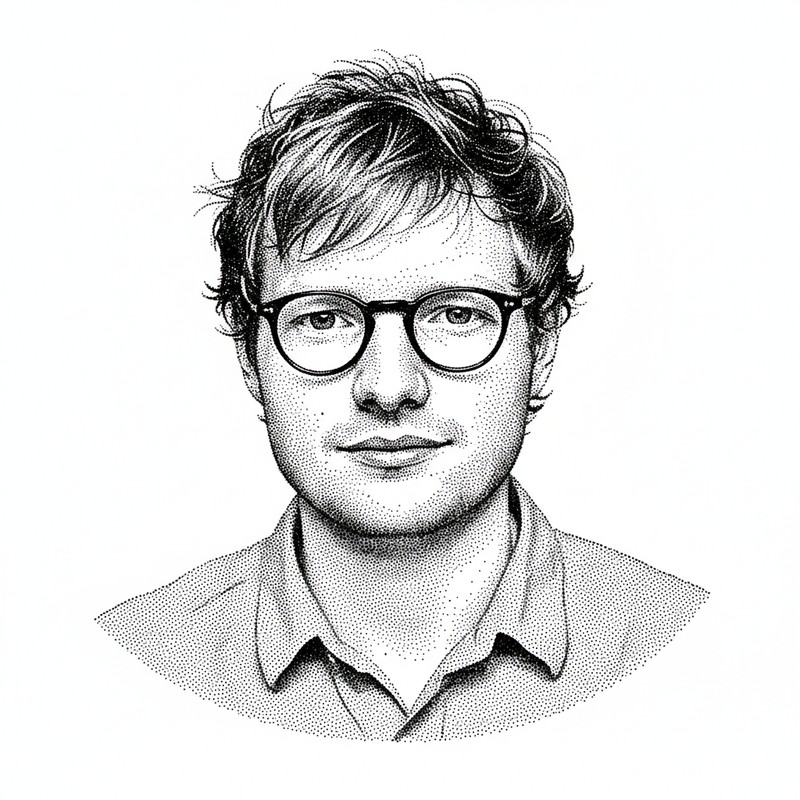
The Board of Review has opened a formal evaluation into the N-Word Pass eligibility of Edward Christopher Sheeran, a red-haired acoustic guitarist from Framlingham, Suffolk, who has somehow become one of the best-selling musical artists of all time while looking like a supply teacher who wandered onto the wrong stage. The question before the Board is whether Mr. Sheeran’s extensive collaborations with Black hip-hop and grime artists, combined with his demonstrated musical versatility, constitute the kind of cultural engagement our framework rewards.
The biographical record. Ed Sheeran was born in 1991 in Halifax, West Yorkshire, and raised in Framlingham, Suffolk. For those unfamiliar with Framlingham, it is a market town in rural East Anglia with a population of approximately 3,000, a ruined castle, and a demographic composition that can be described, charitably, as homogeneous. Young Ed grew up listening to Van Morrison, Damien Rice, and Eminem (the last of whom he has cited as a primary influence on his approach to wordplay and rhythmic delivery). He moved to London as a teenager, performed at open mic nights, slept on couches and, on occasion, outside the Buckingham Palace Tube station, and released his debut album ”+” in 2011. By 2017, his album “Divide” had broken multiple records and he was filling stadiums worldwide.
The hip-hop connections. Ed Sheeran has collaborated with Stormzy, Wiley, JME, Ghetts, and other grime artists. He has also worked with Eminem, 50 Cent, Chance the Rapper, Cardi B, Travis Scott, J Hus, and Young Thug. He has stated repeatedly that grime and hip-hop are among his primary musical influences. He can, by the available video evidence, freestyle with reasonable competence. He has been photographed in studio sessions with some of the most respected names in British and American hip-hop.
The Board does not dispute any of this. The Board does question whether any of it is sufficient for pass issuance, given the totality of the record.
Cultural Context
The N-Word Pass evaluation framework evaluates cultural engagement across multiple dimensions. Collaboration is one dimension. It is not the only dimension, and in cases where the applicant’s personal background, cultural immersion, and community investment are limited, collaboration alone cannot carry the application.
Ed Sheeran’s case is best understood in the context of British grime culture’s specific relationship with authenticity. Grime emerged from East London’s predominantly Black and working-class communities in the early 2000s. It is a genre with deep roots in Black British culture, Jamaican sound system tradition, and UK garage. When a white artist from rural Suffolk enters grime spaces, the cultural dynamics are analogous to those the Board examined in the Eminem evaluation, but with a critical difference: Eminem was forged in the culture. Sheeran visits it.
The Adele evaluation examined a British artist whose connection to Black culture was formed through genuine urban immersion. Sheeran’s formation was rural, white, and acoustic. His subsequent engagement with hip-hop and grime, while sincere, originates from a different foundation.
The Case For
Collaborations with Grime Artists Are Respected Within the Scene
Ed Sheeran’s collaborations with Stormzy, JME, Ghetts, and other grime artists are not casual features arranged by record label executives. They originate from genuine relationships built during his early years performing on the London open mic circuit. Stormzy has spoken publicly about his respect for Sheeran as a musician and a person. The grime community’s acceptance of Sheeran is, by the available evidence, genuine rather than transactional.
This acceptance matters because grime is a genre with rigorous gatekeeping mechanisms. Black British MCs do not typically invite white acoustic guitarists into their studio sessions out of commercial calculation. The invitation suggests recognition of musical ability and personal character that the Board notes favorably.
”No. 5 Collaborations Project” Demonstrated Genuine Hip-Hop Engagement
In 2011, Sheeran released “No. 5 Collaborations Project,” a mixtape featuring collaborations with grime and hip-hop artists. The project was not a major label release. It was not designed for pop radio. It was a deliberate engagement with hip-hop production and lyrical styles, released independently, at a time when Sheeran had nothing to gain commercially from the association. The Board notes this as evidence of genuine interest rather than strategic positioning.
Freestyle Ability Suggests More Than Surface Engagement
Video evidence shows Ed Sheeran freestyling on radio shows and at live events with a competence that suggests genuine study of hip-hop’s technical elements. He does not freestyle like a pop star approximating rap. He freestyles like someone who has spent significant time studying flow, rhyme schemes, and improvisational technique. The Board notes this as evidence of engagement that extends beyond casual consumption.
He Has Never Claimed to Be Something He Is Not
Throughout his career, Sheeran has maintained a consistent public identity. He has not adopted Black aesthetics, hairstyles, or mannerisms. He has not attempted to present himself as anything other than a ginger from Suffolk who loves hip-hop and happens to be very good at making music. This honesty is noted as a positive indicator. The Board has observed that the most problematic applications come from individuals who attempt to perform a racial identity that is not theirs. Sheeran does not do this. He shows up exactly as himself, which is, by all appearances, a friendly and slightly rumpled Englishman with a guitar.
The Case Against
Framlingham Is Not Detroit, Tottenham, or the South Side of Chicago
The Board notes this not as a character assessment but as a geographical fact. Ed Sheeran grew up in rural Suffolk, one of the whitest, most culturally homogeneous counties in England. His formative environment did not include ambient exposure to Black culture, Black community structures, or the multicultural urban dynamics that characterize the upbringings of white artists who have received more favorable evaluations from this Board.
Sheeran’s engagement with Black music was, by his own account, initiated through listening to records. This is a legitimate and common pathway into musical appreciation. It is not the same as growing up within the culture, and the Board’s framework distinguishes between appreciation developed through listening and understanding developed through lived proximity.
Collaborations Are Professional, Not Communal
The Board distinguishes between professional collaboration and communal engagement. Ed Sheeran works with Black artists in studios and on stages. This is a professional relationship, and by all accounts a respectful and productive one. But the Board’s framework evaluates engagement that extends beyond professional contexts into communal ones: sustained presence in Black social spaces, investment in Black community infrastructure, participation in the daily life of Black communities.
The record does not show sustained communal engagement of this kind. Sheeran’s interactions with Black culture occur primarily through the music industry, which is a workplace, not a community.
No Evidence of Sustained Community Investment
Our Board has reviewed the public record for evidence of institutional investment in Black communities, whether British or American. The record does not contain evidence of scholarship programs for Black musicians, funding for community arts programs in underserved areas, or structural investment in the grime or hip-hop communities whose artists have welcomed him into their creative spaces.
This absence is notable because Sheeran’s commercial success is extraordinary. He is one of the wealthiest musicians in the world. The resources available for community investment are substantial. The absence of directed investment in the communities whose musical traditions have contributed to his success indicates a gap in reciprocity that the Board’s framework evaluates negatively.
The Music Remains Fundamentally Pop-Acoustic
While Sheeran’s hip-hop collaborations and grime features demonstrate versatility, the core of his commercial catalog, the songs that sell stadiums and generate billions of streams, remains fundamentally pop-acoustic music. “Shape of You,” “Perfect,” “Thinking Out Loud,” and “Bad Habits” are pop songs. They may incorporate rhythmic elements drawn from dancehall or R&B, but their DNA is pop-acoustic singer-songwriter music in a tradition that is overwhelmingly white and British. The hip-hop engagement, while genuine, operates as a secondary element of a career that is centered elsewhere.
Deeper Analysis
Ed Sheeran is, in the Board’s assessment, a genuinely good person with a genuinely deep appreciation for hip-hop and grime. These assessments are based on the available evidence, which includes public statements from Black artists who have worked with him, video documentation of his musical engagement, and a consistent public persona that does not attempt to claim cultural membership he has not earned.
The case fails not because of any deficiency in character but because of the distance between appreciation and membership. Ed Sheeran appreciates Black music. He studies it. He collaborates with its practitioners. He speaks about it with knowledge and respect. All of this is true, and none of it constitutes the kind of deep, sustained, communal engagement that the Board’s framework requires for pass issuance.
The comparison with Eminem is instructive. Both are white musicians with genuine hip-hop ability. The difference is foundational: Eminem’s relationship with Black culture was formed in the furnace of Detroit’s underground rap scene, where his acceptance was earned through direct competition with Black peers who had no reason to accept him except skill. Sheeran’s relationship with Black culture was formed through listening to records in Suffolk and subsequently building professional relationships in the music industry. Both pathways produce genuine appreciation. Only one produces the kind of communal trust that the Board’s framework rewards.
The Board notes that Sheeran’s case is a clean denial rather than a difficult one. He lacks the formative cultural immersion, the sustained community investment, and the communal engagement that would bring his application within range. He possesses talent, respect from Black peers, and personal decency in abundance. These are admirable qualities. They are not pass qualifications.
Official Verdict
DENIED. The Board of Review has determined that Edward Christopher Sheeran does not meet the criteria for issuance of the Official N-Word Pass.
The determining factors are as follows: formative environment in rural Suffolk provided no meaningful exposure to Black cultural communities; engagement with Black music, while genuine and technically proficient, operates primarily through professional collaboration rather than communal participation; the absence of sustained institutional investment in Black communities indicates a gap in reciprocity; and the core commercial catalog, while occasionally incorporating elements from Black musical traditions, remains centered in pop-acoustic traditions.
Mitigating factors are noted: genuine respect from Black grime and hip-hop artists who have chosen to collaborate with him is meaningful; musical engagement with hip-hop and grime demonstrates study and appreciation that exceeds surface-level borrowing; and a consistent refusal to perform a racial identity that is not his own is commendable.
The denial is issued with respect and without animosity. Mr. Sheeran is advised to continue doing what he does, playing his guitar, treating his collaborators with respect, and refraining from claiming cultural territory he has not earned, which, to his credit, he has never attempted to do.