Introduction
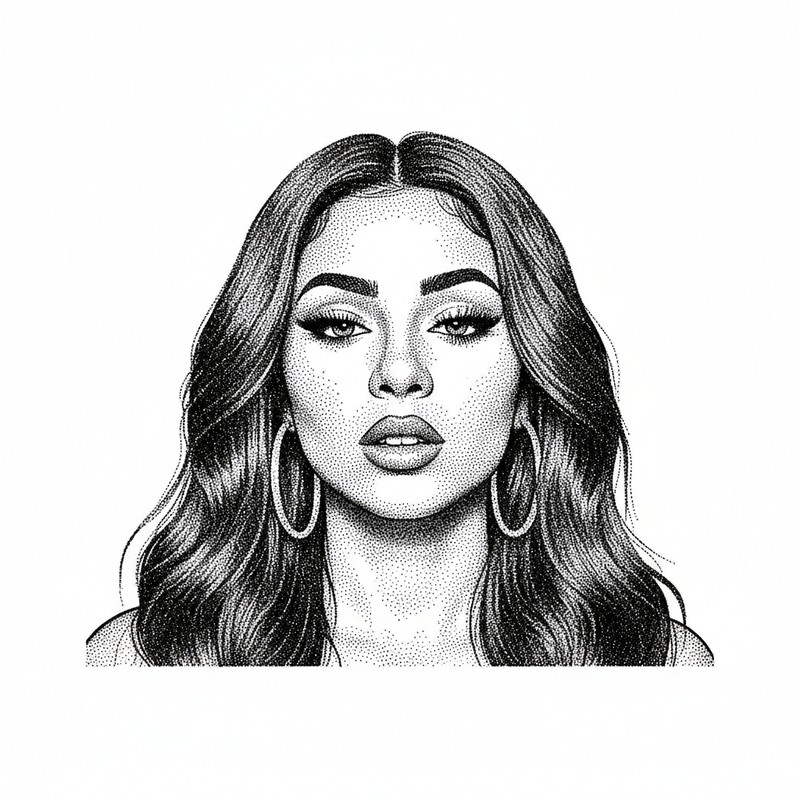
Case File #BB-2026-0227. Subject: Danielle Peskowitz Bregoli, operating under the professional alias “Bhad Bhabie.” Filed under: Entertainers, Rap; Former Daytime Television Subjects; Individuals Whose Career Originated From a Viral Threat Issued to a Studio Audience.
The Board of Review has opened a formal evaluation into the N-Word Pass eligibility of Danielle Peskowitz Bregoli. The subject stared into a Dr. Phil studio camera in 2016, told an audience to “cash me outside, how bout dat,” and accidentally coined one of the decade’s most durable catchphrases. Within weeks, the clip had a hundred million views. Within months, Danielle had a manager, a record deal, and a stage name: Bhad Bhabie. She was thirteen years old.
Born March 26, 2003, Danielle grew up in a turbulent household. Her mother, Barbara Bregoli, a white Italian-American woman, raised her alone after her father, Ira Peskowitz, largely exited the picture. Danielle’s behavioral issues landed her on Dr. Phil’s couch in a segment about out-of-control teens. The show framed her as a cautionary tale. The internet turned her into a folk hero. The gap between those two readings tells you everything about fame in the algorithm age.
By 2017, Atlantic Records signed her. Her debut single, “These Heaux,” made her the youngest female rapper to chart on the Billboard Hot 100 since the chart’s inception. Follow-up tracks like “Hi Bich” and “Gucci Flip Flops” (featuring Lil Yachty) cemented her as a legitimate commercial presence, however grudgingly the hip-hop establishment received her. Producers who had worked with Cardi B and Migos crafted her beats. Her flow borrowed heavily from Southern trap cadences, her accent shifted depending on the room, and her social media presence radiated a confrontational energy that made adults nervous and teenagers loyal.
Then came OnlyFans. Days after turning eighteen in 2021, Danielle launched her page and reportedly earned over a million dollars in her first six hours. By 2023, she claimed cumulative OnlyFans earnings exceeding fifty million dollars. The platform pivot shifted public attention from her music to her business acumen, but the cultural questions never left.
Throughout her career, Bhad Bhabie has used the N-word casually in social media posts, interviews, and alleged voice recordings. When confronted, she has alternately claimed proximity to Black culture as justification, cited her upbringing in predominantly Black neighborhoods, or simply ignored the criticism. In 2020, she was widely accused of “blackfishing,” a term for non-Black people who alter their appearance to appear racially ambiguous or Black. Side-by-side photos showed dramatic changes in skin tone, lip fullness, and hair texture. She denied cosmetic procedures. The internet did not believe her.
So here we are. Can a white teenager who was launched into fame by viral misbehavior, who built a rap career on borrowed cadences, who has used the word without permission and altered her appearance to blur racial lines, make any case whatsoever for the pass? Let’s open the file.
Cultural Context and Historical Background
The N-word’s history needs no extended rehearsal at this point in our catalog, but its intersection with youth internet culture deserves attention. Bhad Bhabie belongs to the first generation of celebrities manufactured entirely by algorithmic virality. She did not audition. She did not grind through open mics or battle circuits. She went viral on a daytime talk show, and the content machine did the rest.
This matters because the traditional pathway into hip-hop, through community, mentorship, and earned respect, was bypassed entirely. The genre’s gatekeeping mechanisms exist for a reason. They ensure that people who profit from Black art have at minimum demonstrated familiarity with its weight. Bhad Bhabie skipped that process. She was handed a record deal because she generated clicks, and clicks do not require cultural literacy.
The “blackfishing” accusation adds another layer. When non-Black people darken their skin, augment their features, and adopt Black speech patterns to accumulate social capital, they engage in a form of identity tourism that extracts value without absorbing cost. Black women who naturally possess the features Bhad Bhabie reportedly enhanced face discrimination in workplaces, media, and medical settings. The asymmetry is the point.
Her use of the N-word sits at the intersection of these dynamics. She has not earned it through community trust. She has not received a co-sign from cultural elders. She has simply used it, daring anyone to stop her, which is less an argument for the pass and more a demonstration of why the pass framework exists in the first place.
The Case For
She Grew Up in Proximity to Black Culture
Danielle Bregoli was raised in Boynton Beach, a South Florida community with significant Black population. Her social circles from childhood included Black friends, neighbors, and cultural influences. Proximity does not automatically confer permission, but it does provide context. She did not discover hip-hop through a Spotify algorithm at age twenty. It was the sonic wallpaper of her daily life from early childhood.
Commercial Success in a Black Genre Suggests Some Acceptance
Bhad Bhabie’s singles charted. Her collaborations with Lil Yachty, Lil Baby, and Kodak Black indicate that at least some Black artists were willing to work with her professionally. In hip-hop’s collaboration economy, a feature implies a degree of endorsement, or at minimum a willingness to share space. These artists did not have to say yes.
Youth as Mitigating Factor
Danielle was thirteen when fame arrived and fifteen when she started recording professionally. The human brain’s prefrontal cortex, responsible for judgment and impulse control, does not fully develop until the mid-twenties. Many of her most criticized moments occurred during adolescence. A fair evaluation must account for the possibility that a teenager given unlimited access to social media and zero adult guidance will make choices that do not reflect a fully formed worldview.
Financial Independence as a Form of Agency
Her OnlyFans success, whatever one thinks of the platform, demonstrated business instincts that operate independently of her hip-hop career. She is not dependent on Black culture for her income in the way she once was, which could be read as a form of stepping back from extraction (though critics would argue the damage was already done).
The Case Against
Documented, Unapologetic N-Word Usage
Bhad Bhabie has used the N-word publicly and repeatedly. Unlike artists who avoid the word on record or acknowledge its weight, she has treated it as casual vocabulary and responded to criticism with defiance rather than reflection. The pass is a trust instrument. Trust requires, at minimum, the acknowledgment that something is being asked for. Danielle has never asked. She has simply taken.
Blackfishing Undermines Any Claim to Authenticity
The documented changes in Bhad Bhabie’s appearance, darker skin, fuller lips, textured hair, triggered widespread accusations of blackfishing. Altering your appearance to benefit from Black aesthetics while retaining the structural privileges of whiteness is the visual equivalent of using the N-word without permission. It treats Blackness as a style that can be adopted and discarded based on market conditions. Several comparison photos went viral in 2020 and 2022, and her denials were met with near-universal skepticism.
No Meaningful Community Investment
Bhad Bhabie has earned tens of millions of dollars, a significant portion of it from a career built on Black musical traditions. Public records show no scholarships, no community programs, no sustained philanthropy directed at Black communities. The absence is glaring. When you extract at that scale, reciprocity is not optional. It is the minimum cost of cultural participation.
The Dr. Phil Origin Story Is Not a Hip-Hop Origin Story
Hip-hop values struggle narratives, but it also values authenticity within those narratives. Danielle’s turbulent childhood was real, but it was not the kind of struggle that hip-hop traditionally recognizes. She was not navigating systemic racism, housing instability rooted in redlining, or school-to-prison pipeline dynamics. She was a behaviorally troubled white teenager on a talk show. Conflating personal chaos with the specific, racialized hardships that birthed hip-hop is a category error.
Defiance Is Not the Same as Confidence
Bhad Bhabie’s confrontational persona, the “cash me outside” energy, is often framed as confidence. But confidence in hip-hop is earned through demonstrated skill and community respect. Defiance without those foundations is simply entitlement. Telling critics to fight you is not the same as answering their critique. The culture knows the difference.
Deeper Analysis
Bhad Bhabie’s career raises uncomfortable questions about what happens when the internet’s content machine bypasses every cultural checkpoint that hip-hop built over four decades. The genre’s gatekeeping mechanisms (battle circuits, mixtape grinding, elder co-signs, community reputation) exist because they ensure accountability. When a thirteen-year-old is rocketed past all of those mechanisms by a viral clip, the result is a performer with commercial presence but no cultural foundation.
The blackfishing dimension compounds the problem. Kim Kardashian faced similar accusations about adopting Black aesthetics, but Kim’s case included decades of documented relationship with Black communities, significant philanthropic investment, and the deeply personal stake of raising Black children. Bhad Bhabie offers none of those counterweights. Her appearance changes read as pure market optimization: look Blacker, sell more records, attract a demographic that generates streaming revenue.
There is also the question of who bears responsibility for a teenager’s cultural trespasses. Atlantic Records signed a fifteen-year-old, positioned her in a Black genre, surrounded her with Black producers and collaborators, and profited enormously. The adults in the room, managers, label executives, PR teams, enabled every misstep. Danielle was a minor operating without adequate guidance in an industry that treats cultural sensitivity as an afterthought when checks are clearing.
That context generates sympathy but does not generate a pass. The evaluation framework does not grade on a curve for circumstances. It asks a simple set of questions: Has this person contributed? Have they shown humility? Have they invested? Have they earned trust? On every count, the answer is no, or at best, not yet.
She is still young. The prefrontal cortex argument cuts both ways: if she was too young to be held fully accountable for past behavior, she is also young enough to change course. A genuine reckoning with her relationship to Black culture, paired with material investment and sustained humility, could shift the evaluation in future years. But that reckoning has not happened, and projecting future growth onto a present evaluation is not how the Board of Review operates.
Official Verdict
DENIED. Bhad Bhabie does not receive the Official N-Word Pass.
Danielle Bregoli’s case is one of the more straightforward evaluations in our catalog. She has used the word without permission, altered her appearance to approximate Blackness, invested nothing of substance back into Black communities, and responded to every critique with defiance rather than reflection. Youth and proximity provide context but not justification.
The pass requires trust, and trust requires accountability. Bhad Bhabie has demonstrated neither. The stamp remains sealed, the file remains open, and the Board notes that she is twenty-two years old with decades ahead of her. Course correction is possible. It simply has not begun.
The application is denied. The file remains open pending evidence of changed conduct.