Introduction
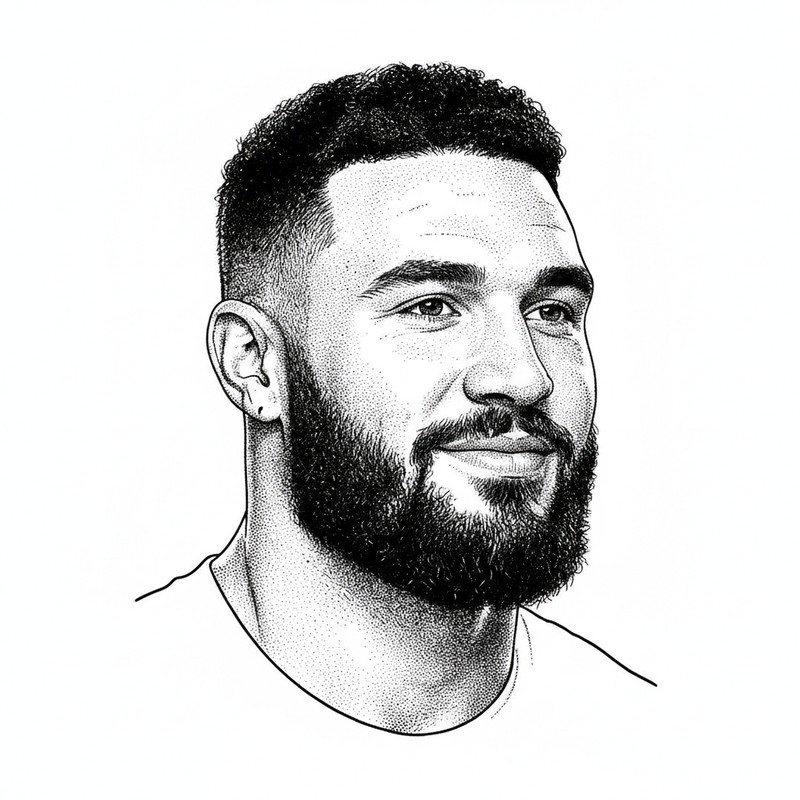
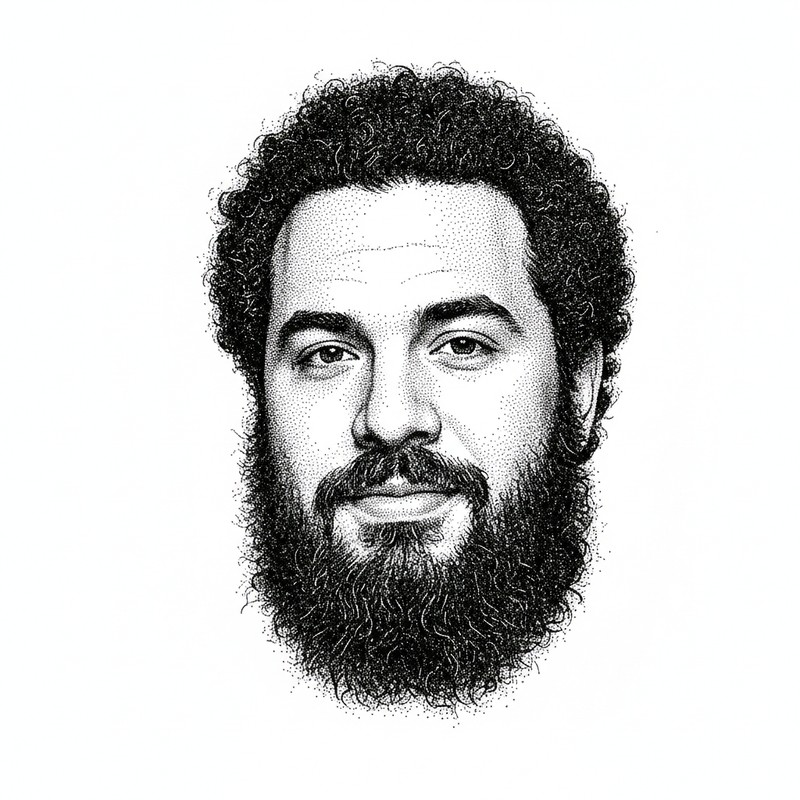
Case File #AB-2026-0226. Subject: Ariyan Arslani, operating under the professional alias “Action Bronson.” Filed under: Entertainers, Rap; Culinary Professionals (Former); Albanian-Americans, Flushing, Queens.
The Board of Review has opened a formal evaluation into the N-Word Pass eligibility of Ariyan Arslani, a 320-pound Albanian-American rapper, chef, painter, television host, and amateur wrestler from Flushing, Queens. Arslani’s case file is considerably more nuanced than most that cross the Board’s desk, owing to a lifetime of genuine immersion in hip-hop culture from one of the genre’s birthplace boroughs.
Born December 2, 1983, Ariyan grew up in a working-class Albanian and Muslim household in Flushing. His father emigrated from Albania. His mother is American. The neighborhood was a Queens melting pot: Albanian social clubs shared blocks with Korean barbecue joints, Colombian bakeries, and West Indian hair salons. Ariyan attended Bayside High School, where the hallways sounded like a United Nations cafeteria. He played football, discovered cooking through his grandmother’s Albanian recipes, and fell in love with hip-hop through the same New York City air that carried it to everyone within earshot of a boombox.
After high school, he enrolled at the Art Institute of New York City for culinary arts. He cooked professionally for years, working the line at fine dining restaurants in Manhattan and Queens. A serious leg injury ended his kitchen career in 2011, and he pivoted to rap full-time. His debut mixtape, Dr. Lecter, dropped that same year and earned immediate underground attention. The combination of vivid food imagery, obscure film references, and a flow that critics compared to Ghostface Killah (a comparison Bronson has both embraced and grown tired of) made him a cult favorite almost overnight.
Albums followed: Blue Chips, Rare Chandeliers (with The Alchemist), Mr. Wonderful, and Only for Dolphins. VICE gave him a cooking show, Fck, That’s Delicious*, where he traveled the world eating lamb brains in Morocco and pork belly in Tokyo while dropping verses between courses. A second show, The Untitled Action Bronson Show, featured him interviewing guests, lifting weights, and occasionally painting landscapes in oil. He lost over 150 pounds during the pandemic through a disciplined fitness regimen he documented on social media, earning a new wave of fans who knew nothing about his music.
Throughout his career, Action Bronson has used the N-word in his lyrics. Not constantly, but noticeably. His usage has drawn criticism from listeners who point out that, regardless of his Queens upbringing or his deep immersion in hip-hop, Ariyan Arslani is not Black. He is Albanian-American, a white-passing ethnic identity that does not carry the historical weight the word was forged to weaponize. Bronson has addressed the criticism sparingly, generally deflecting with comments about growing up in New York City and being “from the culture.”
The question for the Board is whether deep, genuine, lifelong immersion in hip-hop culture from one of its birthplace boroughs can substitute for the specific racial experience the word encodes. It is a closer call than many of our evaluations. Let’s get into it.
Cultural Context and Historical Background
Queens occupies a singular position in hip-hop geography. Run-DMC came from Hollis. Nas came from the Queensbridge Houses. A Tribe Called Quest came from St. Albans. Mobb Deep came from the same Queensbridge towers. The borough’s contribution to the genre is foundational, and growing up there during the 1990s meant absorbing hip-hop not as a consumer product but as neighborhood infrastructure. It was in the parks, the handball courts, the corner stores, the air.
Action Bronson’s immersion in that environment is not disputed. He did not discover hip-hop through a college roommate’s playlist or a streaming recommendation engine. He grew up inside it, in a borough that invented significant portions of it, alongside Black and Latino peers who shared the same subway cars and basketball courts. That proximity is real, and it distinguishes his case from many of the white artists who appear in our evaluation catalog.
However, proximity and identity are different things. Albanian-Americans in New York occupy a complicated racial position. They are technically white, though they often face ethnic discrimination and exist outside the Anglo-Protestant mainstream. But they do not face anti-Black racism. They are not stopped and frisked at disproportionate rates. They are not subject to the school-to-prison pipeline. They do not carry the specific historical burden that the N-word was designed to enforce. The word’s reclamation belongs to the people it was used against, and Albanians, however marginalized within European hierarchies, were not those people.
This is the core tension in Bronson’s case. He is not a suburban interloper. He is not a viral gimmick. He is a lifelong participant in hip-hop culture from one of its most important zip codes. But participation in hip-hop and membership in the racial community that created hip-hop are not synonymous, and the N-word belongs to the latter category.
The Official N-Word Pass framework asks whether an applicant has earned communal trust sufficient to use the word without causing harm. In Bronson’s case, we must weigh an unusually strong cultural resume against an unbridgeable experiential gap.
The Case For
Lifelong Queens Residency and Cultural Immersion
Action Bronson did not move to New York to pursue a rap career. He was born there, raised there, and built his culinary and musical careers there. His understanding of hip-hop comes from decades of daily immersion in one of the genre’s founding boroughs. He rapped in the same parks where legends freestyled before him. His references are not borrowed from Wikipedia. They come from lived experience in a specific place at a specific time.
Peer Respect From Black Hip-Hop Artists
Bronson has collaborated extensively with Black producers and rappers. The Alchemist, Meyhem Lauren, Big Body Bes, and Party Supplies have all worked closely with him. Ghostface Killah initially took issue with vocal comparisons but later appeared to make peace. The broader underground hip-hop community has generally treated Bronson as a legitimate artist rather than an outsider. That peer acceptance, earned through years of consistent output and genuine skill, carries cultural weight.
Culinary Career as Cultural Bridge
Bronson’s cooking career preceded his rap career, and food has served as a genuine bridge between cultures throughout his life. His grandmother’s Albanian recipes, his professional training in French technique, and his enthusiastic consumption of cuisines from every corner of the world reflect a person who engages with cultural traditions through deep participation rather than surface sampling. Fck, That’s Delicious* positioned food as a universal language, and Bronson’s reverence for the culinary traditions of Black, Caribbean, and Latin communities was visible in every episode.
Artistic Authenticity Beyond Commercial Calculation
Bronson has never chased mainstream pop crossover. His music remains rooted in underground boom-bap and psychedelic rap traditions. He paints, writes, and creates with an independence that suggests his engagement with hip-hop is driven by love rather than market strategy. The culture values artists who stay in the lane because they want to, not because they have to.
The Case Against
He Is Not Black, and the Word Belongs to Black People
This is the foundational objection, and no amount of cultural immersion overrides it. The N-word was created to dehumanize Black people specifically. Its reclamation belongs to Black people specifically. Albanian-Americans, however embedded in hip-hop culture, do not carry that history in their bodies. Using the word, even casually, even in lyrics, crosses a line that cultural participation alone cannot erase.
Using the Word on Record Normalizes Non-Black Usage
When a non-Black artist with a platform uses the N-word in recordings, it sends a signal to every listener that the word is available to anyone sufficiently “down.” That normalization erodes the boundaries that Black communities established through reclamation. Bronson’s usage, however casual, contributes to that erosion whether he intends it to or not.
The “I’m From New York” Defense Has Limits
Many non-Black New Yorkers grew up hearing and using the N-word in mixed company. That does not make it appropriate. Geographic proximity to Black culture does not transfer racial experience. The “I grew up around it” argument has been deployed by countless non-Black people to justify usage, and Black communities have consistently rejected it as insufficient. Being from Queens gives Bronson cultural credibility in hip-hop. It does not give him ownership of a word that encodes a history he did not live.
Limited Public Accountability
Bronson has not meaningfully addressed his N-word usage in interviews or public statements. He has not apologized, recontextualized, or committed to evolving his language. The absence of reflection suggests either a belief that no reflection is needed or a reluctance to engage with legitimate criticism. Neither reading supports a pass application.
No Documented Community Investment
Unlike Eminem, whose philanthropic investment in Black communities is well-documented, Bronson’s public record shows no sustained charitable engagement with Black institutions, scholarship programs, or community organizations. His cultural consumption is visible. His cultural reciprocity is not.
Deeper Analysis
Action Bronson’s case is the closest to a borderline evaluation the Board has encountered among denied applicants. The reason is simple: his cultural credentials are real. He is not performing hip-hop. He is living it, and has been living it since childhood. His music, his references, his collaborations, and his artistic sensibility all reflect someone who genuinely belongs in the genre’s ecosystem. If the pass were granted based on hip-hop residency alone, Bronson would be a strong candidate.
But the pass is not about hip-hop residency. It is about the N-word, and the N-word’s weight is racial, not cultural. A white-passing Albanian-American man who has spent his entire life in hip-hop still has not experienced the specific dehumanization that the word encodes. He has not been called it by a police officer during a traffic stop. He has not heard it whispered in a job interview waiting room. He has not felt it land on his children’s shoulders in a school hallway. The word carries a particular gravity that attaches to Black bodies, and no amount of cultural proximity transfers that gravity.
This is not a criticism of Bronson’s character or his art. It is a recognition that some things belong to specific communities for specific reasons, and respecting those boundaries is itself a form of cultural engagement. Post Malone was denied in part because his cultural engagement felt shallow. Bronson’s engagement is deep. But depth of engagement and eligibility for the word are measured on different scales.
The Albanian-American experience in New York is genuinely complex. Bronson’s family navigated immigration, ethnic prejudice, and working-class struggle in a city that does not make any of those things easy. That experience deserves recognition. But it is not the Black American experience, and conflating the two, however unintentionally, diminishes the specificity of both.
If Bronson were to retire the word from his vocabulary, acknowledge the distinction between cultural participation and racial membership, and direct some of his considerable platform toward Black community investment, his already-strong cultural resume would become even stronger. The irony is that the pass is often closest to those who demonstrate they do not need it.
Official Verdict
DENIED (Borderline). Action Bronson does not receive the Official N-Word Pass.
This is the narrowest denial in recent Board history. Ariyan Arslani’s hip-hop credentials are legitimate, his cultural immersion is lifelong, and his artistic contributions to the genre are genuine. Under almost any other metric, he would pass review. But the N-word is not a hip-hop credential. It is a racial inheritance, and Bronson, for all his proximity to the culture that reclaimed it, does not carry the history it encodes.
The Board encourages Bronson to continue making excellent music, cooking extraordinary food, painting strange and wonderful canvases, and contributing to hip-hop’s evolution. We also encourage him to retire the word from his recordings, not because his love for the culture is in question, but because respecting its boundaries is the deepest form of love available to someone standing just outside the circle.
The stamp stays sealed. The respect stays on record. The two are not contradictions.